
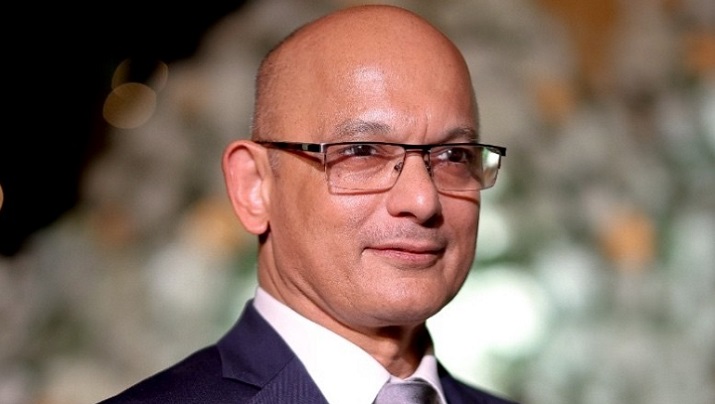
New Delhi, June 25 -- Private equity firm Somerset Indus Capital Partners, which has so far taken exposure across hospitals, diagnostics, medical devices, pharma and allied domains in the healthcare sector, is keen to invest in senior living space to tap the growing potential of the industry, a top company executive told VCCircle.
"We are actively tracking and looking at the senior living market, observing that it is finally beginning to show significant scale," said Mayur Sirdesai, founder and managing partner, Somerset Indus Capital Partners.
Senior living works at the crossroads of real estate, healthcare and hospitality. The sector is broadly divided into three parts currently: independent living by seniors, assisted living and specialised care driven by healthcare professionals.
"Senior living is no longer just a real estate play, it has evolved into an access and service-led operator model. The preferred model involves operators working with real estate developers. The developers build the facility, and the operator takes it on a long-term lease to run the services, a strategy similar to how companies manage hospitals," he added.
Sirdesai also believes there is a growing opportunity to place assisted-living centres within large, high-rise residential communities, making these services more accessible to families living in the same areas. "While we do not currently have a senior living investment, we are tracking a couple of firms and may 'end up having one' in our portfolio as the sector continues to scale [up]," he added.
He stated that, beyond general assisted living, there is a specific need for specialised geriatric care for conditions such as Alzheimer's and Parkinson's which includes 'transition care' models that provide long-term support. Sirdesai added that the market was coming of age, "with some companies now touching a decent scale, which indicates a level of maturity that makes it more attractive for investment".
Fuelling demand
A bunch of factors including changing social dynamics in India are fueling the demand for senior living. Families are becoming "super nuclear," where children and parents often prefer different lifestyles and may choose to live separately, he said. "In top-tier cities, particularly, senior couples are increasingly moving into assisted living facilities not out of necessity, but because they value the independence, company, and ease of living these facilities provide," added Sirdesai.
Apart from cultural acceptance of the concept and the move towards a nuclear family setup, the demand is also driven by an aging population. As per a report by KPMG, in 2024, individuals aged 60 and above constituted 11 per cent of India's population, a proportion anticipated to nearly double to over 21 per cent by 2050, making a strong driver for the sector in the coming years.
While the sector is on a growth trajectory, it is still in its infancy compared to other developed markets. Real estate consultancy firm JLL states the current market penetration of senior living stands at 1.3 per cent compared to the United States and Australia, where penetration rates exceed 6 per cent, indicating a vast untapped potential.
"This gap signifies a golden opportunity for developers, investors, and policymakers to create innovative, quality-driven solutions for India's aging population," the report stated.
The senior living concept has been around for some time now in the Indian ecosystem but it has taken off only recently, with more and more investors, developers and operators focusing on the sector. A recent report by JLL and the Association of Senior Living India (ASLI) projects a staggering 300 per cent growth for the sector to reach a size of $7.7 billion (Rs 64,500 crore) by 2030. The report also estimates that the target market for senior living facilities will grow from 1.57 million households in 2024 to 2.27 million by 2030.
Geographically, senior living facilities are predominantly concentrated in the southern region of India, with key cities such as Coimbatore, Bengaluru and Chennai accounting for 40 per cent of the total inventory. This regional focus is attributed to factors such as a favourable climate, superior healthcare infrastructure and higher cultural acceptance of the senior living concept.
Even though the demand is strong, it is restricted mostly to top cities, among the affluent senior population and NRIs returning home for retirement.
Investors and developers
To tap the growing potential, India's top developer DLF early this year announced its intent to venture into senior living with focus on premium assets. It has set a target of developing 500,000 sq ft in Gurugram with a revenue potential of Rs 2,000 crore.
Ashiana Housing, a long standing player in the segment, this April initiated a Rs 1,800 crore expansion plan for multigenerational and senior-living projects in Pune, signaling aggressive real estate scaling.
More such investments were made in the past few years.
InvAscent, a healthcare-focused PE firm, in 2025 invested Rs.110 crore in Geri Care Health Services, an integrated elder-care and geriatric services provider.
In 2024, Primus Senior Living raised $20 million in a seed round led by General Catalyst and Kites Senior Care raised Rs 45 Crore in Series A funding from the family office of Manipal Group's Ranjan Pai.
Published by HT Digital Content Services with permission from VC Circle.