
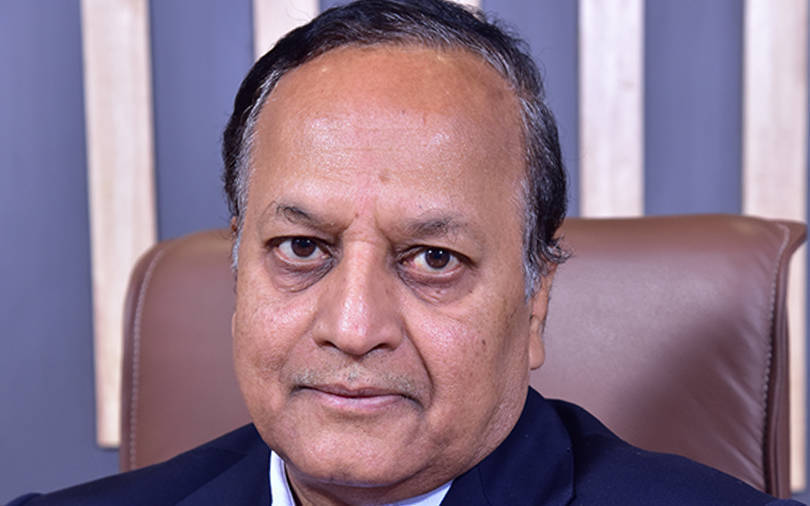
New Delhi, May 18 -- Sunil Jain, founder and partner at Sundev Renewables LLP, is a veteran in India's renewable energy sector with over three decades of experience. He previously served as CEO and executive director of Hero Future Energies and as operating partner for energy transition at Essar Capital. He is also chairman of the Skill Council for Green Jobs and holds leadership roles in industry bodies such as FICCI's Renewable Energy Council.
Jain launched Sundev in 2022. Based in New Delhi, Sundev focuses on smaller-scale renewable projects, primarily in the commercial and industrial (C&I) segment, along with M&A advisory and capital raising. The firm has developed and flipped 32 MW of solar, wind, and battery storage assets (under 50 MW), with another 18 MW in the pipeline. It is also exploring larger ambitions including a green-powered data centre for export-oriented bitcoin mining.
In an interview with VCircle, Jain outlines Sundev's investment philosophy, trends in renewable M&A and IPOs, tariff trajectories, battery storage growth, and offers policy recommendations on transmission, discom privatisation, and green hydrogen/ammonia. Edited excerpts:
What is your investment philosophy at Sundev and what has your new platform been up to over the last year or so?
We started Sundev - Sun stands for Sunil and Dev for Devin (Narang), my partner. We created this partnership firm for multiple business opportunities. Presently, we are doing C&I solar, wind and battery storage projects below 50 MW. We are not going for large-scale projects right now as we don't have that kind of capital. We don't hold assets on our books. We develop them, create good opportunities, bring customers and flip them.
So far, we have created 32 MW and another 18 MW is in the pipeline. We are also into M&A advisory, helping people in acquisitions. We are helping raise capital - we have done debt capital raise for a company and are on track for equity.
Our biggest upcoming project is a green-powered data centre for bitcoin mining, primarily for export markets. India offers cheap renewable power and low project costs, making it an obvious choice. We are seeing data centres growing rapidly in India.
How much money are you going to invest in this data centre business? When do you see some traction?
This could eventually be over $500 million in the next five years. Capital is available but deployment depends on geopolitical stability. Possible locations are Uttar Pradesh, Andhra Pradesh or Maharashtra, with UP likely to take the lead.
You have developed and flipped 32 MW. What is your development pipeline likely to look like over the next one year? And do you have a plan to scale over the next five years?
Over the next one year we plan around 100 MW. I have run companies and I don't believe in five-year pipelines.
Why is that?
The Indian market is very dynamic. What you plan today may not happen next year. Large firms planned gigawatt-scale projects but bids are not coming out and existing ones are not signed. We focus on what we have in hand for the next 12 months.
How is the M&A market in renewables? What trends are you seeing? Will M&A activity and deal sizes go up?
There are seven-eight big players who will mostly be buyers, and five-seven aspirational players wanting to reach over 5 GW. Today, 5 GW is the scale that matters. Building that organically in three years is difficult, so acquisitions will happen. PE capital will drive the business as Indian capital (outside Adani, Tata, Reliance) is limited. We may see fewer but bigger deals.
How do you see the IPO market in this sector?
Despite difficulties, people will go for IPOs because they need capital. Recent IPOs have made investors more realistic on valuations. People may delay if valuations are not right, but it depends on desperation for cash.
Do you think valuations going forward will be more even?
Yes. Companies will need to moderate and leave something on the table.
From the M&A perspective, how do you see the tariff curve for solar and wind going forward?
I don't see tariffs rising. The recent Gujarat solar bid was at Rs 2.34 - rock bottom. Prices may even go down.
Are we seeing a situation like 10 years back?
Not exactly, because we depend partly on China and there are squeezes. Battery storage will be important. Battery prices have risen and the dollar is at above 93, but bidding aggression continues.
What is the battery storage development curve in India likely to be?
It will grow fast from next year onwards. Cell manufacturing is starting, moving beyond just assembly. The ALMM (Approved List of Models and Manufacturers) policy and 40% duty have been very favorable - manufacturers are doing well.
What would be your key policy recommendations to the government?
The government should incorporate renewable energy features into the Electricity Act. Allow the private sector to build transmission lines and substations for large projects and share them. Privatisation of discoms will create stable demand. Liquidating regulatory assets (as per a Supreme Court order) is crucial, so discoms have capital to modernise and expand transmission and distribution.
Do you think we will continue to see round-the-clock projects?
Plain vanilla solar is gone. It will move to hybrid solar+wind with battery storage - starting from four hours to six-eight hours.
Is there serious thrust possible on offshore wind and offshore solar?
It is possible as it avoids land acquisition issues and gives better peak-hour supply. India still has land for 150 GW of onshore wind, but digitisation of land records would resolve many legal hurdles.
What about green hydrogen? Is there a serious market?
You cannot easily export green hydrogen due to logistics - we can export green ammonia instead. Competing with China is difficult. The way forward is distributed/captive production: steel plants, fertilizer plants making their own. Ammonia is the practical bet. We should define clear grid compliance for green hydrogen/ammonia.
Published by HT Digital Content Services with permission from VC Circle.