
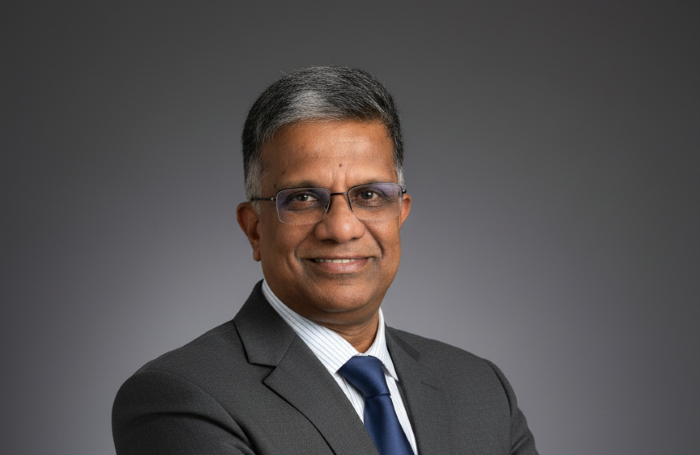
New Delhi, June 12 -- Forus Health Pvt Ltd, the maker of eye-screening devices, is charting aggressive expansion plans and has set higher growth targets for the next five years, a top executive told VCCircle.
Towards this, the Bengaluru-based company will follow a multi-pronged strategy including several product launches, generating a larger share of its revenue from international markets and scaling up its services vertical.
Over the next five years, the company aims for a rapid 45% organic topline growth, said K. Chandrasekhar, founder and CEO of Forus Health. He added that the company remains open to inorganic growth opportunities.
Background
Chandrasekhar, who founded Forus in 2010, started the company with the objective of treating avoidable blindness in India--a country with a quarter of the world's visually challenged people at the time--using technology.
The company initially began manufacturing its own medical devices after seeing a gap in the required on-the-ground devices, Chandrasekhar said. "Available devices at the time were very expensive and meant for high-end clinics," he said.
In 2012, venture capital firms Accel (then Accel Partners) and Chiratae Ventures (then IDG Ventures India) co-invested $5 million in the medical technology company as part of its Series A funding. Two years later, it raised Rs 50 crore ($8 million at the time) from Asian Healthcare Fund and its existing investors Accel and Chiratae Ventures.
Chiratae Ventures exited in 2019 selling their shares to TPG New Quest (formerly NewQuest Asia Fund) who then exited in 2025.
Last year, Inviga, a healthcare-focused investment vehicle launched by HCG founder BS Ajai Kumar, acquired a 21% stake in the ophthalmic medical device-maker in an entirely secondary transaction.
Over time, Forus gradually expanded into 85 countries offering 10 different eye care diagnosis products under the 3nethra series with over 5,000 installations.
Today, the company makes 45% of its topline from its international market, the rest comes from the domestic market.
Forus is looking to get a larger share of its revenue from the US, Europe, the Middle East and other markets. In FY27, the company expects 55% to come from the international market and 45% to come from India, said Chandrasekhar. Over time, they are looking to shift this ratio even further to 60:40, he added.
Growing its services vertical
At present, medical devices are the mainstay of the company, commanding around 80-85% of the revenue share. But Chandrasekhar is expecting to grow Forus' services segment to 25-30% of the topline over the next five years.
Its services business was set up during the COVID-19 pandemic, when Forus began offering screening-as-a-service by setting up camps at corporate offices or residential areas to identify patients with eye diseases requiring intervention and connect them to a hospital. The services business, which got off to a rocky start owing to pandemic related difficulties as more people started working from home, was "rebuilt" post-COVID as interest in wellness and preventive care grew. The company is now partnering with many governments offering screening services across different states, Chandrasekhar said.
Within the services category, Forus is also looking at developing an oculomics vertical, which would involve studying the retina using artificial intelligence (AI) to diagnose systemic conditions such as cardiovascular risk, kidney disease and neurological issues.
"As awareness of AI and home imaging grows, we believe adoption will increase, creating consistent recurring revenue," said Chandrasekhar. On the product side, the company offers eye-screening devices in three segments: adult screening, including anterior and posterior; neonatal imaging; and refraction space. It is now adding more products in the adult and neonatal spaces, including solutions for myopia management. This will involve product development for the next one to two years, and then deploying it at homes or in corporate environments for disease management.
While they have been selling to hospitals in 85 countries, they next want to partner more deeply with clinics through screening services offered from homes, in camps or at corporate offices and then connecting the patients with healthcare providers.
Financial roadmap, headwinds
Chandrasekhar said Forus grew 15-16% in the first 10 years, and about 28% in the five years up to FY26. The company has remained EBITDA positive in the last five years through FY26, with operating profit growing at a CAGR of 27%.
While he didn't disclose the latest financials, Chandrasekhar said that every last quarter of a financial year is Forus' "biggest," contributing 35-40% of revenue, however, the first quarter is usually slow owing to inventory build-up. As per VCCEdge, Forus' consolidated revenue growth in FY25 slowed to 11% to touch Rs 50.8 crore, with a net profit of Rs 4.3 crore.
When asked about headwinds, such as the war in the Middle East, Chandrasekhar said the company has a diversified presence across many countries. Still, he warned of supply chain risks due to rising memory chip prices and transportation costs. The company may pass some costs to customers or use value engineering to safeguard profitability and keep its gross margins intact.
Published by HT Digital Content Services with permission from VC Circle.