
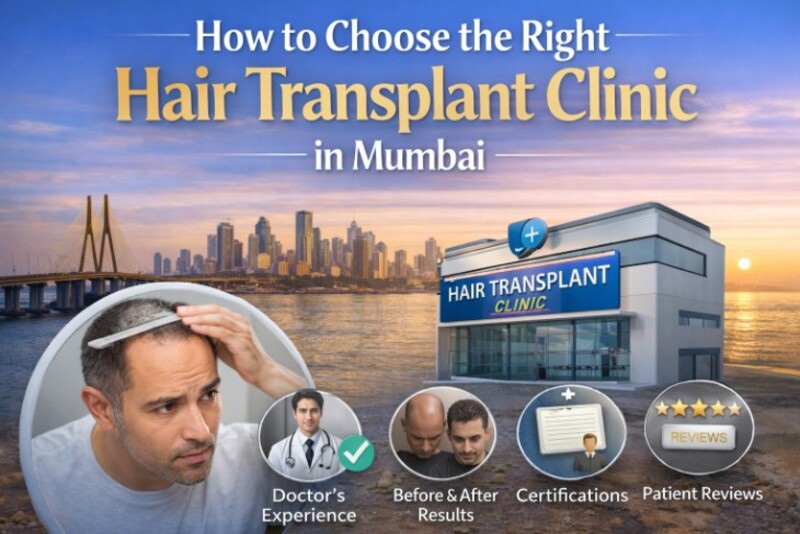
New Delhi, June 24 -- Choosing a hair transplant clinic in Mumbai can feel overwhelming. There are dozens of options, and most of them use similar language - "natural results", "advanced technology", "experienced surgeons". When everything sounds the same, it becomes difficult to know what actually separates a reliable clinic from one that may not meet your expectations. This guide is meant to help you ask the right questions and understand what genuinely matters before you make that decision.
What to Understand Before You Start Looking
Hair transplantation is a surgical procedure. Like any surgery, outcomes depend on multiple factors - the skill of the surgeon, the quality of the team, the technique used, and most importantly, whether the procedure was even the right choice for your specific type of hair loss. Many patients come in asking about a transplant when what they actually need first is a proper diagnosis. Hair loss can be caused by hormonal imbalances, nutritional deficiencies, autoimmune conditions, or genetic pattern baldness. Each of these requires a different approach. A transplant performed without addressing the underlying cause may not deliver lasting results. So before evaluating clinics, it helps to understand your own hair loss pattern and what stage you are at.
The Surgeon's Role and Why It Matters More Than the Clinic's Brand
A clinic's reputation is often tied to its most experienced surgeon. Before committing, it is worth finding out who will actually perform your procedure. In some clinics, consultations are done by senior doctors, but the surgery itself is carried out by junior staff or technicians.
Ask directly:
* Who will be performing the transplant? * How many procedures has that surgeon completed? * Can you see verified before-and-after photos of their actual patients? * Is the surgeon board-certified or trained in a recognised hair restoration programme?
These are not uncomfortable questions. Any responsible clinic will answer them clearly.
Understanding the Techniques - FUT, FUE, and Beyond
Two primary techniques are used in most clinics today: FUT (Follicular Unit Transplantation) and FUE (Follicular Unit Extraction). FUE is more commonly offered now because it leaves less visible scarring, but FUT may still be appropriate in certain cases, particularly when a large number of grafts are needed.
More recently, robotic-assisted and motorised FUE tools have entered the market. These can improve precision, but the tool is only as effective as the surgeon guiding it.
What a good clinic should do is explain both techniques honestly - including which one is suitable for your hair density, scalp laxity and donor availability. Be cautious of any clinic that recommends a technique without a thorough physical examination first.
What Realistic Expectations Actually Look Like
One of the most important things a clinic can do is give you an honest picture of what to expect. Hair transplant results take time. Most patients begin to see new growth between three to six months after the procedure, with full results typically visible after twelve to eighteen months.
Not everyone is a good candidate. Patients with very limited donor hair, active scalp conditions, or unrealistic expectations about density may not benefit as much from the procedure. A trustworthy clinic will tell you this, even if it means recommending a non-surgical alternative instead.
Clinics like Kibo Clinics focus on evaluating the underlying cause of hair loss before recommending any treatment path - whether that involves surgery, medical management, or a combination approach. This kind of evaluation-first model tends to lead to more appropriate treatment decisions and, ultimately, more satisfying outcomes for patients.
Questions to Ask During Your Consultation
A consultation is your opportunity to assess the clinic as much as they assess you. Come prepared:
* What is the cause of my hair loss, and am I a suitable candidate for a transplant? * What technique do you recommend for my case, and why? * What is the expected graft count, and how was this calculated? * What does the post-operative care plan include? * What happens if results are not as expected?
How a clinic responds to these questions tells you a great deal about their transparency and patient-centred approach.
Final Thoughts
Choosing a hair transplant clinic in Mumbai is not just about finding the most affordable option or the one with the most polished website. It is about finding a team that takes your individual condition seriously, explains your options without pressure, and sets realistic expectations from the start.
Take time with this decision. Request multiple consultations if needed. A good clinic will welcome your questions and support your right to make an informed choice at your own pace.
NOTE : No VCCircle Journalist was involved in the creation/production of this content.
Published by HT Digital Content Services with permission from VC Circle.