
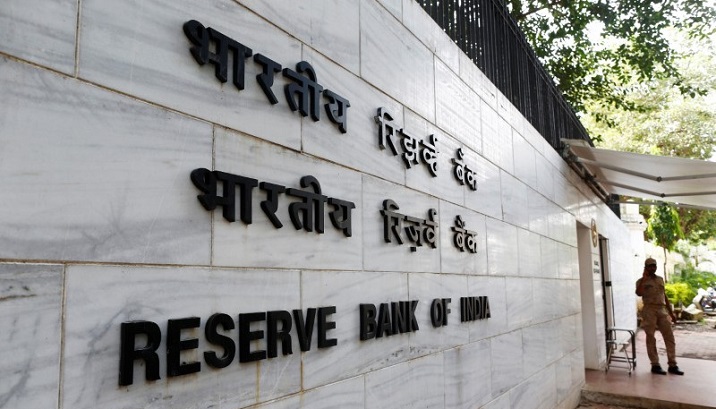
New Delhi, Aug. 6 -- The Reserve Bank of India's draft proposal to amend foreign investment rules could improve investment flows into alternative investment funds (AIFs), real estate investment trusts (REITs) and infrastructure investment trusts (InvITs), according to legal experts.
A few weeks ago, the RBI issued a proposal to amend the Foreign Exchange Management (Non-debt Instruments) Rules, 2019. In line with the announcement made during the Union Budget 2026-27, the suggested amendments aim to simplify compliance, offer greater operational flexibility, and move towards a more principle-based, investee- and investor-neutral regulatory framework.
Here is a breakdown of what is being proposed and how it could change capital flows into these asset classes.
What are the changes?
For one, the draft expands the universe of equity instruments through which FDI can be made.
"The concept of equity is now that of an economic, or rather an accounting, one and not merely restricted to a corporate law one," said Jayesh H, co-founder of Juris Corp.
FDI is now defined as an investment made by a foreign entity through equity instruments issued by an unlisted Indian company, or through 10% or more of the equity capital of a listed Indian company. Equity instruments are restricted to equity shares, convertible debentures, preference shares and share warrants issued by the Indian company.
In the draft rules, the definition of "equity" has been expanded to include instruments classified as equity by the eligible investee entity; units of an investment vehicle, including AIFs, REITs and InvITs, as per the respective SEBI regulations; and participating interest or rights in oil fields or mines of an Indian company or LLP.
Second, the draft provides operational ease by clarifying the roles of the RBI and the Department for Promotion of Industry and Internal Trade (DPIIT).
"It (the draft) clearly demarcates that the FDI Policy will tell investors whether investment is allowed and on what conditions, while the FEMA Rules will tell investors how to make and manage that investment. Accordingly, there is less room for two interpretations of the same provision," said Saurabh Sharma, partner at Juris Corp.
Further, the draft does not trigger FDI rules for investment in unlisted securities unless it crosses a threshold.
As Mohit Gogia, partner at Cyril Amarchand Mangaldas, explained, the proposed changes introduce a single, uniform 10% threshold to determine whether an investment falls under FDI, which applies irrespective of whether the investee is listed or unlisted. Currently, any investment in an unlisted company qualifies as FDI.
Another key change is the expansion of the pool of eligible investors, through a new definition of "foreign controlled entity" (FCE), and of eligible investee companies.
Investors can now qualify as an FCE by proving they are either owned or controlled by a person residing outside India, which is different from the current requirement for foreign-owned and controlled companies (FOCCs), which must be both owned (more than 50%) and controlled by a foreign entity. Under the draft rules, investees also include partnership firms and proprietary concerns.
Gogia also pointed out that the compliance burden may now be shared between investor and investee companies. Under the current framework, this responsibility rests largely with the domestic investee company.
How does it affect AIFs, REITs and InvITs?
Foreign investment in AIFs, REITs and InvITs is currently governed under a section of the NDI Rules, rather than the primary FDI framework.
Pallavi Panigrahi, partner at Ascendus Law Partners, said the draft removes ambiguities around how these entities can receive foreign capital. She said the draft rules explicitly categorise SEBI-regulated vehicles, including AIFs, REITs and InvITs, as "eligible investee entities".
"This formal inclusion standardises how these pooled vehicles receive foreign capital, eliminating previous structural ambiguities," Panigrahi said.
The draft rules could also change how downstream investments of AIFs are classified, and therefore how they are governed by SEBI.
Currently, downstream investments are classified as domestic only if the AIF's individual sponsors and managers are resident Indian citizens. If not, these investments can be treated as indirect foreign investment.
"The draft rules do not replicate the aforesaid test or the AIF-specific explanation, and instead defer ownership and control determinations to the relevant sectoral regulator," Gogia said.
Further, he pointed out that if the sectoral regulator finds that the investment vehicle falls within the definition of an FCE, "it may have to be tested as to whether foreign participation or governance rights under the applicable SEBI framework could result in such vehicles being characterised as foreign-controlled."
Published by HT Digital Content Services with permission from VC Circle.