
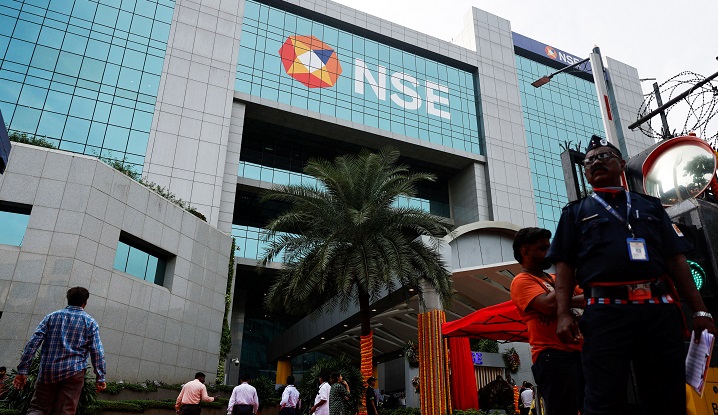
New Delhi, July 6 -- The Delhi High Court's recent ruling on the National Stock Exchange being a public authority will not place any hurdle in the exchange's path to a public listing but it may have an impact on the operations of stock exchanges, clearing corporations and depositories, according to legal experts.
On July 1, the Delhi High Court upheld a 2010 verdict in a dispute between the NSE and the Central Information Commission, and stated that the exchange would be considered a "public authority" under the Right to Information (RTI) Act.
The order said, "We entirely agree, and wholeheartedly endorse the finding, of the learned Single Judge, that the NSEI is an "authority" within the meaning of the first part of Section 2(h) of the RTI Act."
Section 2 (h) defines a public authority.
IPO process
Sumit Agarwal, managing partner at Regstreet Law Advisors and a former SEBI officer, said this is not a fresh hurdle to the listing and has been disclosed in the draft red herring prospectus filed. He said the Securities and Exchange Board of India has reviewed the draft papers and that the new development should be handled through an update in the red herring prospectus.
Sanjay Israni, partner at Desai & Diwanji, said the order should be viewed in a larger context of the Delhi High Court declining to interfere with SEBI's no-objection certificate to the NSE IPO. This decision removed "one of the principal judicial challenges" to the listing, he said.
"Against that backdrop, the subsequent judgment declaring the NSE to be a 'public authority' under the RTI Act does not question the validity of the SEBI NOC, the NSE's recognition as a stock exchange, or its eligibility to undertake an IPO," he said.
Neha Nagpal, founding and managing partner at N & Company Legal, said the decision only triggers transparency duties for the exchange, including appointing a Central Public Information Officer (CPIO), a First Appellate Authority (FAA), and answering citizen queries.
She added that listing eligibility comes under a different set of laws altogether, which are the Companies Act, 2013, and SEBI's public issue framework.
NSE's trade secrets
While declaring the NSE as a public authority would open it up for public queries, lawyers said the exchange can still protect its business and trade secrets from public disclosure.
"The public authority status isn't an open house," said Regstreet's Agarwal.
He cited three sections: Section 8(1)(d), which lets the NSE withhold trade secrets and competitively sensitive information such as matching-engine architecture, cybersecurity design, unreleased products and vendor contracts; Section 8(1)(j), which protects employee data; and 8(1)(h), which protects details about live investigations. But, he added: "None of these are absolute. The NSE has to show actual harm, not mere inconvenience."
Besides Section 8 (1)(d), N and Company's Nagpal cited Section 8 (1)(e), which exempts information held in a fiduciary capacity.
Israni pointed out that the Delhi High Court's analysis centered around functions governed by the Securities Contracts (Regulation) Act (SCRA) and the SEBI Act, and the judgement does not address the exchange's decision making such as on product development or business strategy.
"That distinction is likely to be important in practice," he said.
"Regulatory decisions-particularly those involving SEBI approvals or market governance-may become more amenable to RTI requests. However, the internal deliberations behind new product launches, trading technologies or commercial strategy would remain separately assessable under the RTI Act's exemptions," he added.
Other SEBI-regulated entities
The court decision drew heavily from the NSE's existence depending on government recognition, which came through SEBI recognition under Section 4(3) of the SCRA Act.
When asked how it would play out for other regulated entities, Agarwal said, "I'd be cautious here."
"The ruling turns on Section 4(3) of the SCRA. The NSE cannot exist as a recognised exchange without that government recognition, which the bench treated as 'constituting' it. This logic may extend to market infrastructure institutions (MIIs) such as stock exchanges, depositories and clearing corporations. Banks and insurers operate under licensing, not recognition-as-existence, and private banks haven't been held as public authorities merely for being RBI-licensed," he said.
He added, "If this travels anywhere next, it's toward clearing corporations and depositories built on the same SCRA architecture-not banks, asset management companies, alternative investment funds or insurers broadly."
N & Company's Nagpal said the judgment's decision would be specific to stock exchanges but not the entire securities market ecosystem.
"The Bench held the NSE a public authority because recognition under the SCRA is constitutive: without that governmental order, the entity cannot function as an exchange at all, so it is 'constituted by order' of the government. That logic applies squarely to the BSE. But the court carefully separated recognition from mere regulation. A broker or a mutual fund is licensed to operate, not defined into existence by that licence," she said.
She agreed that depositories and clearing corporations, which also require SEBI recognition to operate, "are the closest analogues and the most exposed".
What next?
Israni believes that the exchange is likely to challenge the judgment before the Supreme Court and seek interim relief, including an injunction against the high court ruling.
"The NSE's route is a Special Leave Petition before the Supreme Court under Article 136 of the Constitution," said Nagpal.
But any interim relief may not come easily, according to her. "Until then, the NSE must comply," she said.
The NSE didn't respond to an email seeking comment till the time of writing this article.
Published by HT Digital Content Services with permission from VC Circle.