
New Delhi, July 2 -- Warburg Pincus-backed IndiaFirst Life Insurance posted an improvement in its value of new business (VNB) margin for the financial year ended March 2026, driven largely by a higher share of individual business.
The improved financial performance comes as Warburg Pincus looks to monetize its nearly 26% stake in the life insurer.
The VNB margin rose to over 20% in FY26 from 17.6% a year ago, aided by business growth and a favourable shift in the product mix. VNB, which measures the profitability of new policies sold during a given period, is a key metric for life insurers.
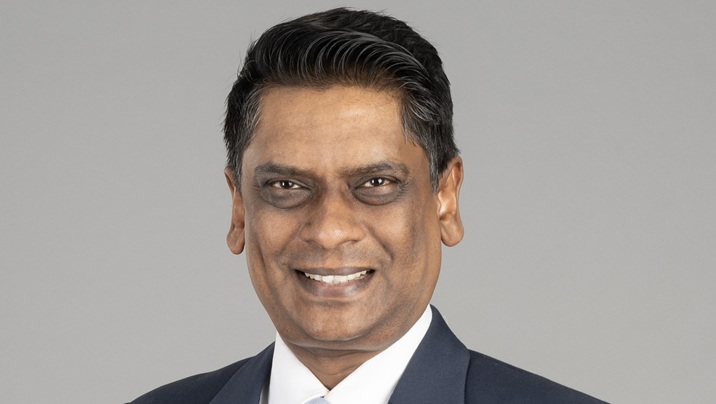
"Over the past few years, we have consciously shifted towards higher-margin products while maintaining growth and, at the same time, maintained tight control on operating costs. Our banca-led distribution continues to provide acquisition efficiency at scale," Rushabh Gandhi, managing director and chief executive officer of IndiaFirst Life, told VCCircle.
"If we exclude the investments we are currently making in building the agency channel, our underlying VNB margin is already in the mid-20s," he added.
The company aims to sustain VNB margins in the mid-20s range over the near to medium term.
IndiaFirst Life is yet to disclose its FY26 financials. However, according to a document accessed by VCCircle, its net profit rose to Rs 127 crore in FY26 from Rs 102 crore a year ago, aided by a rise in gross direct premium. Gross direct premium increased to Rs 8,019 crore from Rs 7,218 crore a year ago. The company also posted a new business premium of Rs 3,499 crore in FY26, up from Rs 2,969 crore a year ago, VCCircle has learnt.
A comparison with FY21 shows a significant shift in the composition of the insurer's new business portfolio. The share of individual business in the company's new business premium rose to 54% in FY26 from 45.1% in FY21, VCCircle has learnt. However, the share of group funds business declined to 12.5% from 29.4% in FY21.
High-yielding individual life insurance products include non-participating savings plans and term plans. Typically, these policies see higher renewal rates and command higher premiums.
The insurer's 13th-month persistency, which measures the percentage of policies that remain active after the first year, improved to 81.8% in FY26 from 81.2% a year ago. The 61st-month persistency ratio, the percentage of policies that remain active after five years, also rose to nearly 51.1% from around 46.7% a year ago.
Currently, non-participating products account for 36% of the company's individual annualized premium equivalent (APE), followed by unit-linked insurance plans (ULIPs) at 28%, annuity products at 20%, participating plans at 14%, and protection plans at 2%.
"Non-par and annuity (products) support margin stability, and ULIPs provide growth. On pure protection, the opportunity in India is still evolving. We continue to participate meaningfully in this segment through (our) Credit Life (Plus Plan) and the government's Pradhan Mantri Jeevan Jyoti Bima Yojana scheme," Gandhi said.
Focus on non-bank distribution
The company has been looking to reduce its dependence on bancassurance in recent years.
The share of non-bancassurance channels, including agency, broking and digital, rose to 31.6% in FY26 from 9% in FY24. However, the bancassurance channel still accounted for a sizable 68.4% of the business in FY26.
The agency channel's contribution to individual APE rose to 13% in FY26 from 3% in FY23, VCCircle has learnt.
Going ahead, the insurer plans to expand its agency branch network to 100 in FY27 from the current 64. Over the next five years, it aims to build an agent network of 50,000.
"We expect the agency mix to move to around 25%, with an agent base of over 50,000. However, the focus is not just on scale but on productivity, persistency, and quality of business," Gandhi said.
Background
IndiaFirst Life started as a joint venture between Bank of Baroda, Andhra Bank and UK-based Legal & General Group Plc in 2010. In 2018, the British company sold its entire 26% stake to private equity firm Warburg Pincus. In 2020, Union Bank became a shareholder of IndiaFirst after its merger with Andhra Bank.
The life insurer became a subsidiary of state-run Bank of Baroda after Union Bank sold a 21% stake to its larger peer in 2022.
Last year, VCCircle reported that French insurer BNP Paribas Cardif and Seoul-headquartered Samsung Life Insurance were frontrunners to acquire Warburg's stake in IndiaFirst Life.
Recent media reports suggest BNP Paribas Cardif is close to inking a deal. However, IndiaFirst Life refrained from commenting on the matter.
Warburg's exit is expected to pave the way for the company's initial public offering (IPO). Although the insurer had filed draft papers in 2022, it let the regulatory approval lapse amid changes in regulatory norms and weak market sentiment.
The company did not provide an updated timeline for the IPO. In an interaction with VCCircle in June 2025, Gandhi had said the company needed three to four quarters of sustainable growth before an IPO.
"We are in a growth phase, and the board remains supportive of capital infusion as required. We will raise capital selectively, in line with business needs and growth opportunities, with a clear focus on maintaining return discipline," he had said.
Published by HT Digital Content Services with permission from VC Circle.