
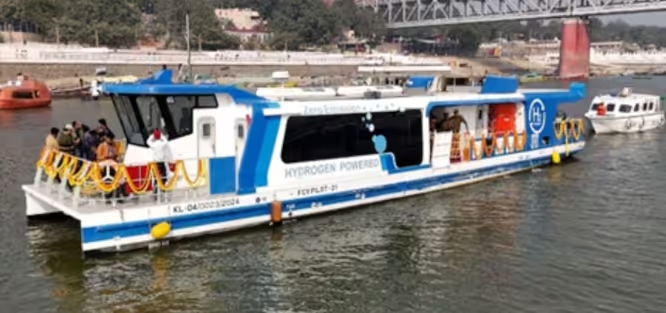
India, July 27 -- The Government of India is pushing hard on Inland Water Transport (IWT) as a pillar of its multimodal transport vision, and the press release you're viewing outlines a very ambitious roadmap.
Infrastructure & Digital Reforms
- 32 National Waterways operationalized with multimodal terminals, cruise jetties, and community jetties.
- Digital platforms like PANI (navigation info), Jalyan & Navic (vessel/crew registration), CAR-D (cargo data), and Jal Samriddhi (commercial ops) are streamlining approvals and logistics.
- Electronic Navigational Charts and hydrographic surveys are improving safety and efficiency.
Cost & Environmental Advantage
- Freight cost per ton-km:
- IWT: Rs.1.06
- Rail: Rs.1.36
- Road: Rs.2.50
- Emissions: IWT matches rail (0.0006 Rs/TKm) and is far cleaner than road (0.0031 Rs/TKm).
- Air pollution costs: IWT (0.03 Rs/TKm) vs. Road (0.202 Rs/TKm).
Policy Measures
- Jalvahak Scheme: 35% incentive for cargo owners/operators on NW-1, NW-2, NW-16.
- Tonnage Tax Extension: predictable tax regime for inland vessels.
- National Waterways Regulations 2025: transparent framework to attract private investment.
- PSU Cargo Shift Mandate: over 140 PSUs directed to allocate cargo to waterways.
- Coastal Shipping Act 2025: modernized regulations, effective March 2026.
- Coastal Cargo Promotion Scheme: aims to double IWT/coastal shipping share from 6% to 12% by 2047.
Regional Projects
- Northeast (NW-2, NW-16): ship repair facility at Pandu, tourist jetties, regional excellence centre at Dibrugarh.
- Southern (Kerala, AP, Telangana): fairway development, Ro-Ro terminals, floating jetties.
- Eastern/Western/Northern states: coal evacuation via NW-5, cruise tourism in Goa/Karnataka, Sundarbans international route maintained.
- J&K, Himachal, Punjab: new jetties, feasibility studies for......
Published by HT Digital Content Services with permission from Travel Media.