
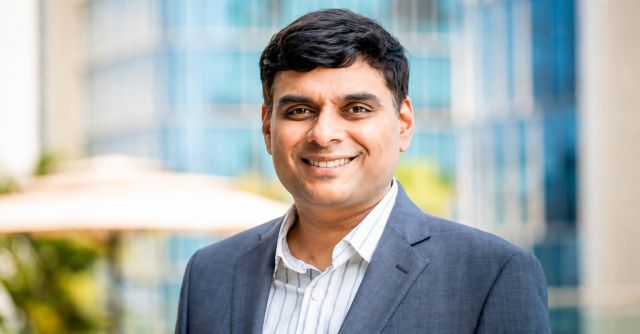
New Delhi, Aug. 5 -- Artificial intelligence is moving beyond customer-facing applications at e-retailer Myntra to become a core layer powering engineering, seller operations, merchandising, supply chain and enterprise decision-making. The Flipkart-owned fashion marketplace says the technology has accelerated software releases, shortened seller onboarding time, improved customer conversions and enhanced operational efficiency. In this interview, Pramod Adiddam, Chief Technology Officer, Myntra, discusses where AI is creating the biggest business impact, how the company balances in-house development with foundation models, and the technology priorities shaping the next phase of digital commerce. Edited excerpts.
Myntra has integrated AI into customer discovery, seller onboarding and engineering. Which AI application has had the biggest business impact?
The biggest impact has come from embedding AI across customer, seller and operational journeys rather than treating it as a standalone capability. AI-powered discovery and personalisation have contributed to around 20% higher conversions in 2026 YTD versus 2024, with 90% of monthly active users now experiencing personalised search.
Across the business, AI has increased feature rollout velocity by 40%, reduced seller onboarding from 15 days to 1-2 days, shortened catalogue go-live from one day to four hours, and cut supply-chain simulations from two days to one hour. BIRA, our internal business intelligence assistant, delivers an estimated 10x productivity improvement for certain analytical workflows, while our AI-led catalogue platform generates 400-600 product videos daily.
In customer operations, Meera, our Agentic AI assistant, handles around 30% of customer queries, enabling teams to focus on more complex interactions. The broader opportunity is to make customer journeys more relevant, help sellers grow faster and improve operational efficiency while maintaining strong governance.
"The strongest impact has come from embedding AI across Myntra's ecosystem-from customer, seller and operational journeys-rather than treating it as a standalone application."
What proportion of Myntra's AI stack is built in-house versus powered by foundation models, and how do you decide whether to build or buy?
Our AI stack combines proprietary capabilities with foundation models depending on the use case. Core capabilities, including personalisation, recommendations, search relevance, size and fit, seller intelligence and enterprise context, are built internally. Foundation models complement these in areas such as reasoning and natural language interaction.
For example, BIRA's semantic layer and enterprise data integration are built in-house, while Claude powers natural language interpretation. Gemini helps generate personalised size explanations. Build-versus-buy decisions depend on strategic importance, data sensitivity, scalability, latency, cost and speed to market, with human oversight built into every workflow.
Size and fit remain major drivers of returns in fashion e-commerce. How are you measuring the effectiveness of your AI recommendations?
We measure success through customer and business outcomes rather than a single accuracy score. Our in-house model combines purchase history, retained and returned sizes, brand-specific sizing patterns, garment dimensions and customer preferences. Today, the size recommendation layer covers around 85% of the eligible apparel portfolio, with personalised explanations delivered in under two seconds. We track recommendation coverage, user adoption, search latency and A/B test results, with early experiments already showing lower size-related returns. We are also combining size recommendations with explainability and fit visualisation, while retaining human moderation to ensure quality.
Myntra reports a 40% improvement in engineering rollout velocity through AI. How much of your software development lifecycle is now AI-assisted?
AI now supports almost every stage of the software development lifecycle-from coding and testing to deployment, monitoring and diagnostics. Developers use AI for code generation, pull request reviews, test creation, bug detection and security checks. We have also built specialised AI agents for design validation, deployment verification, performance profiling, app health monitoring and crash analysis. These capabilities have increased feature rollout velocity by 40%, allowing engineers to spend more time on architecture and platform resilience. However, developers retain final authority over architecture, security and code acceptance alongside production deployment.
"AI can identify an issue or suggest a fix, but engineers decide whether it is correct, secure and ready to implement."
As AI agents evolve, do you see Myntra transitioning into an autonomous shopping assistant?
Fashion commerce is shifting from keyword-led search to intent-led, conversational shopping. Customers increasingly begin with a broader need, such as an occasion or complete look, rather than a specific product. We've mapped more than 1,500 shopping concepts to better understand these needs. Capabilities such as Maya, personalised search, algo store, occasion-based looks, mix & match and size & fit intelligence are helping customers move more seamlessly from discovery to purchase. As these capabilities evolve, they will connect more parts of the shopping journey. However, customer choice will remain fundamental. Technology should simplify decisions, not make them.
Beyond AI, what are Myntra's top technology priorities over the next two to three years?
Our priority is to build a technology foundation that is scalable, resilient and secure. Platform engineering, including automated testing, deployment systems, performance engineering and observability, remains a key focus, alongside real-time data infrastructure for merchandising, seller operations and fulfilment. We are also investing in intelligent fulfilment across demand forecasting, inventory visibility, network planning and dynamic routing. Cybersecurity, privacy and responsible technology governance remain foundational as we combine intelligence with resilience, trust and disciplined execution.
"Fashion is personal and expressive, and technology should expand possibilities and simplify decisions rather than make choices on behalf of the customer."
Published by HT Digital Content Services with permission from TechCircle.