
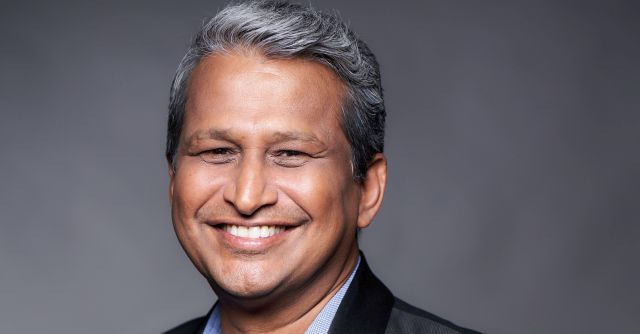
New Delhi, July 1 -- Artificial intelligence may dominate boardroom conversations today, but for Dr Manivannan Selvaraj, Founder and Managing Director of Kauvery Hospital, the real challenge isn't AI - it's data.
"Everybody wants to jump onto the AI bandwagon," he told TechCircle in an exclusive interview. "But unless you have clean, structured data, AI is only going to give you wrong decisions."
That philosophy is driving Kauvery Hospital's latest digital transformation. The multi-speciality healthcare chain has implemented Oracle Fusion Cloud Applications across finance, procurement, inventory and product management, replacing fragmented finance operations that struggled to keep pace with the group's rapid expansion.
The next phase will include Enterprise Performance Management (EPM) and Fusion Data Intelligence (FDI) to strengthen forecasting, analytics and planning.
For Selvaraj, the transformation was less about replacing software and more about changing how the organisation makes decisions. "Earlier, every discussion started with, 'Is this data correct?' or 'Why doesn't this number match?'," he said. "Now the conversation shifts to, 'What should we do with this data?' That is the biggest cultural change."
The need for change became more urgent as the Chennai-based hospital expanded from three to 12 facilities, with four more planned over the next year. While the group's home-grown hospital management system handled clinical operations efficiently, finance operated separately, creating multiple integration points, inconsistent master data and lengthy reconciliation cycles.
"The hospital operations were happening in one system and finance in another. There were too many integration touchpoints and the masters weren't the same," Selvaraj said. "Every audit brought similar observations. We realised we needed a platform that could scale with the business."
After evaluating multiple enterprise platforms for nearly a year, Kauvery chose Oracle Fusion Cloud. "We found several products were comparable on functionality," Selvaraj said. "But Oracle had an edge in areas like AI capabilities and where the platform is headed." Instead of moving every hospital workflow into the ERP, Kauvery retained procurement execution within its hospital management system while
Oracle manages finance and accounting. General ledger entries flow automatically into Oracle, reducing integration complexity while creating what Selvaraj calls "a single source of truth."
The implementation took around five months after months of preparation involving data cleansing, user acceptance testing and employee training.
"We identified digital champions in every department and refused to compromise on testing," he said. "Earlier we would say we completed UAT, but without enough real transactions. This time we insisted every scenario had to be validated before going live."
Although the deployment has been live for only two months, Selvaraj expects operational efficiency to improve by 20%-30% as manual finance processes disappear.
"Invoice processing, reconciliations, duplicate payments-these consumed enormous time," he said. "Now invoices are captured through OCR, manual intervention comes down, duplicate masters are eliminated and finance teams can rely on one version of the truth."
The cloud platform is also expected to support Kauvery's expansion strategy. Four new hospitals are scheduled to open over the next year, and Selvaraj wants every new facility to function as a plug-and-play operation without significantly expanding the corporate finance team.
"We should be able to add a new hospital without rebuilding our back office every time," he said. "That's where cloud really changes the operating model."
AI, however, remains the next frontier. Kauvery plans to use AI for budgeting, procurement forecasting and identifying revenue leakages across its network. The hospital group is planning nearly Rs.1,000 crore of medical equipment purchases over the next four years, making predictive planning increasingly important.
"Forecasting is where we see immediate value," Selvaraj said. "Today, collecting the data itself is difficult. Once the data is structured, AI can help us predict purchases, optimise budgets, identify outliers and even detect revenue leakages."
Technology spending has already begun reflecting that shift. Kauvery's IT budget has grown from around 1% of annual turnover to roughly 2.25%, a change Selvaraj attributes partly to lessons learnt during the pandemic, when digital systems enabled the hospital group to continue operations remotely.
"Earlier, people would happily buy a Rs.2 crore CT scanner but hesitate over software," he said. "COVID changed that mindset completely. Today, departments ask us for more digital capabilities. Our challenge is keeping up with demand."
For Selvaraj, the lesson extends beyond healthcare. "AI is becoming accessible to everyone," he said. "The real competitive advantage won't come from buying AI. It will come from having clean data and knowing the right questions to ask."
Published by HT Digital Content Services with permission from TechCircle.