
New Delhi, March 18 -- As Indian businesses expand into global markets, cross-border payments are becoming both a growth opportunity and a potential risk. Fraud, chargebacks and authentication failures can create unpredictable costs-especially for small and mid-sized exporters operating on tight margins. Increasingly, payment companies are turning to artificial intelligence to move beyond reactive fraud detection towards predictive, real-time risk management.
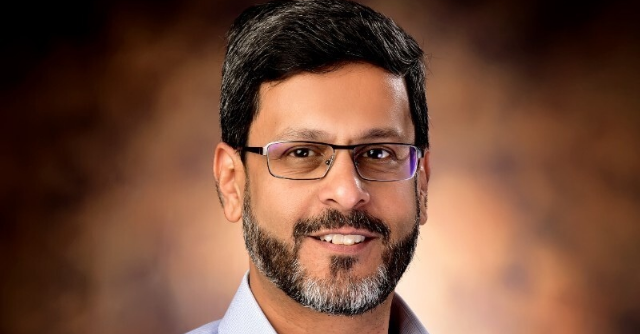
In an interaction with TechCircle, Ramkumar Venkatesan, Chief Technology Officer at Cashfree Payments, a Bengaluru-headquartered fintech firm, discusses how AI-powered risk systems are reshaping cross-border payments and helping exporters expand globally with greater confidence.
Indian exporters selling overseas often bear a disproportionate burden from cross-border chargebacks, according to Venkatesan, who noted that a single dispute can cost several times the original order value once product loss, international shipping, dispute fees and foreign exchange reversals are factored in.
"For SME exporters operating on margins of 10% to 35% across sectors such as textiles, jewellery, electronics and handicrafts, even a few chargebacks can significantly erode profits," he said. "This unpredictability can discourage smaller businesses from entering high-growth global markets."
To tackle this challenge, Cashfree has built RiskShield, an AI-powered risk engine designed to evaluate transaction risk in real time-before payment authorisation is completed.
"Historically, fraud detection has been reactive. Suspicious activity is identified after the transaction takes place or once a dispute is raised," Venkatesan said. "AI allows us to move that intelligence earlier in the payment flow."
RiskShield uses a mix of supervised and unsupervised machine learning models trained on historical fraud patterns, dispute outcomes, transaction metadata, device intelligence and behavioural signals. The system also incorporates corridor-specific attributes to identify patterns unique to different markets and payment ecosystems.
"Static rule-based systems cannot keep up with how quickly fraud tactics evolve," he said. "Machine learning allows models to continuously learn and adapt across geographies, currencies and payment methods."
A key challenge in cross-border payments is balancing fraud prevention with customer experience. Legitimate international transactions can often appear unusual to issuing banks, increasing the chances of false declines. "In cross-border commerce, preventing fraud cannot come at the cost of rejecting genuine customers," Venkatesan said.
To address this, RiskShield builds a contextual risk profile for each transaction using multiple data signals, including device fingerprinting, behavioural biometrics, network intelligence and merchant transaction history. The platform also integrates external intelligence frameworks such as AML blacklists and regulatory-grade inputs like the Financial Fraud Risk Indicator (FRI) and the Digital Intelligence Platform (DIP) developed by India's Department of Telecommunications.
"Combining proprietary AI models with ecosystem-level signals allows us to make more accurate risk decisions," he said. Rather than applying uniform authentication rules, the platform uses adaptive strategies that vary based on transaction risk, geography and merchant trust history. Machine learning models continuously recalibrate these signals to distinguish genuine customers from suspicious activity.
"The aim is to maintain strong fraud controls while keeping the checkout experience frictionless for legitimate buyers," he said. As Indian exporters expand into newer markets, risk management also needs to become more geographically aware. Payment behaviour, regulatory environments and fraud typologies differ widely across regions, he noted. "You cannot apply a one-size-fits-all model globally."
Cashfree is investing in corridor-aware AI models that learn from transaction outcomes and issuer feedback across markets such as the GCC beyond the UAE, parts of Africa, Southeast Asia, Eastern Europe and Latin America. Another focus area is explainable AI, which helps merchants understand why a transaction has been flagged as high risk.
"Exporters need visibility into these decisions," Venkatesan said. "Explainable AI helps them identify what signals triggered the alert and what steps could improve approval rates."
The platform is also designed to respond quickly to emerging fraud trends, with models regularly retrained using fresh transaction data, dispute outcomes and issuer responses. "This enables the system to detect new fraud patterns early-for example, shifts from card-based fraud to alternative payment methods or emerging threats in specific geographies," he said.
Beyond fraud detection, Venkatesan said AI is evolving into a broader decision-support tool for cross-border commerce. Predictive analytics can help SMEs identify which markets, payment methods and customer segments carry higher risk or operational costs. "That insight can influence pricing strategies, payment method choices and market expansion plans," he said.
AI-driven models can also help businesses anticipate dispute volumes, manage reserves and plan entry into new markets with greater clarity. Looking ahead, Venkatesan expects complementary technologies such as tokenisation and blockchain to further strengthen AI-led risk frameworks. Tokenisation reduces exposure by ensuring sensitive payment credentials are not stored or transmitted unnecessarily, while blockchain can improve traceability in multi-party cross-border transactions.
"When combined with AI-driven systems, these technologies can improve transparency and strengthen trust across payment flows," he said. As global commerce becomes increasingly digital, such risk infrastructure will play a critical role in enabling Indian exporters to scale internationally.
"For exporters, risk protection is no longer just about preventing fraud," he said. "It's about giving businesses the confidence to expand into new markets while protecting their margins."
Published by HT Digital Content Services with permission from TechCircle.