
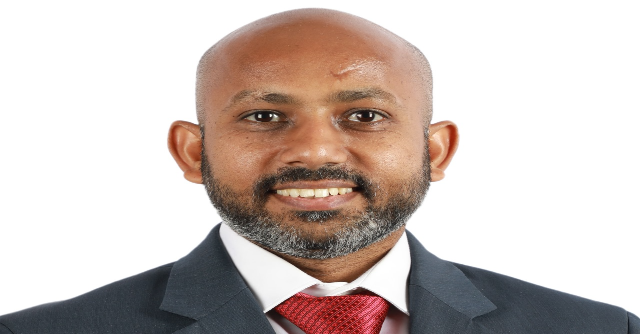
New Delhi, Feb. 12 -- As enterprises reassess their cloud strategies amid rising costs and complexity, the conversation around data infrastructure has shifted from cloud-first to hybrid approaches. In a conversation with TechCircle, Amit Chaurasia, founder and CEO of Dataneers, a data infrastructure company, discussed how Indian enterprises are navigating storage modernization, Kubernetes adoption challenges, and the impact of AI on infrastructure priorities.
Edited excerpts:
What's the biggest architectural shift in cloud-native storage you've seen in the past five to seven years?
Object storage started gaining popularity around 2016-17. Earlier, we talked a lot about object storage on OpenStack, and as a technology, it was in a very nascent stage. However, with the advent of the cloud, people started adopting it. It seemed very easy because customers wanted to get rid of the old headache of managing on-premise storage.
People were hooked onto the cloud in the early days of COVID when there was a lockdown. So, 2019, 2020, 2021, 2022, it had a dream run. However, by the end of 2022 and into 2023, people started realizing the headwinds. People started looking at the negatives or the cons of storing data on the cloud-the egress cost, the security, the availability, and so on.
From 2023, we have been seeing a trend of cloud repatriation where most of the workloads that had moved to cloud blindly started relooking at the whole journey, and some of them even wanted to come or started contemplating coming back from cloud to on-prem. If you divide the seven years into two segments, the first three and a half years were all cloud-everybody thought cloud was the answer to all problems. And now people have become wiser. People want to not just completely blindly trust cloud storage, but they want to be data-wise, and they are looking at multiple options.
Hybrid is one. They are redesigning their application to reduce the egress cost. They are looking at how they can leverage the cloud; however, have total ownership of themselves.
How mature and reliable is Kubernetes today for running databases, storage-heavy systems, and AI workloads in real production environments?
It is certainly a challenge. That's where organizations like us come into the picture. The major drawback for adapting stateful applications to Kubernetes was the lack of uniformity and standardized storage plugins and modules, which, to a large extent, CSI (Container Storage Interface) drivers have mitigated.
Organizations are adopting Kubernetes with stateful applications. However, there is a lot of work to be done when it comes to its adoption. We are working towards that, where we can help customers adopt stateful applications in Kubernetes. There are some organizations that help back up the workload that is running on Kubernetes. But certainly that challenge remains.
That is the reason why most of the adoption has remained only in the enterprise. We do not see much Kubernetes adoption in the mid-market area. SMEs are completely off it. They do it either for experimental purposes, but I haven't seen much adoption of Kubernetes in smaller sectors. Mid-market people are evaluating and there are very small deployments. Enterprises are going full on with Kubernetes deployments. In fact, your UPI platform, which is across India length and breadth, is running on Kubernetes on-prem with stateful applications.
Data movement is expensive and slow, which is critical for AI. How are you helping enterprises with this? How should teams design for compute near data and control egress in hybrid or multi-cloud setups?
First of all, we do not work with hyperscale enterprises. Most of the modeling and the inferencing that is happening is in the enterprise area, where they have the resources and support from the hyperscalers to run their models, train their models, which requires significant CPU and storage resources. Most of them have the credits or the required support to get those things ready. Perhaps that work is already done by most of the enterprises.
However, when it comes to designing applications or ensuring that egress is taken care of, we ask our customers to get us involved with the design of the application or the agents that they're writing, so that we can help them in optimizing the throughput that they want from the datasets. Given that we are Google Cloud partners, we work with the Google teams on the costing structure.
When it comes to on-premises infrastructure, that's where we bring our technical expertise, where any optimization is required. The availability of the right infrastructure is still in the making. There are a lot of startups working towards optimizing the workload and the storage when it comes to AI workload. I can name a few-DDN is working towards that, Vega is another. There are a few startups in Pune that are working on how data can be moved quickly from memory to GPUs, and GPU starvation can be reduced. However, they're all in progress.
We work with the architects to design the system in a way where we are optimizing the throughput as far as we can, provided the underlying hardware system.
Where do you see the industry trend shifting? Are Indian enterprises moving towards hybrid, multi-cloud, or cloud-first again? What's driving this direction-cost, compliance, latency, or vendor strategy?
Hybrid is certainly the way to go. But it all depends on the hyperscalers. Some hyperscalers support people who want to go hybrid. At the same time, it also depends on what network deal they're getting, because if they are being charged for each byte that is read across the cloud, then customers are a little cautious.
We see two trends. One is multi-cloud and hybrid-and by hybrid, I mean on-prem also. As I said, Kubernetes is the de facto fallback if somebody wants to have an on-prem system, because of the kind of elasticity and scalability that customers need. Kubernetes has all the boxes checked, provided they can manage the maintenance and upkeep of the Kubernetes cluster. On the cloud, certainly, we are looking at a multi-cloud hybrid. And there are some customers who are combining Kubernetes on-prem and cloud.
How is AI changing the data infrastructure priorities in India?
When it comes to capital expenditure, people want to spend more on GPUs. And now they've started looking at storage as a must-have, and optimized storage as a must-have. You must be looking at the increase in prices of RAM and SSDs. That's the reason-people have started investing in these kinds of resources. It was a very specific, very niche phenomenon. Now it is getting more generalized.
Where do you see infrastructure spending increasing in the next 6-12 months-storage modernization, security, or AI compute?
Earlier, the awareness of data storage and the need for data storage optimization was very limited because it was always a niche area. Customers hardly had storage in mind because it's always sitting underneath the layers. People would want to talk about the CPU and the RAM. The latency or the throughput was discussed only by a few tech folks. When it came to storage, only the capacity mattered.
But now it is not just the capacity-it's the optimization of storage, the network throughput, and its combination with the network. Storage is definitely in the limelight. However, given its technical nature, most people leave it to the experts. This is one trend I'm seeing now-people have started talking more about storage and going to a deeper level when they want to ask questions. Otherwise, the discussion would just stop at "What is the capacity? What is the per TB cost?" That is a shift we are looking at in the last year.
Another thing is that many other players-the resellers who would just sell vanilla boxes-have now started taking an interest in smaller companies like us. Earlier in the mid-market, two players would dominate. Now companies are talking to us; they want to know what we are building, and so on.
What we are looking at is a complete upheaval of the way we have known the world so far, especially after the announcement by the Anthropic CEO with the launch of their coworkers module. We are looking at major changes-we might see the world turning upside down when it comes to IT infrastructure and IT applications.
The way I look at it, application development might go completely the agentic way. There will not be manual folks designing workflows and automating workflows-agents would be developed to automate those workflows. That will have far more intelligence in the workflow. And given that the agents will be faster and far more efficient, the need for efficient storage is going to rise. The need for storage and network which is blazingly fast will rise. And that is where we see a bottleneck also, because the hardware has not yet matched up to that level.
If you look at it, there is a GPU crunch worldwide. Google is giving competition to Nvidia for their GPUs. Google has its GPUs-I don't know whether it has come to India as of now. Google is still maintaining its presence with the Google Cloud VMs. Given that applications are going to demand more and more storage and more bandwidth, it remains to be seen how we can cater to those demands.
Where is your company positioning itself in all these trends? Where are you investing the most, and why-AI infrastructure, resilience engineering, DevOps automation?
We are predominantly an engineering company. While the age of services companies might not be completely over, the respect that an IT service company would get is far less than it was earlier, when we started. Given that we had technical expertise, we quickly got up and created a product. We have entered the market, we are getting customer interest, and we are getting resellers interested in taking our product ahead.
What differentiates us is that we are one of those few Indian companies that have a Make in India storage product. In the small and mid-market segment-and as I said, I'm not targeting enterprise-95% of the data storage market is dominated by two major players, Synology and QNAP. We are trying to capture that market.
These companies are only selling the product, and their footprint in India is only through resellers who may or may not have the technical expertise to cater to the exact needs of the challenges that the customer might face six months down the line regarding bandwidth and performance. Our forte is that we have built the product, and we have the technical expertise. We can provide customized solutions and meet the customized needs of Indian customers within the cost budget that they have, which most players operating from abroad might not be able to provide, or they will charge a premium if customization is required.
As I said earlier, the hardware is not ready. Hardware is still struggling to match the needs. So, where is the scope? The scope is in the software. And that's where we have the expertise and the forte to extract the juice from the software, which can eventually get more from the hardware. That is where our niche is.
Published by HT Digital Content Services with permission from TechCircle.