
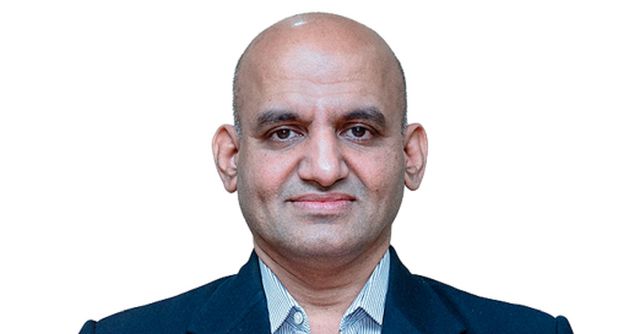
New Delhi, May 18 -- As India accelerates into an AI-first era, the gap between enterprise ambition and infrastructure reality is widening. In a conversation with TechCircle, Sajiv Nair, Chief Technology Officer and Chief Information Officer at ESDS, an Indian sovereign cloud provider, offers a candid assessment of where businesses are falling short, what the next wave of enterprise IT demands looks like, and why sovereign infrastructure is no longer a niche concern but a boardroom imperative. Edited Excerpts:
India is entering an AI-first era. Where do you think most enterprises are still unprepared?
Today, most enterprises are trying to layer AI onto legacy systems that were never designed to handle the latency, compute intensity, or data volumes that AI demands. Beyond hardware, the deeper challenge is data quality and governance. Add to this a critical shortage of in-house AI operations talent, and organisations end up investing heavily in AI tools while struggling to translate that investment into consistent, measurable business outcomes.
Is data sovereignty now becoming a boardroom issue for BFSI and government clients?
Two years ago, data sovereignty was largely a compliance checkbox. Today, it is a strategic risk conversation at the board level. For BFSI institutions and government bodies, the question is no longer just where data is stored, but who controls it and what happens if geopolitical conditions change. Regulatory frameworks such as the DPDP Act and RBI guidelines have reinforced this urgency, making Indian jurisdiction and localised data control a non-negotiable boardroom priority.
How are AI and GPU-intensive workloads changing the way ESDS designs its data centres and cloud infrastructure?
GPU-intensive workloads have fundamentally redefined data centre design priorities. Traditional infrastructure was built for CPU throughput and storage density. AI demands something entirely different: high bandwidth memory, ultra-low latency interconnects, significantly higher power density per rack, and purpose-built cooling architecture. At ESDS, we are actively re-engineering our data centre infrastructure to meet these demands, with a strong focus on thermally efficient designs, high-density compute environments, and sovereign-grade AI-ready frameworks built specifically for Indian enterprise requirements. The scale of this shift is reflected globally - according to Gartner, worldwide AI spending is projected to reach around $2.5 trillion in 2026.
ESDS talks about an autonomous AI-powered cloud. What does that actually look like in practice?
In practical terms, it means the cloud observes, learns, and acts without human intervention. The global autonomous AI market was valued at $6.8 billion in 2024, growing at a CAGR of 30.3 per cent between 2025 and 2034, reflecting how rapidly enterprises are shifting toward self-managing infrastructure. Our platform, Enlight - a patented, vertically auto-scalable cloud - dynamically allocates compute based on real-time demand, eliminating over-provisioning costs while preventing underperformance. With embedded AI-driven anomaly detection and autonomous remediation, irregularities are resolved before they impact operations, reducing cloud management overhead by 40 to 50 per cent by 2027.
What are enterprise customers asking for today that they weren't asking for two years ago?
The most notable shift is demand for AI-ready infrastructure as a baseline expectation, not an optional consideration. Customers now want end-to-end solution ownership, where cloud orchestration, workload management, and compliance controls are delivered as a unified experience rather than assembled from disconnected tools. Security is no longer a layer added afterwards - enterprises expect it embedded by design from day one. According to Flexera's 2025 State of the Cloud Report, 85 per cent of organisations identify managing cloud spend as their single biggest challenge, reinforcing that cost transparency and operational control are now boardroom-level priorities.
In a hyperscaler-dominated market, where can an Indian cloud player like ESDS genuinely differentiate?
Differentiation cannot be built on price alone. At ESDS, our edge lies in sovereignty, proximity, and accountability. Data hosted on foreign platforms - primarily US-hosted hyperscalers - remains accessible under the US CLOUD Act unless stored on a truly sovereign platform. ESDS is MeitY empanelled, STQC certified, and fully compliant with the DPDP Act, RBI guidelines, and MeitY/NIC frameworks. With over 1,300 clients, including 152 BFSI institutions and 115 government bodies, and 99.95 per cent uptime across five Indian data centres, we offer complete accountability under Indian law.
Which technology trend in enterprise IT is overhyped right now, and which one is underestimated?
Generative AI as a universal enterprise solution is overhyped. Gartner predicts that over 40 per cent of agentic AI projects will be cancelled by the end of 2027 due to escalating costs, unclear business value, and inadequate risk controls. Most organisations still need structured, domain-specific AI before pursuing large language models. On the underestimated side, two areas stand out: AI-driven infrastructure observability and end-to-end security. Organisations are so focused on deploying AI that designing it right, securing it properly, and measuring real business outcomes often get overlooked. The AIOps market alone is projected to reach $11.8 billion by 2034.
Published by HT Digital Content Services with permission from TechCircle.