
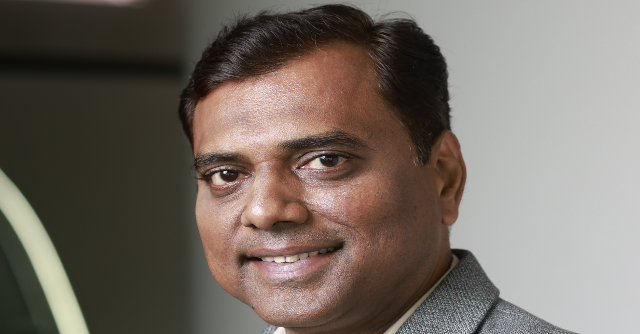
New Delhi, May 15 -- India's manufacturing sector is undergoing a quiet but decisive transformation. What once lived in the domain of IT departments and engineering teams has now become a boardroom conversation. Swapnil Deosthali, Head of Digital Industries at Siemens Limited, spoke to TechCircle about where Indian manufacturers stand today, what global customers now demand, and why the convergence of sustainability and digital technology is reshaping how factories operate and compete.
Edited Excerpts:
Manufacturing digitalization has become a boardroom priority in India. What changed most, global competition, supply-chain disruptions, sustainability goals, or something else?
It is a combination of all these factors. However, the biggest shift is that digitalization is no longer seen as an IT or engineering initiative, it is now a business survival imperative. Boards are asking hard questions: How quickly can we adapt? How resilient is our factory? How efficiently are we using energy, materials, and assets? Digital technologies have become the enabler to answer those questions in real time, which is why digitalization has moved firmly into the boardroom.
Where does Indian manufacturing stand today on the Industry 4.0 maturity curve compared to markets like Germany or China? Are we still piloting, or moving toward scale?
Many Indian manufacturers have already completed successful pilots, especially in areas like automation, energy monitoring, and predictive maintenance, and are now scaling these solutions across plants, lines, and networks. The positive shift in India is that leading manufacturers are now asking the right questions about standardization, interoperability, and digital continuity, which signals a move from experimentation to structured, scalable transformation.
Digital twins are getting a lot of attention. Where are manufacturers actually seeing measurable ROI today?
The most immediate and measurable ROI from digital twins is coming from engineering efficiency and operational optimization. Manufacturers are seeing benefits in reducing commissioning time by virtually testing production lines before physical installation, minimizing downtime through simulation-based optimization and what-if analysis, and improving first-time-right quality, especially in complex or customized production environments. In many cases, digital twins are helping companies avoid costly errors before they happen, which delivers returns far faster than traditional trial-and-error approaches on the shop floor. The ROI becomes even stronger when digital twins are connected across design, engineering, operations, and service - not used in isolation.
Siemens Xcelerator promises digital continuity across the manufacturing lifecycle. What real-world problem does it solve for companies dealing with legacy systems and fragmented operations?
The real-world problem is fragmentation. Most manufacturers operate with a mix of legacy machines, multiple automation systems, disconnected software tools, and siloed data. This makes it extremely difficult to gain a consistent, end-to-end view of operations. Siemens Xcelerator addresses this by providing a modular, open digital business platform that connects existing systems rather than forcing a rip-and-replace approach. It enables digital continuity - from design and engineering to production, operations, and service - while respecting the reality of brownfield environments. In simple terms, it helps companies move from islands of automation to integrated, data-driven manufacturing, without disrupting ongoing operations.
Industrial AI is one of the biggest trends right now. Where is AI already creating real value on the shop floor, and where is the hype ahead of reality?
Industrial AI is already delivering real value in narrow, well-defined use cases such as faster design, development and engineering, predictive maintenance, quality inspection and anomaly detection, and energy optimization and process stabilization. These applications work because they are built on reliable industrial data, domain knowledge, and physics-based understanding - not just algorithms. The hype tends to get ahead in areas where AI is expected to deliver insights without sufficient data quality, process understanding, or integration into operations. AI does not replace engineering expertise - it augments it. Successful manufacturers are approaching Industrial AI pragmatically: solving specific problems, scaling proven use cases, and embedding AI into daily operational workflows.
As India positions itself as a global manufacturing alternative under the China+1 shift, what are global customers expecting from Indian factories today that they weren't expecting five years ago?
Global customers now expect consistency, transparency, and traceability - not just cost competitiveness. Five years ago, the focus was largely on price and capacity. Today, customers expect digitally enabled quality control, end-to-end traceability of materials and processes, predictable delivery and resilience to disruptions, and compliance with sustainability and ESG requirements. Digitalization is becoming a qualifier, not a differentiator. Indian manufacturers who invest in digital transformation are better positioned to meet these expectations and integrate into global supply networks.
How closely linked are sustainability and digitalization now? Are manufacturers seeing real business value from energy optimization and resource efficiency initiatives?
Sustainability and digitalization are now inseparable. Manufacturers are seeing real, tangible business value from energy monitoring and optimization, resource efficiency and waste reduction, and data-driven decision-making for emissions reporting and compliance. What has changed is that sustainability is no longer just about reporting - it is about operational performance. Digital tools provide the transparency needed to reduce costs, improve efficiency, and meet regulatory requirements simultaneously. In many cases, energy and resource optimization initiatives are among the fastest-payback digital investments manufacturers can make.
Looking ahead, what will define the most successful manufacturing companies in India over the next 5-10 years?
The most successful manufacturers will be defined by three capabilities: digital continuity across engineering, production, and operations; data-driven decision-making embedded into daily workflows; and agility and resilience, enabled by flexible automation and digital tools. They will not view digitalization as a one-time project, but as a continuous capability that evolves with the business. Ultimately, successful Indian manufacturers will be those who combine deep engineering excellence with digital intelligence, positioning themselves as reliable, sustainable, and high-quality partners in global value chains.
Published by HT Digital Content Services with permission from TechCircle.