
New Delhi, July 14 -- Agritech company Cropin on Tuesday launched OrbitAI, describing it as the world's first agentic AI platform for food and agriculture. This launch marks the company's biggest bet yet on autonomous decision-making, combining its proprietary agricultural intelligence with Google's AI infrastructure.
Built on Google Cloud's AI stack, including Gemini Enterprise Agent Platform, Agent Development Kit, BigQuery and WeatherNext, OrbitAI combines Cropin's 15 years of agricultural intelligence spanning 103 countries, more than 400 crops, 10,000 crop varieties and over one billion acres of farmland. Unlike conventional AI assistants trained primarily on internet data, the platform is designed to reason across crops, weather, soil, climate, geospatial information and supply chains before recommending actions to enterprises, governments and farmers.
For Cropin, the launch represents a shift from AI that answers questions to AI capable of reasoning and supporting complex agricultural decisions.
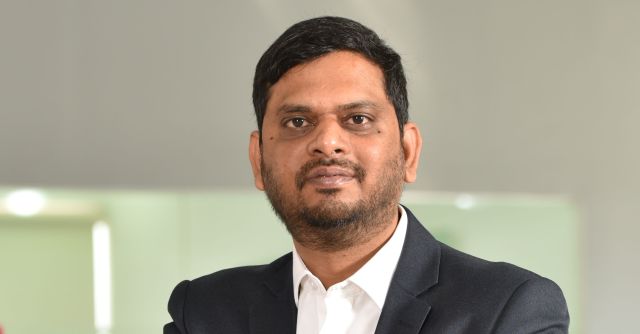
"Agentic AI is not a buzzword for us. OrbitAI is not simply answering questions. It is designed to reason across crop, climate, weather, soil, geospatial, agronomic and supply chain data, then support specific decisions across the food and agriculture value chain," Krishna Kumar, Founder and CEO of Cropin, told TechCircle.
The platform is designed to answer complex agricultural queries, from predicting soybean supply risks for procurement teams to identifying disease outbreaks for farmers using real-time weather and crop intelligence. Rather than acting as a chatbot, OrbitAI orchestrates specialised AI agents that analyse multiple datasets simultaneously before recommending a course of action.
Google Cloud accelerates global scale
Cropin has spent over a decade building agricultural intelligence, but Kumar said Google Cloud's AI ecosystem has significantly expanded both the scale and capabilities of the platform. "Could Cropin have built agricultural intelligence without this partnership? Yes, that is what we have been doing for more than a decade," he said.
"But Google Cloud helps us accelerate OrbitAI from a powerful domain intelligence platform into a global agentic AI platform that can scale across enterprises, governments and food systems."
According to Kumar, while Cropin contributed proprietary crop intelligence, predictive models, field data, and enterprise workflows, Google Cloud provided the AI infrastructure through Gemini models, the Agent Development Kit, BigQuery, and WeatherNext to process large-scale agricultural, climatic, and geospatial datasets in real time.
Tackling AI's biggest problem - Trust
As enterprises increasingly deploy generative AI, hallucinations and unreliable outputs remain among the biggest concerns, particularly in sectors such as agriculture where inaccurate recommendations can directly affect crop yields, procurement and food security. Kumar argues that agriculture requires a fundamentally different AI architecture from general-purpose chatbots.
"The hallucination problem in general AI stems from training on uncurated internet data where accuracy is unverifiable," he said. OrbitAI instead grounds every recommendation in structured agricultural datasets, satellite observations, predictive crop models, field data, climate signals and verified outcomes accumulated over 15 years.
Every crop season feeds fresh ground-truth data back into OrbitAI, allowing predictions to be validated against actual outcomes and continuously improving model accuracy, he said.
Perhaps more importantly, the platform is designed to explain every recommendation rather than simply generate responses. "OrbitAI doesn't just say 'high risk'. It tells you why, which variables are driving the assessment and what the confidence interval is. Trustworthy AI, in my view, is AI that shows its work."
Enterprises first, farmers eventually
Although OrbitAI has been built to serve everyone from sourcing managers to smallholder farmers, Cropin expects the first wave of adoption to come from enterprises, governments and financial institutions.
These organisations make high-value decisions around sourcing, insurance, sustainability, underwriting, production planning and food security, where even marginal improvements in prediction and timing can translate into significant economic value, Kumar said. At the same time, the company believes advanced agricultural intelligence should no longer remain confined to specialist software used by experts.
"A farmer, agronomist, researcher, sourcing manager or sustainability officer should be able to ask a question about a farm, crop, region or asset and get a trusted answer in natural language," Kumar said.
"Our long-term vision is much broader: anyone on the planet who needs trusted intelligence about crops, farms and food systems should be able to use OrbitAI."
The next AI battle will be domain intelligence
One of OrbitAI's distinguishing features is its open architecture. Rather than locking customers into a proprietary AI ecosystem, Cropin has made OrbitAI available as a Model Context Protocol (MCP) server, allowing enterprises using GPT, Claude, Llama, Mistral or proprietary AI models to access Cropin's agricultural intelligence as a native tool. For Kumar, this reflects a broader shift in enterprise AI itself. "The foundation model race is effectively over as a competitive differentiator," he said.
"The top five or six foundation models are now comparable in reasoning capability. What isn't commoditised-and what cannot be commoditised-is the intelligence layer sitting above those models. The data, the domain models, the feedback loops, the ground truth. That's the moat."
He compares Cropin's role to Bloomberg's position in financial markets. "We become intelligence infrastructure, not an application competing for wallet share."
Summing up his view of enterprise AI's next phase, Kumar said: "Foundation models are the engine. Domain intelligence is the fuel. You can have the best engine in the world, but without the right fuel, it doesn't know which field to go to."
Beyond agriculture
Beyond agriculture, Cropin sees OrbitAI as the first step towards a much broader AI strategy. Over the next decade, Kumar expects AI agents to work alongside satellites, drones, IoT sensors, farm machinery and enterprise systems to automate crop monitoring, yield forecasting, insurance, sourcing, sustainability reporting and food supply-chain decisions.
"The future is not just dashboards. It is a connected intelligence layer where satellites observe, sensors capture, predictive models forecast, agents reason, and workflows trigger action," he said.
Looking ahead, Kumar said the company ultimately wants to build what it calls a "Verified Physical World Intelligence" layer spanning agriculture, water, land use, carbon, climate risk and natural resources.
"OrbitAI is the beginning," he said. "It allows us to move from fragmented data and expert tools to trusted, predictive and actionable intelligence for the physical world."
The launch comes as enterprises increasingly move beyond AI pilots towards domain-specific AI agents capable of executing complex workflows instead of simply generating text or code. As organisations seek measurable business outcomes, vendors are increasingly betting that industry-specific intelligence, rather than generic AI models, will become the next competitive differentiator.
Published by HT Digital Content Services with permission from TechCircle.