
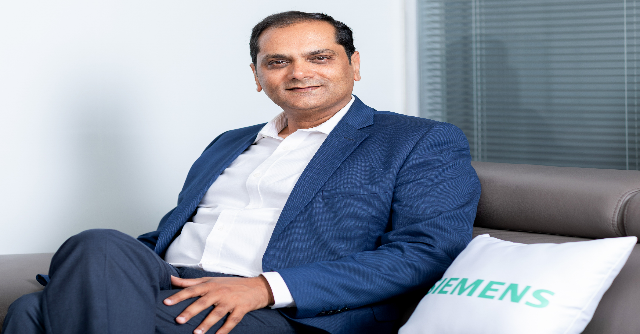
New Delhi, Dec. 16 -- AI in engineering has been part of strategy decks and shopfloor conversations for years, but the real shift is only visible now: with how deeply it is starting to shape everyday workflows. McKinsey's latest survey found that around two-thirds of organisations are now regularly using generative AI, nearly double the figure just ten months earlier, with software development one of the most active use cases. In boardrooms and engineering labs across the globe, the conversation has shifted. The initial dopamine hit of Generative AI is fading, replaced by a more pragmatic, harder-edged question: How do we engineer this at scale without breaking our existing infrastructure? We have transitioned from experimenting to operationalising. As we look toward the 2026 horizon, I see four distinct shifts that will separate the digital leaders from the laggards. From chatbots to agentic engineering workflows In 2025, the market moved from asking LLMs to generate code snippets to deploying Agentic AI-systems capable of pursuing complex goals. Gartner identifies Agentic AI as a top strategic trend for 2025, predicting that by 2028, 15% of day-to-day work decisions will be made autonomously by agents (up from 0% in 2024). For 2026, this changes the definition of "engineering." We are observing a shift toward AI-integrated workflows where human engineers act as architects, while agents handle execution. Industry patterns are moving from simple automation to autonomy. The future is not just a single AI tool, but a multi-agent system where one agent writes code, another critiques it for security, and a third optimizes for cloud costs. India: Global innovation grid for Industrial AI For decades, the narrative on India was cost arbitrage. That story is dead. Today, India is the Global Capability Centre (GCC) Capital of the World. According to Nasscom and Zinnov, India now hosts over 1,700 GCCs, with the focus shifting aggressively toward Engineering R&D (ER&D). These centres are co-designing platforms running global reliability programmes and building reference architectures for industrial AI. In manufacturing, India's push toward "Industry 4.0" is accelerating the adoption of AI, machine learning, and automation on the shopfloor, with digital technologies projected to account for a rising share of manufacturing expenditure.
At the same time, Indian manufacturers are experimenting with digital twins for factories and logistics networks, using high-fidelity simulation to optimise layout, energy consumption, and throughput before anything is physically built or modified. This mix of scale, cost-value advantage, and domestic complexity is powerful. Engineering teams in India are solving for price-sensitive, infrastructure-constrained markets with high expectations on reliability, making the country a natural proving ground for futuristic industrial tech and sustainable engineering solutions. The most forward-looking organisations already treat their Indian centres as co-innovation hubs where customers, partners, and internal teams collaborate on next-generation platforms, rather than as low-cost factories for legacy work. Architecture for the 'Post-PoC' era As organisations scale from pilots to production, the cracks in legacy architecture are showing. You cannot run a sports car engine on a go-kart chassis. The "PoC theatre" of isolated experiments is giving way to rigorous architectural demands. For 2026, three non-negotiables are emerging:
Interoperability: AI agents need to traverse the IT/OT divide. A predictive model is useless if it cannot talk to the legacy SCADA (Supervisory Control and Data Acquisition) system on the factory floor. Cyber Resilience by Design: AI expands the attack surface. We are seeing a massive push for "Digital Trust" frameworks. Security can no longer be a gatekeeper at the end of the release cycle; it must be embedded in the agent's logic. Data Sovereignty: With tightening regulations, the days of throwing all data into a single global lake are over. We are architecting data-sovereign infrastructures where AI models travel to the data, not the other way around, assuring compliance with local residency laws. Safety and reliability: When AI systems influence how much power a plant draws, how a conveyor behaves, or which maintenance task is deferred, guardrails cannot be an afterthought. Engineering platforms need assurance layers that validate AI recommendations against physics, safety rules, and operating limits before actions are taken.
Designing for failure, not just for the ideal demo, will separate robust deployments from fragile ones. Rise of "AI-Native" team Perhaps the most human shift of all is in talent. The demand for specialised, single-discipline roles is evolving into a demand for multi-disciplinary talent. The engineering team of 2026 is "AI-native." This does not just mean they know how to code; it means they possess "hybrid" skills, such as a mechanical engineer who can deploy Python agents to optimise thermal simulations, or an electrical engineer proficient in data modelling. Essentially, they know how to validate probabilistic outputs and how to integrate "imperfect" AI suggestions into "perfect" safety-critical systems. This requires a culture of continuous experimentation and a rapid feedback loop, something that's being aggressively cultivated by organisations. We are seeing a move toward what industry analysts call the "Polymath Engineer": talent capable of bridging the physical and digital worlds. These teams are comfortable framing problems for AI, validating probabilistic outputs, and integrating them into safety-critical systems. Road ahead The transition to 2026 is about the disciplined application of engineering principles to the powerful new tools, not simply discovering buzzwords. It is about moving from the excitement of the experiment to the reliability of engineering reality. Technology leaders now need to stop viewing AI as a feature to be added, and start viewing it as the substrate upon which your future engineering platform will be built.
Published by HT Digital Content Services with permission from TechCircle.