
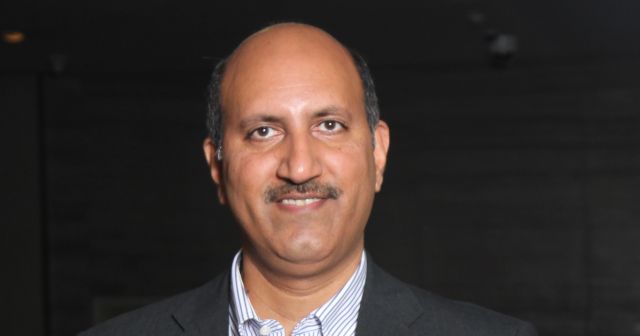
New Delhi, July 20 -- India's AI boom is reshaping the country's data centre industry, with demand shifting rapidly from traditional cloud hosting to GPU-intensive infrastructure for AI training and inference. Betting on this transition, Bharti Airtel's data centre arm Nxtra plans to expand to 1 GW of AI-ready capacity over the coming years, as enterprises and hyperscalers accelerate AI deployments, Nxtra's Chief Executive Officer Ashish Arora said.
The company is expanding its hyperscale footprint across Mumbai, Chennai, Bengaluru, Pune, Delhi NCR and Hyderabad, while strengthening its edge computing network to support AI, cloud and data localisation requirements.
"We are not just scaling data centre capacity, we are building an integrated digital infrastructure ecosystem that is intelligent by design, with modular architecture, high-density racks, liquid-ready cooling and low-carbon resilient power to support GPU-intensive AI workloads," Arora told TechCircle.
India's data centre market is undergoing a structural shift as enterprises move beyond conventional cloud infrastructure towards AI-driven computing that requires specialised facilities with high-density power, advanced cooling and low-latency connectivity.
According to Arora, demand is being driven by both hyperscalers and enterprises across financial services, e-commerce, healthcare, manufacturing, gaming and the public sector.
"We are witnessing a fundamental shift in data centre demand. Enterprises are moving beyond traditional virtual machine-based workloads to AI-driven computing, increasing the need for GPU-ready infrastructure, low-latency connectivity and robust security frameworks," he said.
Nxtra is positioning itself as an integrated digital infrastructure provider by combining AI-ready data centres with Airtel's nationwide fibre network, global subsea cable connectivity, cloud, cybersecurity and edge infrastructure.
The company currently operates 15 hyperscale data centres and more than 120 edge facilities across 65 cities, giving it a distributed infrastructure footprint beyond the country's largest metropolitan markets.
Arora said edge computing is becoming increasingly important as AI applications require real-time processing closer to end users. "Edge is no longer a side play for us. It is a strategic asset that allows us to support emerging workloads such as AI inferencing, industrial automation and real-time analytics while extending enterprise-grade digital infrastructure into tier-2 and tier-3 cities," he said.
Alongside expansion, the company is placing sustainability at the centre of its growth strategy. Nxtra has committed to achieving net-zero emissions by 2031, is a member of RE100, and has aligned its climate targets with the Science Based Targets initiative (SBTi). Its upcoming facilities will be built to at least IGBC or LEED Gold standards and will incorporate liquid-ready cooling, AI-driven thermal optimisation and energy-efficient power systems.
"We are demonstrating that rapid growth and responsible operations can go hand in hand. As AI adoption accelerates, our focus is to ensure the infrastructure powering these workloads is both high-performing and sustainable," Arora said.
The company is also deploying AI across its own operations to improve uptime and efficiency through predictive maintenance, automated remediation and digital twin-based optimisation of power and cooling infrastructure.
According to Arora, the use of AI has improved operational metrics such as uptime, mean time to repair and power usage effectiveness, while reducing operating costs and carbon emissions.
With competition intensifying from global and domestic data centre operators, Arora said Nxtra's biggest differentiator is its integration with Airtel's wider digital infrastructure ecosystem.
"Customers no longer want just racks and megawatts. They want a trusted partner that can build, deploy and operate mission-critical AI workloads securely, sustainably and at scale. That is where our integrated platform differentiates us," he said.
Arora added that faster approvals for land and power, greater availability of renewable energy, and continued investments in grid infrastructure would be critical to sustaining India's next phase of AI-led data centre growth.
India's data centre industry is entering a new phase of expansion, fuelled by hyperscale cloud investments and AI infrastructure demand. According to Cushman & Wakefield, the country has emerged as the second-largest data centre market in Asia-Pacific with 1.6 GW of operational capacity and another 3.1 GW under development, as operators race to build AI-ready facilities for GPU-intensive workloads..
Published by HT Digital Content Services with permission from TechCircle.