
New Delhi, April 14 -- The global business process management (BPM) industry is being reshaped by a convergence of AI-led automation and nearshore expansion-and mid-sized firms are moving faster than legacy incumbents to capitalise on this shift. Mumbai-based global BPM provider1Point1 Solutions' March acquisition of Costa Rica-headquartered Netcom BCC reflects this trend, as companies look to combine intelligent automation with geographically distributed delivery to win larger, more complex global contracts.
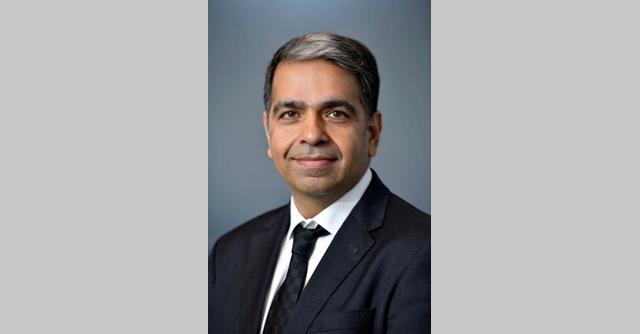
In an interaction with TechCircle, Akshay Chhabra, Chairman & Managing Director, 1Point1 Solutions said the foray into Latin America is less about incremental expansion and more about building a globally relevant, AI-first BPM platform at speed. "AI and nearshore are coming together in a very structural way. Clients want both-intelligent automation and proximity to their end markets," he said.
LatAm push sharpens global play
Netcom BCC is a banking-focused BPM specialist with capabilities across collections, KYC and verification workflows, fraud monitoring, customer onboarding and credit administration. The acquisition significantly strengthens 1Point1's presence in the BFSI segment, which remains its largest vertical globally.
"The deal gives us immediate access to marquee clients, including relationships with seven US banks," Chhabra said. "For us, this is not just geographic expansion-it's about building domain depth in regulated markets."
For a company looking to scale in North America, the acquisition compresses the time required to establish credibility. It also opens up Costa Rica, Panama and Colombia as nearshore delivery hubs, enabling closer alignment with US clients in terms of time zones, compliance and language capabilities.
Chhabra said Latin America will be central to the company's next phase of growth, particularly as enterprise spending on AI-led transformation accelerates across BFSI, healthcare, e-commerce and manufacturing. "Nearshore locations in LATAM give us a strong advantage in terms of time-zone alignment and cultural proximity for North American clients," he noted.
Financially, the deal is expected to materially accelerate growth. Netcom brings in about $25 million in revenue, with consolidation effective March 1, 2026. Nearly half of its delivery capacity is currently underutilised, providing headroom to scale without proportional cost increases.
The company expects its US pipeline over the next 12-18 months to drive efficiencies in sales and administrative costs, translating into margin expansion for new engagements.
AI-first model drives efficiency gains
The acquisition also aligns with a broader shift in 1Point1's positioning-from a traditional BPM vendor to an AI-first services platform. The company has been investing in a horizontal AI stack supported by centres of excellence across verticals such as banking, healthcare, travel and automotive.
"We are among the few BPM players investing meaningfully in AI to move beyond manpower-led delivery," Chhabra said. "Our focus is on solving multiple business problems within a single architecture while improving both margins and outcomes for clients."
Early deployments indicate tangible gains. The company claims to have delivered 20-40% efficiency improvements for enterprise clients, including higher first-call resolution rates and lower operating costs. In some cases, replacing legacy IVR systems with AI-led workflows has resulted in significant cost compression, pointing to a structural shift in BPM economics.
The Netcom acquisition further strengthens this approach by adding domain expertise in regulated BFSI environments, alongside an expanded North American client base.
Multi-shore strategy becomes core to growth
At the same time, the deal reinforces the growing importance of multi-shore delivery models in large outsourcing contracts. Enterprises are increasingly seeking a mix of onshore, nearshore and offshore capabilities to balance cost, resilience and regulatory requirements.
"A multi-shore model is no longer optional-it's a strategic imperative," Chhabra said. "Clients want the flexibility to operate across geographies while ensuring efficiency and risk management."
For 1Point1, this translates into a delivery network spanning India, the Philippines and now Latin America, positioning it to compete for larger and more complex global mandates.
India, however, continues to remain central to this strategy. The company is positioning its India operations as a specialised talent hub focused on high-value work, including AI development and complex process management, while nearshore centres handle collaboration-heavy and customer-facing roles. This hybrid model reflects a broader industry shift, with India evolving from a cost centre to a capability hub.
Beyond this transaction, 1Point1 has been steadily expanding its global footprint. The company operates nine delivery centres across five continents, serves over 100 clients and employs more than 8,000 professionals worldwide. It is also pursuing a disciplined inorganic growth strategy, with plans to evaluate two to three acquisitions over the next three to four years, particularly targeting companies with North American exposure, multilingual capabilities and access to Fortune 1000 clients.
The timing of these moves aligns with a wider industry inflection point. As enterprises move from AI pilots to scaled deployments, vendor selection criteria are shifting. Clients are increasingly favouring partners that can combine automation with domain expertise and global delivery, rather than pure-play AI firms or traditional outsourcing providers.
Published by HT Digital Content Services with permission from TechCircle.