
New Delhi, Sept. 23 -- It was the best of times, it was the worst of times, it was the age of wisdom, it was the age of foolishness, it was the epoch of belief, it was the epoch of incredulity, it was the season of light, it was the season of darkness, it was the spring of hope, it was the winter of despair."
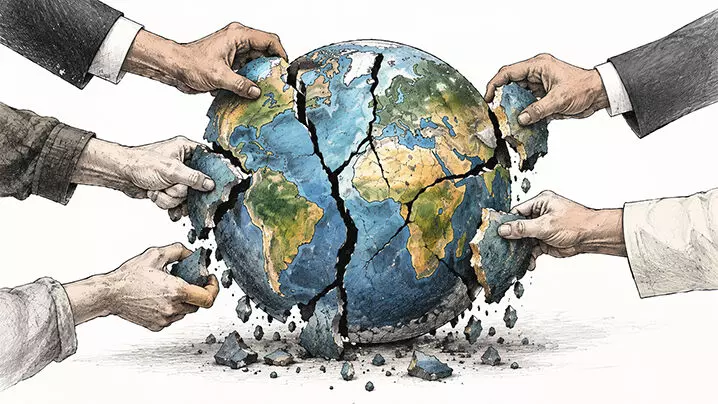
So wrote Charles Dickens in his epochal book, A Tale of Two Cities, in the year 1859 to describe the trials and tribulations of a set of characters against the backdrop of the French Revolution in the cities of London and Paris. Almost two centuries later, the above phrase succinctly sums up the situation in much of the world today: North America, South America, Europe, Asia, the Far East, China - wherever you look, these contradictory positions seem to loom large. All the long-held beliefs in the traditional concepts of the rule of law, secularism, democracy, federalism, separation and consequential balance of powers, and multilateralism seem to have been turned on their heads. The effects of climate change, the rich-poor divide and fiscal indebtedness are visible. The mad hunt and colonisation for mineral resources in places like Africa and South America affect the global population sitting elsewhere, as has been flagged through independent research by prestigious institutions such as The Lancet, the NRDC, UN bodies (predominantly the IPCC), the Royal Society, etc. It is as if the world is in an existential crisis. Most affected of all are global citizens, especially those who are marginalised, displaced, poor or caught in a war zone. The old order, along with its goalposts, seems to be changing most rapidly. At the same time, the shape of the new order remains to be defined. Technological advancements in space exploration, artificial intelligence, medical sciences and so on are rapid. But all of this comes at a cost to humanity and a fragile ecosystem, which will potentially impact the future of the younger generations.
How did we reach this situation, and how do we break the impasse? Just as one cannot predict the future, no one has any ready answers. One thing is certain: we human beings have created this mess, and only we can pull ourselves out of it. In ancient times, feudal lords, kings, emperors and their subordinate authorities were guided by a set of wise men and women, strategists, generals, chemists and religious leaders in their courts. Much depended on the ruler, of course; his or her balance, empathy and judgement were as important as military and strategic skills. Fast-forward to this day, when countries and their elected and self-declared leaders have many more tools at their command - from satellites, the latest gadgetry and futuristic technology to the most potent tool by far, Artificial Intelligence. Yet, the most basic tool - that is, public opinion - is ignored. And it so happens that the guides to many of our leaders are predominantly oligarchs, and the driving factor behind most decisions is business and commercial interests. This phenomenon happened during the colonisation of much of what was then condescendingly termed the Third World, and it is happening yet again. We are standing at the cusp of a monstrous wave, one that can make or mar humanity. How we crest this wave will decide our future and will require all the ingenuity at our command.
In the past, we have seen countries and nations pull themselves back from the brink, though, sadly, many have not been able to recover from the abyss. At times, it was overwhelming public opinion or public voice, and at other times, saner counsel advanced by courts, multilateral forums, etc., that finally prevailed in remedying the situation. In countries that eschew the democratic path, public movements can turn violent, leading to civil war and the loss of lives, property and national resources. Moreover, poor democratic practices in many other countries have led to the implementation of hasty decisions dictated by ego and commercial considerations rather than genuine public interest. There is no longer any elbow room for discussion, debate or thought followed by informed decision-making. Nations that practised authoritarian regimes have successfully rebuilt their economies. There is apparent progress and prosperity, but no one knows what lies below the surface. Others have tried, with varying degrees of success, to maintain economic progress - a difficult task in an era when geopolitical events and economies are interconnected.
Yet, the human being is, by nature, a curious, thinking person. Inevitably, when the situation gets tough and goes beyond tolerance, questions begin to surface. The obvious facts are noticed, and rhetoric is ignored. A good leader listens to public opinion and recalibrates strategy. However, when questions are not answered, it signifies a Hobbesian and narrow political outlook. Public perception is a strong commodity; akin to market sentiment, it can make or mar the political fortunes of a person or a political party. The uncertainty of the world awaits a decision either way.
Views expressed are personal. The writer is a former IRS officer
Published by HT Digital Content Services with permission from Millennium Post.