
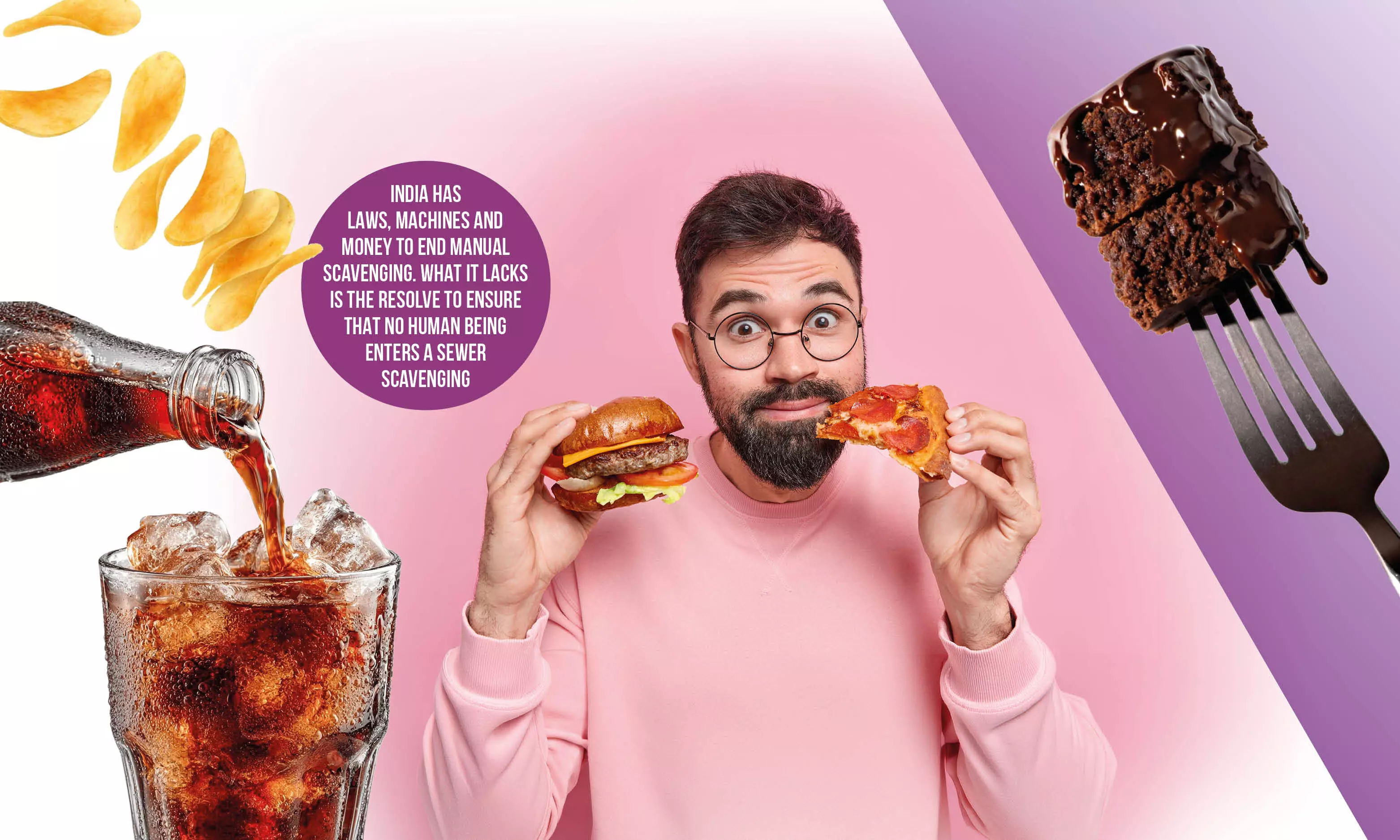
New Delhi, Sept. 26 -- Something strange has happened to the Indian dinner table. We have never had so much advice about healthy eating. We count calories. We discuss protein. We buy air fryers. We watch videos about gut health. We know that sugar is bad, salt is bad and sitting for 10 hours a day is probably not a great lifestyle strategy either. But all this said, at 9.47 pm, we order a burger, fries, cola and dessert because cooking is simply too much work. The food arrives before the guilt does.
This is not merely about junk food. It is about the way urban India is changing its relationship with food. For generations, food involved time. Someone bought vegetables, cleaned them, chopped them, cooked them and served them. Today, for a rapidly growing urban population, food can be selected, paid for and delivered without anybody having to leave the sofa. That is an extraordinary achievement of technology. It is also becoming an extraordinary test of self-control.
Cities Changed First
The transformation is particularly visible among young Indians who have moved to cities for college, jobs and opportunity. A student living in Delhi, Bengaluru, Mumbai or Hyderabad typically does not possess a kitchen, a mother who calls at 8 pm asking about dinner, or the inclination to cook after ten hours of classes or work. Why cook dal when something makhani is just 20 minutes away? Why chop vegetables when a pizza is one tap away? Why make breakfast when there is a cafe nearby?
There is nothing terribly wrong with any of this. Food delivery has made life easier and created an enormous food-service economy. The food-services sector is projected to sizzle even more, with online delivery already reaching crores of urban users. The problem begins when convenience stops being an occasional indulgence and becomes the default. That matters. A pizza on Friday is dinner. A pizza because you cannot be bothered to cook is a lifestyle.
Unseen Calories
The trick of junk food is that it rarely looks as dangerous as it is. A packet of chips looks small. A soft drink hardly looks dangerous. A burger arrives neatly wrapped. A dessert comes in a sexy container that appears innocent. Vivacious almost. The calories, however, are not interested in looks.
Take a regular cola. Its nutritional information says it contains 44 calories and 10.6 grams of added sugar per 100 ml. A 600 ml bottle, therefore, contains 264 calories and 64 grams of sugar. That is an astonishing amount of sugar to consume without having eaten anything. And then there is the burger. The fries. The dip. And perhaps the dessert you ordered because the app suggested it.
Any meal can become a calorie mega-event while the eater continues to think of it as 'just dinner'. This is one reason the global obesity story has become so serious. WHO says 43 per cent of adults worldwide are overweight, with 16 per cent living with obesity. More than 250 crore adults are overweight, including 89 crores with obesity.
India is not at the same level of adult obesity as Western countries. Not yet. WHO's estimates put age-standardised adult obesity in India at 7.3 per cent, with obesity among 5-19-year-olds at 3.4 per cent. But that should not be mistaken for immunity.
Indian Paradox
India has always had a peculiar relationship with food. We have a grand culinary tradition built around grains, pulses, vegetables, spices, fermented foods and home cooking. Yet, the urban diet is acquiring another layer: packaged snacks, sugary beverages, instant foods, fried fast food and processed meals.
WHO has specifically examined the growth of ultra-processed foods in India, noting the changing food habits and the easy availability of processed convenience foods. Its India study links rapid urbanisation and changing lifestyles with dietary shifts towards foods high in energy, fats, free sugars and salt.
This is not limited to India; the world is eating differently. Urbanisation, industrial food production, cool marketing, larger portions, sedentary work and convenience have created a global environment in which unhealthy food is easier to obtain than healthy food. WHO identifies unhealthy diet and physical inactivity among the major risk factors driving non-communicable diseases. Those behaviours cause raised blood pressure, high blood glucose, abnormal blood lipids and obesity.
The problem then is not that we are eating too many samosas. It is that the entire ecosystem around us makes unhealthy choices the easiest ones.
That Bloody Sofa
Food gets much of the blame because it is visible. The sofa, not so much. A person can consume 1,000 calories and then spend the next six hours barely moving. The modern office makes this easy. Sit in a car. Sit at work. Sit in a meeting. Sit in a cab. Sit at home. Then order dinner. Then sit some more.
Physical inactivity is now a global malaise. Around 31 per cent of adults worldwide are insufficiently active today. The body, sadly, has not received the memo that sitting is now a full-time occupation. This is where junk food and sedentary lifestyles become troublesome. The issue is not one burger or a packet of chips. It is the combination of high-energy food, low physical activity and repetition. The occasional indulgence is indulgence. But when indulgence becomes infrastructure, there's trouble.
Price of Convenience
There is another wretched part to this story. It is not hunger alone that makes us order junk food. It is laziness too. We could cook. We could walk to the market. We could make a sandwich. We could eat fruit. We could carry lunch from home. But that evil phone is already in our hand. And those apps know exactly what we like.
The delivery revolution has removed the small amount of effort that once stood between us and our cravings. The fridge no longer has to chill our dinner. It only has to have cold water while dinner travels towards us. That is incredibly convenient. It is also commercially brilliant. The more we order, the more normal ordering becomes. And the more normal it becomes, the less it feels like an indulgence.
Who Foots the Bill?
This is where the story gets interesting. The cost of unhealthy eating is not paid at the restaurant; it is paid later. By the individual. By the family. By the healthcare system. By the health-insurance ecosystem. An insurance company does not look at the pizza and send you a higher premium invoice. But insurers do care about the diseases that unhealthy diets and inactive lifestyles drive: diabetes, cardiovascular disease, hypertension, obesity and other conditions. And chronic disease is expensive.
India carries a substantial non-communicable disease burden. WHO's 2025 India profile says NCDs accounted for 49 per cent of deaths in India in 2021, or about 64 lakh deaths. That number should make the discussion about junk food less amusing. Because the real price of a Rs 299 meal may not be Rs 299. It can include years of medication, diagnostic tests, hospitalisation, lost working days, reduced productivity and higher household healthcare expenditure.
The bill simply comes later. But this does not mean India needs a national ban on burgers, pizzas, cola or French fries. Life without the occasional guilty pleasure would be miserable. Food is pleasure. Food is culture. Food is social. And sometimes, after a bad day, a plate of fries is the reason to continue living. The problem is proportion. And India is quite low in its storage of this mental commodity.
Perhaps that is the conversation India needs. We have become good at delivering food. We now need to get better at deciding what should be delivered to us. The app does not ask whether you have already had two burgers this week. The cola does not ask whether you have exercised. The pizza does not care whether your cholesterol is up. The bill adds up. And by the time it arrives, it does not come on a scooter with a free delivery facility. It comes with a doctor, a prescription and a health-insurance premium. And that is when that Rs 299 meal starts looking frightfully expensive.
Published by HT Digital Content Services with permission from Millennium Post.