
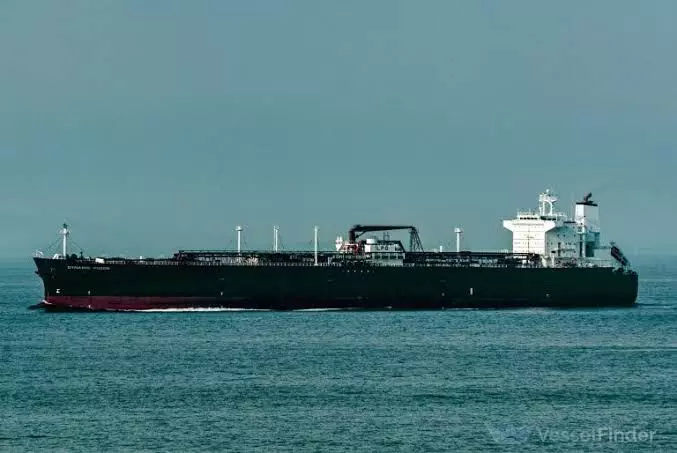
NEW DELHI, March 14 -- Two Indian ships carrying LPG from the Gulf countries crossed the Strait of Hormuz early on Saturday, raising the number of Indian vessels safely passing through the war-hit, narrow shipping lane to three.
The remaining 22 ships on the west side of the strait are on standby as the Indian government engages with governments in the region for ensuring their safe passage. LPG carriers Shivalik and Nanda Devi are now headed to Mundra and Kandla ports in Gujarat, Rajesh Kumar Sinha, Special Secretary in Ministry of Shipping, told a media briefing.
The vessels are carrying 92,700 tonnes of LPG, he said adding Shivalik is likely to reach Mundra on March 16 and Nanda Devi is likely to dock at Kandla the next day.
Besides the safe passage being an important milestone for Indian diplomacy, the cargo they are carrying is considered critical as shipping constraints had impacted cooking gas LPG supplies.
India imports 60 per cent of its LPG needs, with 85-90 per cent of this being sourced from Gulf countries like Saudi Arabia and the UAE who use the Strait of Hormuz as transit for shipping oil and gas to users. The strait has been effectively closed since the first week of March.
The two ships were among the 24 stranded on the west side of the strait since the war broke out in the region.
Besides, four others were stranded on the east side. One of them, an India-flagged oil tanker, Jag Prakash, carrying gasoline from Oman to Africa, crossed the war-hit strait on Friday.
Sinha said of the 22 remaining Indian-flagged vessels on the west side, six are LPG vessels, one is a liquefied natural gas (LNG) carrier, four are crude oil tankers, one is carrying chemical products, three are container ships and two are bulk carriers.
Hundreds of ships had been stranded in the narrow sea lane between Iran and Oman since the US and Israel launched attacks on Iran, and Tehran targeted the region in retaliation.
"Several of our ships remain on standby in the Gulf region. We propose to continue to remain in touch and coordinate with all the concerned countries to ensure a safe and unimpeded transit for them in our effort to ensure our energy security," MEA spokesperson Randhir Jaiswal said at the briefing.
Sinha said in all 28 Indian flags vessels were stuck - 24 on the west of the Strait of Hormuz and four on the east.
Amid a growing domestic gas supply crunch triggered by global tensions in the aftermath of West Asia conflict, disruptions in cooking gas availability are being reported across several parts of Asia, with the ripple effects being felt in India as well.
Restaurants, hotels, and households in many cities, towns, and rural areas are struggling to secure regular LPG supplies. Meanwhile, commercial LPG cylinder distribution has begun in 29 states and Union Territories, while authorities have stepped up raids across the country to curb hoarding and black-marketing, a senior oil ministry official said.
Sujata Sharma, Joint Secretary in the Ministry of Petroleum and Natural Gas, said panic booking continues to rise despite the fact that there are enough stocks available to meet domestic household requirements of cooking gas LPG.
India, she said, has adequate crude oil inventories, and domestic refineries are operating at full capacity, ensuring sufficient availability of petrol and diesel across the country.
Sharma said domestic LPG supply is being prioritised even as the government continues to closely monitor the situation amid the prevailing geopolitical developments that hampered energy supplies from the Gulf countries.
"The situation is a matter of concern for all of us, but we are ensuring that household consumers do not face inconvenience. Domestic consumers have been prioritized, and LPG cylinder supply is being ensured for them," she said.
However, LPG refill bookings have surged sharply due to panic buying by consumers. "Yesterday, the number of bookings was about 75 lakh, and it has now increased to around 88 lakh. This is nothing but panic booking," she said, urging consumers to book cylinders only when required.
Pre-war, daily bookings totalled around 55 lakh and oil marketing companies delivered 50 lakh cylinders per day. While the cylinder deliveries remain the same, bookings have surged.
She also clarified that booking restrictions are linked to the time gap between two deliveries. "In urban areas, there is a minimum gap of 25 days between the last delivery and the next booking, while in rural areas the gap is 45 days. If consumers try to book before this window, the booking will not take place," she said.
To ease supply pressure, the government has ramped up domestic LPG production from 10 per cent to 31 per cent as of now.
The official added that state-run GAIL has met city gas distribution (CGD) operators and asked them to provide piped natural gas (PNG) connections to commercial consumers facing LPG supply constraints. Consumers who can easily shift from LPG to PNG - both domestic and commercial - are being encouraged, she said.
Joint teams in Maharashtra and Rajasthan have carried out inspections, while in Uttar Pradesh, authorities conducted surprise checks at around 1,400 locations. People continue to queue up at the gas agencies in different states, including the national Capital, as they struggle to get a refill.
The Ministry of Petroleum and Natural Gas said that it has barred consumers with piped natural gas connections from retaining, obtaining or refilling domestic LPG cylinders under an amended supply order.
Published by HT Digital Content Services with permission from Millennium Post.