
New Delhi, March 21 -- There is a new desire in India, one that is being matched by a mad wheel-lust on Indian roads. The car-buyer has changed; he mutated quietly at first, then all at once. Barely a few moons ago, buying a car was a careful financial decision; families debated mileage, resale value and service costs above all else. The car itself was modest. Most were humble hatchbacks, usually white or silver, bought to serve the practical purpose of moving a family of four and their bags from A to B.
That era has galloped into history.
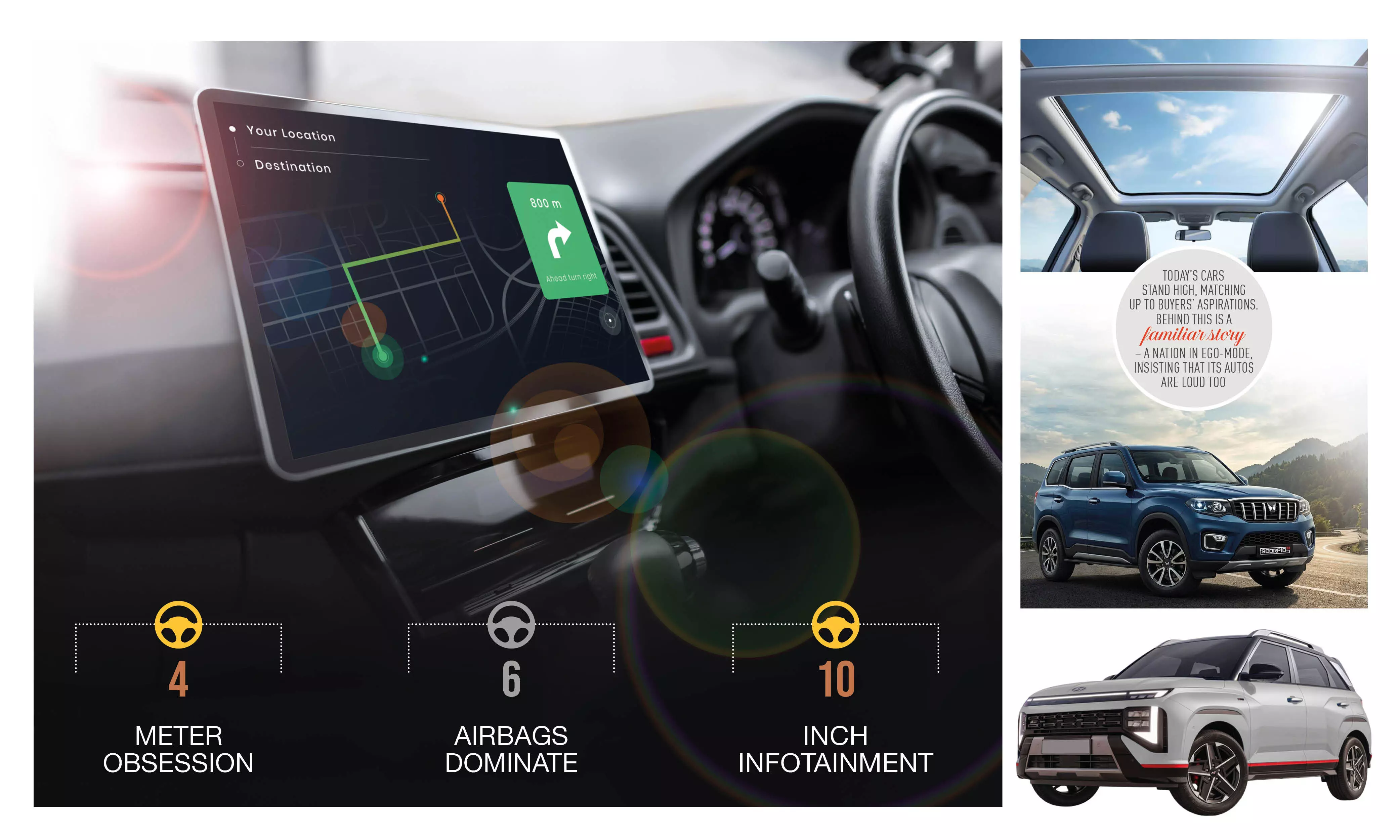
Showrooms today parade something singular yet distinct; a pageant of tall SUVs with touchscreens, panoramic sunroofs and alloy wheels that look more at home on the autobahn than on India's crowded streets. The car is no longer transport; it is symptomatic theatre. And what's being witnessed is not a change in product preference, but a psychological shift. Car-buyers are driven as much by aspiration and image as by practicality. The automobile has become an expression of success, identity and lifestyle - one that rolls along but gathers no moss. And automakers are merrily whistling in.
Big is Better
The most visible symbol of this transformation is the takeover of the SUV. Just a few years back, SUVs were niche vehicles; bulky machines driven by politicians, industrialists or working-class people who needed them for rough terrain or carrying goods. Today, SUVs dominate the market, having grown enough to command over half of passenger vehicle sales.
Even cars that are essentially hatchbacks are being dressed up to look like SUVs. They sit higher, wear chunky body cladding and sport aggressive grilles. Marketing departments call them 'crossovers', but the pitch to buyers is unmistakable. Bigger is better. Because that is what the buyer needs, everyone is told. Part of the appeal is practical. India's roads are unpredictable landscapes where potholes can appear suddenly and speed-breakers resemble masochistic challenges. A car with visibly-high ground clearance offers psychological comfort, if nothing else.
Practicality alone cannot explain the craze, though. The SUV has become the new status symbol of the middle-class. A taller vehicle means prosperity, confidence and an 'arrival' in professional and personal life. In the hierarchy of modern aspiration, the hatchback suddenly feels like yesterday's car(t).
Crazy Feature Fever
Alongside the obsession with size, another phenomenon has swept through the Indian market: feature mania. A decade ago, large touchscreens, digital instrument clusters, connected-car technology and advanced driver assistance systems were limited to luxury vehicles. Today, they appear in mid-range models. They have to, if they need to sell.
Sunroofs, once an indulgence, have become a magnet. Salespeople admit that buyers insist on them, even if they rarely ever open them. The feature has become shorthand for modernity and premium appeal. The new-age car-buyer expects technology everywhere - wireless smartphone connectivity, seamless voice commands, multiple cameras, ambient lighting and ever-larger displays.
More often than not, the features list has become more important than the mechanical qualities of the car. Conversation has shifted from horsepower and suspension to screens and warning sensors. The automobile, in effect, is becoming another consumer electronic device, albeit one with wheels.
Social Signals Galore
Given this transformation, peer pressure plays an understated yet powerful role. India's car purchases have always carried social meaning. The new car parked outside the house is visible, standing proof of familial and professional progress. In the age of social media, this symbolism has only intensified. Cars appear in Instagram posts, wedding processions and late-night reels celebrating 'New Car Delivery'. The automobile has become a prop in the performance of success.
This has subtle but significant consequences. Buyers frequently compare vehicles not just on price and reliability, but also on the mental stimuli they send to friends, relatives and colleagues. A larger car, a known brand and badge, or a panoramic sunroof, can metamorphose perceptions dramatically. The car has become less about transport and more about a signal. The Indian buyer, like car consumers everywhere, wants not just mobility. he craves recognition too.
Car Firms Happily Oblige
Automakers have been quick to read the mood. Manufacturers that once focused heavily on compact hatchbacks are launching SUVs in every imaginable size and price bracket. From entry-level micro-SUVs to premium flagship models, the segment has exploded with options. Design language has also changed. Cars now look more muscular and dramatic - sculpted body panels, oversized grilles and LED lighting signatures designed to stand out in traffic.
Inside the cabin, screens dominate dashboards that once held simple analogue dials. Connectivity features are marketed as aggressively as engines. In effect, the Indian automobile industry has become part-psychologist and part-fashion designer, interpreting the evolving desires of the consumer and translating them into metal, glass and software. The shift is so dramatic that even once conservative manufacturers are reinventing themselves to remain relevant and appear cool.
Mature, But Wannabe
What does this transformation mean for India's automotive future? It signals a market that is rapidly maturing. As incomes rise and credit becomes more accessible, buyers want to be seen moving up the value chain. The car is thus no longer just a tool for transport; it is a lifestyle statement.
This trend sparks risks too. Larger vehicles consume more space on crowded roads. Feature-heavy cars are more expensive, pushing entry-level buyers out of the market. And the increasing complexity of vehicles raises questions about long-term reliability and ownership costs. Yet, the shift is not one that can be dismissed away as vanity. Aspiration is a powerful engine of economic growth. The desire for better, bigger and more sophisticated products is pushing industries to innovate and compete.
The auto market is only reflecting a broader societal transformation: from cautious frugality to brash ambition. Cars are bigger, screens brighter and aspirations louder. But beneath it all is a familiar story. A nation in ego-mode, resolute that its vehicles should echo the decibel of its wannabe dreams.
Published by HT Digital Content Services with permission from Millennium Post.