
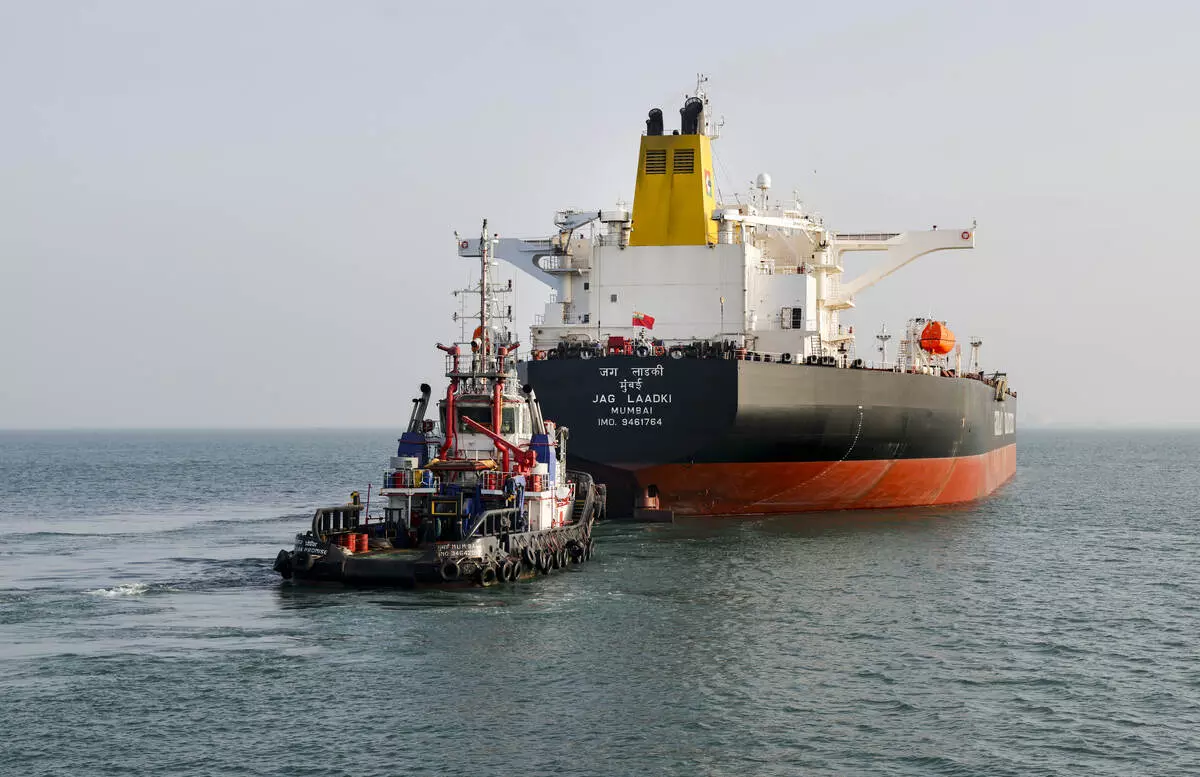
New Delhi, March 26 -- India has accelerated the signing of contracts to diversify its crude oil and LPG imports, as reported by NDTV on Thursday, citing industry sources. According to sources, agreements are being concluded after detailed negotiations to secure rates aligned with India's economic interests. Among the potential suppliers is Russia, from which India had earlier purchased significant volumes of discounted crude after the Ukraine war began and Moscow faced sanctions. These purchases were later scaled down in line with conditions set by the United States. Washington, which had voiced concerns that India's Russian oil imports were indirectly funding the war, made the reduction a prerequisite for signing February's interim tariff agreement. India agreed to compensate by increasing energy purchases from the US.
However, the US-Israel conflict with Iran that erupted on February 28 triggered a sharp spike in global oil prices and disrupted supply chains after Tehran halted tanker movement through the Strait of Hormuz - a crucial chokepoint handling 20-25 per cent of global seaborne crude trade. The passage is vital for India, with roughly 40 per cent of its oil requirement - about 5.5 to six million barrels per day - transiting through it. On March 6, Washington granted New Delhi a 30-day window to procure Russian oil that had already been loaded onto vessels, helping offset reduced Middle East supplies. Bloomberg reported that India has purchased an estimated 60 million barrels from Russia for delivery in April 2026. The government has maintained there is no immediate shortage of fuel or gas. Junior Petroleum Minister Suresh Gopi informed Parliament this week that India's three strategic petroleum reserves currently hold about 3.372 million tonnes, roughly two-thirds of their total capacity.
He added that the country's overall reserves - including crude in strategic petroleum reserves and ready-to-use fuel stocks held by oil marketing companies - are sufficient for 74 days. Earlier, Prime Minister Narendra Modi had said India has broadened its energy sourcing over the past 11 years, increasing the number of supplier nations from 27 to 41. On LPG supplies - used by more than 33 crore Indian households for cooking - the government stated in early March that it had directed a 25 per cent rise in domestic production and urged citizens not to panic buy. The assurance came after reports of hotels and restaurants temporarily shutting operations due to a shortage of commercial LPG cylinders. Meanwhile, Washington has also issued a 30-day waiver allowing purchases of sanctioned Iranian oil, limited to crude already stored on vessels on or before March 20, 2026. All such shipments must be offloaded by April 19.
Energy analytics firm Kpler said these waivers could release around five million barrels per day into the market within a month. However, it cautioned that this would not fully compensate for prolonged Middle East supply disruptions, citing payment hurdles and risks linked to shadow fleets that could restrict faster transactions. Kpler further estimated cumulative oil supply losses at 133 million barrels since the conflict began, warning that the figure could rise to 600 million barrels by the end of April if normal flows are not restored. Current outages stand at 10.7 million barrels per day and could reach 11.5 million barrels by late March due to the conflict and mounting pressure around the Strait of Hormuz. Damage to refineries and storage depots from strikes by both US-Israel forces and Iran has worsened the disruption.
Published by HT Digital Content Services with permission from Millennium Post.