
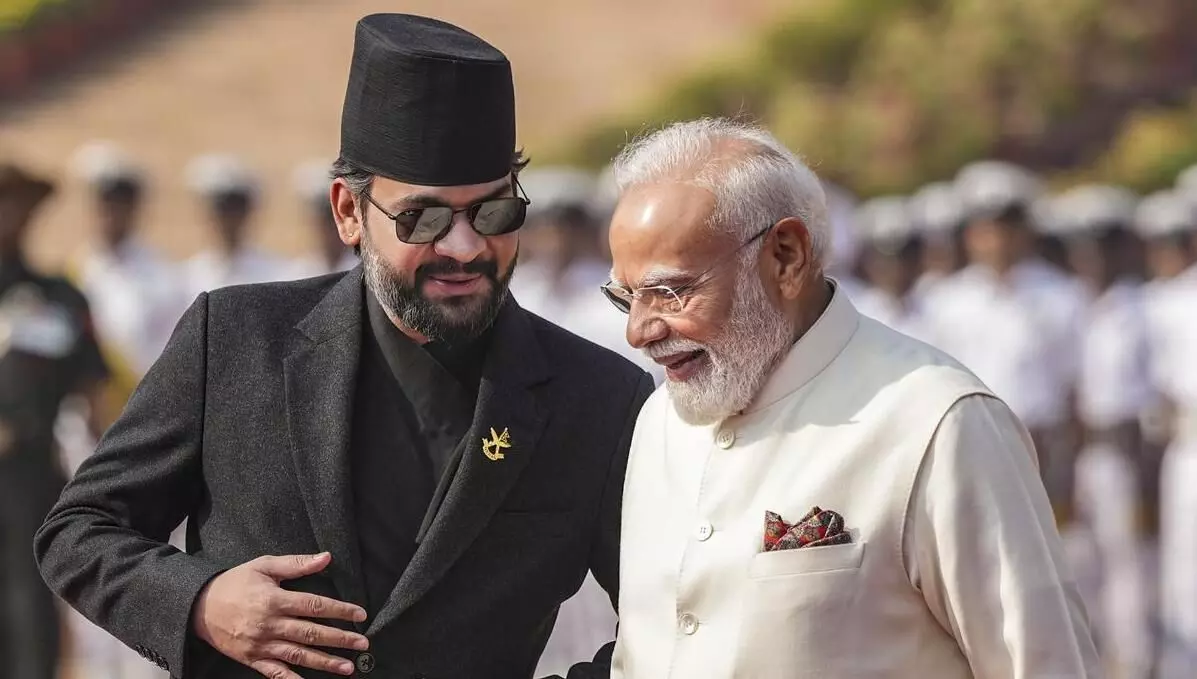
NEW DELHI, Nov. 23 -- Prime Minister Narendra Modi on Monday said India's vast energy market could become a major driver of Nepal's economic prosperity by harnessing the Himalayan nation's hydropower potential, as the two countries advanced cooperation in clean energy, petroleum infrastructure and essential supplies.
Addressing a joint press conference with Nepalese Prime Minister Balendra Shah following bilateral talks at Hyderabad House, Modi highlighted the potential of Nepal's rivers to generate clean electricity and strengthen economic ties between the neighbouring countries.
He said India's growing demand for energy could provide Nepal with opportunities to develop its hydropower resources and expand electricity exports.
Modi pointed to the foundation stone laying ceremony for the 669 MW Lower Arun Hydroelectric Project and reiterated India's commitment to completing the Arun-3 hydropower project on schedule.
The two Prime Ministers jointly laid the foundation stone for the Lower Arun project during Shah's state visit to India. The initiative is part of ongoing bilateral efforts to expand Nepal's electricity generation capacity and strengthen cross-border energy cooperation.
Modi said the two projects reflected a shared vision of using Nepal's clean energy resources to promote long-term economic growth and mutual prosperity.
Turning to petroleum cooperation, the Prime Minister emphasised India's role as a reliable supplier of fuel, fertilisers and other essential commodities to Nepal.
He said New Delhi had maintained uninterrupted supplies despite serious challenges affecting oil availability during the year, in keeping with India's Neighbourhood First policy.
The Prime Minister also announced the dedication of Phase II of the Motihari-Amlekhgunj petroleum pipeline, a major cross-border energy infrastructure project connecting the two countries.
In addition, the two leaders laid the foundation stone for a petroleum terminal at Jhapa in Nepal, which forms part of the proposed Siliguri-Jhapa petroleum pipeline project.
The initiatives are aimed at strengthening petroleum supply infrastructure and improving the reliability of fuel transportation between India and Nepal.
Modi said the expansion of pipeline infrastructure would further reinforce the energy partnership and help ensure the continued availability of essential petroleum products in Nepal.
The energy-related announcements formed part of a broader set of agreements and infrastructure initiatives unveiled during Shah's visit.
The two leaders also jointly inaugurated and laid foundation stones for six major projects covering cross-border connectivity, energy and infrastructure development.
India and Nepal issued a Joint Vision Document outlining their shared development aspirations under the frameworks of Viksit Bharat and Samunnat Nepal.
The document is intended to guide future cooperation in economic development, infrastructure, connectivity and other priority sectors.
The two countries also signed eight Memorandums of Understanding covering space technology, security training, civil service capacity building, healthcare, traditional medicine, sustainable urban development and agriculture.
The agreements were exchanged following delegation-level discussions between the two Prime Ministers in New Delhi.
Modi's remarks underscored the importance of hydropower and petroleum infrastructure in the bilateral relationship, with both governments seeking to translate their energy cooperation into investment, industrial development and greater economic opportunities.
Published by HT Digital Content Services with permission from Millennium Post.