
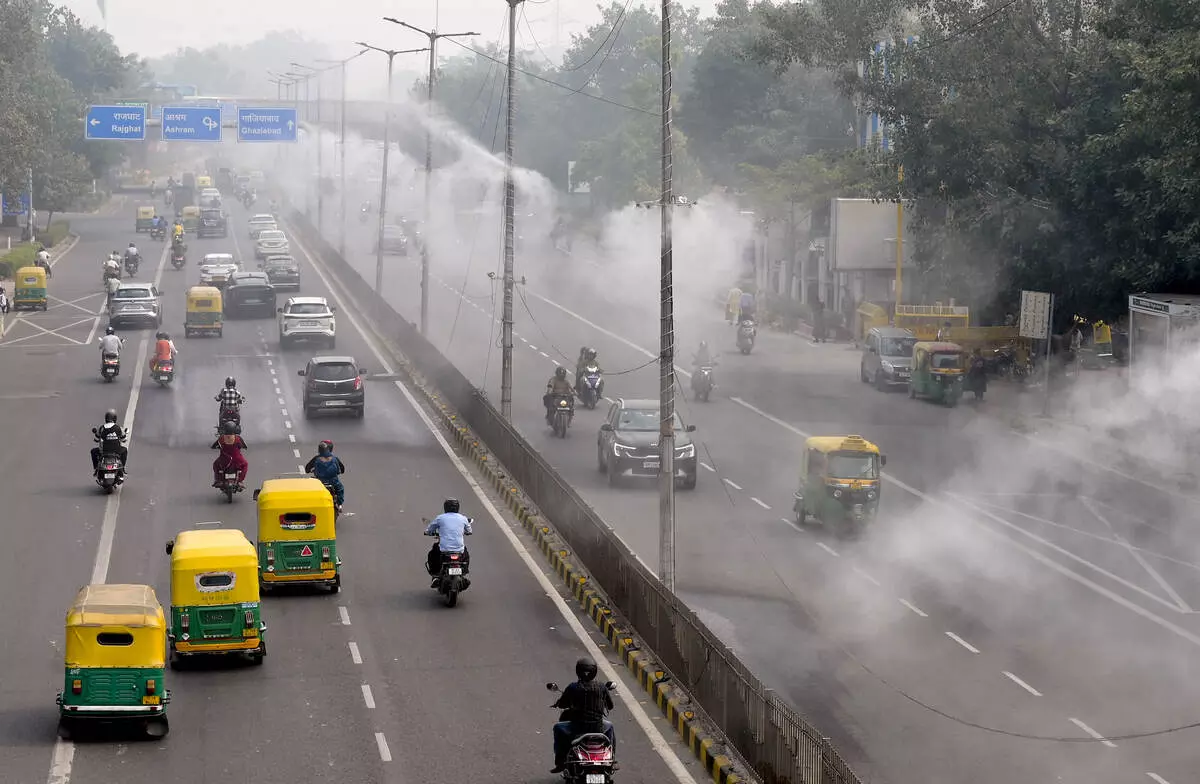
NEW DELHI, Nov. 17 -- The Commission for Air Quality Management (CAQM) on Tuesday revoked restrictions under Stage III of the Graded Response Action Plan (GRAP) across Delhi-NCR after the national capital's Air Quality Index (AQI) improved to 204, providing relief from some of the stringent anti-pollution measures imposed earlier this month.
The decision followed a review of the prevailing air quality conditions, with the commission citing a downward trend in pollution levels. However, restrictions under GRAP Stages I and II will remain in force across the National Capital Region.
The CAQM also clarified that measures specified in its order dated October 30, 2026, would continue to apply despite the withdrawal of Stage III restrictions.
The development comes after Delhi experienced a prolonged spell of deteriorating air quality, prompting authorities to impose additional measures to control emissions from vehicles, construction activities and other sources of pollution.
Stage III restrictions had been invoked on November 6 after Delhi recorded a daily average AQI of 382, placing air quality in the 'very poor' category. At the time, forecasts indicated that pollution levels could deteriorate further because of unfavourable meteorological conditions.
The restrictions included curbs on certain construction and demolition activities, limitations on the movement of specified categories of older vehicles and additional measures to reduce dust and vehicular emissions.
With Stage III withdrawn, activities prohibited specifically under that stage can resume, subject to applicable regulations and the continuing requirements under Stages I and II.
However, the relaxation does not mean that all pollution-control measures have been lifted. Authorities will continue implementing restrictions aimed at controlling road dust, vehicle emissions, industrial pollution and other contributors to deteriorating air quality.
The improvement comes after stronger winds and light rainfall helped disperse accumulated pollutants in the capital over the past few days.
Delhi's air quality had improved to the 'poor' category on Monday, with the AQI recorded at 216 at 7 am, compared with considerably higher readings during the preceding days.
The latest AQI of 204 remains within the 'poor' category, indicating that pollution continues to pose health concerns, particularly for children, older people and those with respiratory or cardiovascular conditions.
Under the Central Pollution Control Board's classification, an AQI between 201 and 300 is considered 'poor', while readings between 301 and 400 fall in the 'very poor' category. An AQI between 401 and 500 is classified as 'severe'.
The GRAP framework provides for progressively stricter measures depending on air quality conditions and forecasts. The CAQM reviews pollution trends and meteorological predictions before deciding whether to invoke or withdraw restrictions.
The commission's latest decision offers temporary relief to residents, commuters and businesses affected by Stage III curbs, although authorities remain alert to the possibility of pollution levels rising again as winter conditions become less favourable for the dispersion of pollutants.
The CAQM is expected to continue monitoring air quality across Delhi-NCR and review the situation as necessary to prevent a renewed deterioration.
Published by HT Digital Content Services with permission from Millennium Post.