
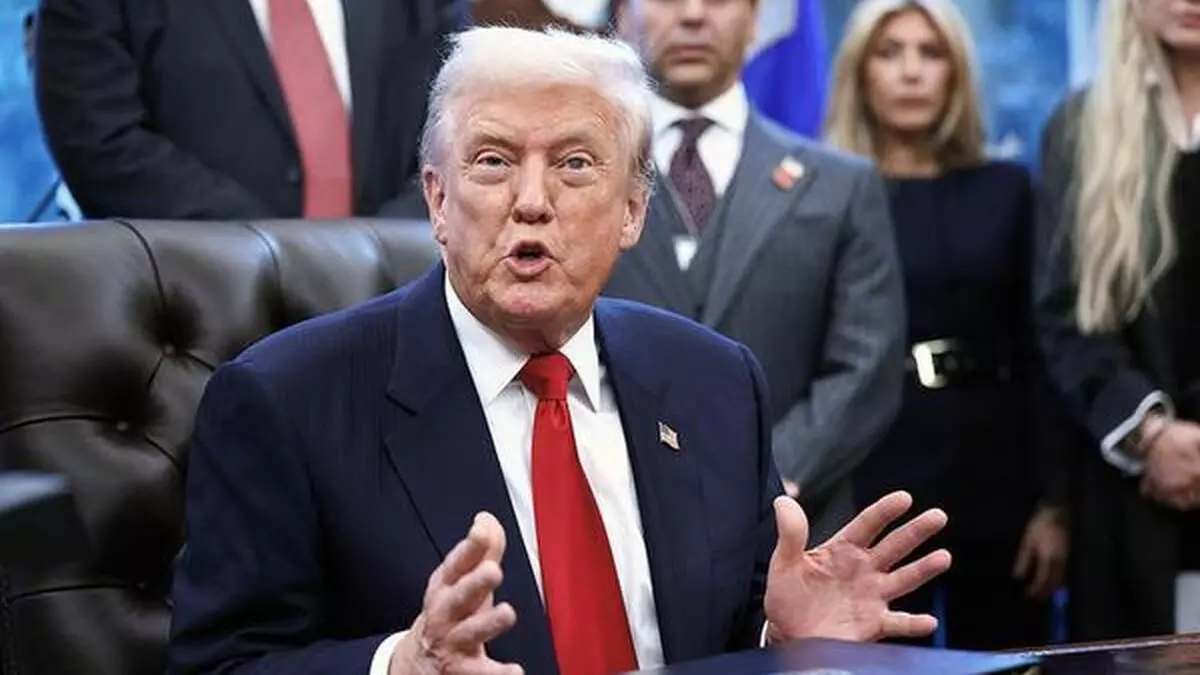
New Delhi, Sept. 19 -- US President Donald Trump has signed the sweeping Sanctioning Russia and Iran Act, which seeks to impose steep levies on Moscow and its top energy buyers such as China and India.
"On Friday, September 18, 2026, the President signed into law: H.R. 5334, the "Lindsey O. Graham Sanctioning Russia and Iran Act of 2026," which authorizes and expands statutory sanctions, tariffs, and prohibitions on Russia and extends existing sanctions on Iran," the White House said.
The House of Representatives on Wednesday passed the Sanctioning Russia and Iran Act, which seeks to impose sanctions on Russia's leadership and energy sector -- as well as on collaborators in Moscow's defence industry and its so-called shadow fleet.
The Act also authorises President Trump to impose tariffs of up to 100 per cent on countries buying Russian oil and gas, including China and India.
The law gives Trump wide discretion over implementation, including which countries face tariffs, the tariff rates imposed, and whether sanctions provisions are waived.
The law comes into effect within 30 days of signing by the President and requires him to impose duties of up to 100 per cent on goods imported from countries that are the top five purchasers of Russian crude oil or natural gas by total volume during the 12 months preceding enactment.
A country is exempt from the gas-related duties if its Russian gas imports accounted for less than 15 per cent of Russia's total exports during the applicable period and it has taken "significant steps" to reduce those imports.
The legislation targets Russia's "shadow fleet" and other foreign persons involved in supporting Russian energy production or sanctions evasion, including vessel owners, operators, managers, insurers, and other parties engaged in covered activities.
The bill targets Russia's economy by punishing major purchasers of its oil and gas.
At Trump's behest, the bill also extends to Iran's energy and weapons sectors.
The bill is named after the late Senator Lindsey Graham, one of Ukraine's staunchest defenders in Washington before his death on July 11.
The legislation seeks to reduce the financial resources sustaining Russia's war against Ukraine. It targets Russian officials, banks, energy interests, and foreign entities supporting Moscow's military operations. The law authorises Trump to impose tariffs on countries doing business with Russia to cut their dependence on Russian oil and gas.
According to the House Ways and Means Committee, the legislation directs tariffs of up to 500 per cent on Russian goods. It also provides for duties of up to 100 per cent on goods from countries covered by its Russian oil and gas purchase provisions - which cover major Russian energy importers and leading facilitators of oil sanctions evasion.
Additionally, the bill includes sanctions against Russian President Vladimir Putin and senior figures in the Russian government.
India is facing a new tariff threat now that Trump has signed the Russia sanctions bill into law.
An amendment introduced by Democratic Congressman Steny Hoyer had called for explicitly naming 10 nations - China, India, the UAE, Turkiye, Singapore, Azerbaijan, Kazakhstan, Hungary, Kyrgyzstan, and Slovakia - to be eligible for tariffs of up to 100 per cent under the bill's secondary tariff provisions. However, the amendment does not itself impose a 100 per cent duty on India.
The tariffs could be imposed on India if Trump chooses to exercise his power.
If Trump levies the 100 per cent tariff on India, it would be on top of a 10 per cent tariff that the US currently imposes on imports from New Delhi as a penalty for not doing enough to stop the import of goods made using forced labour.
However, the exact impact of new tariffs on Indian exports can be assessed only after the US announces the tariff rates.
India and the US had strained ties last year when Trump imposed an additional 25 per cent tariff on Indian imports of Russian crude, on top of a 25 per cent reciprocal tariff. The additional tariffs were, however, removed in February 2026, while the reciprocal tariff was reduced to 18 per cent as part of a US-India trade framework.
India on Wednesday made it clear that it is determined to take all necessary measures to protect its trade and economic interests.
"As stated on several earlier occasions, India remains firmly committed to ensuring energy security for its 1.4 billion people. It will continue to do so through diversified sourcing and based on evolving market dynamics," the Ministry of External Affairs said in a statement.
The MEA said the issue of India's oil trade with Russia has been discussed at high levels in recent months with various US interlocutors. "Its potential implications for not just the bilateral relationship but also the international energy market have been very clearly articulated by the Indian side," it said.
Published by HT Digital Content Services with permission from Millennium Post.