
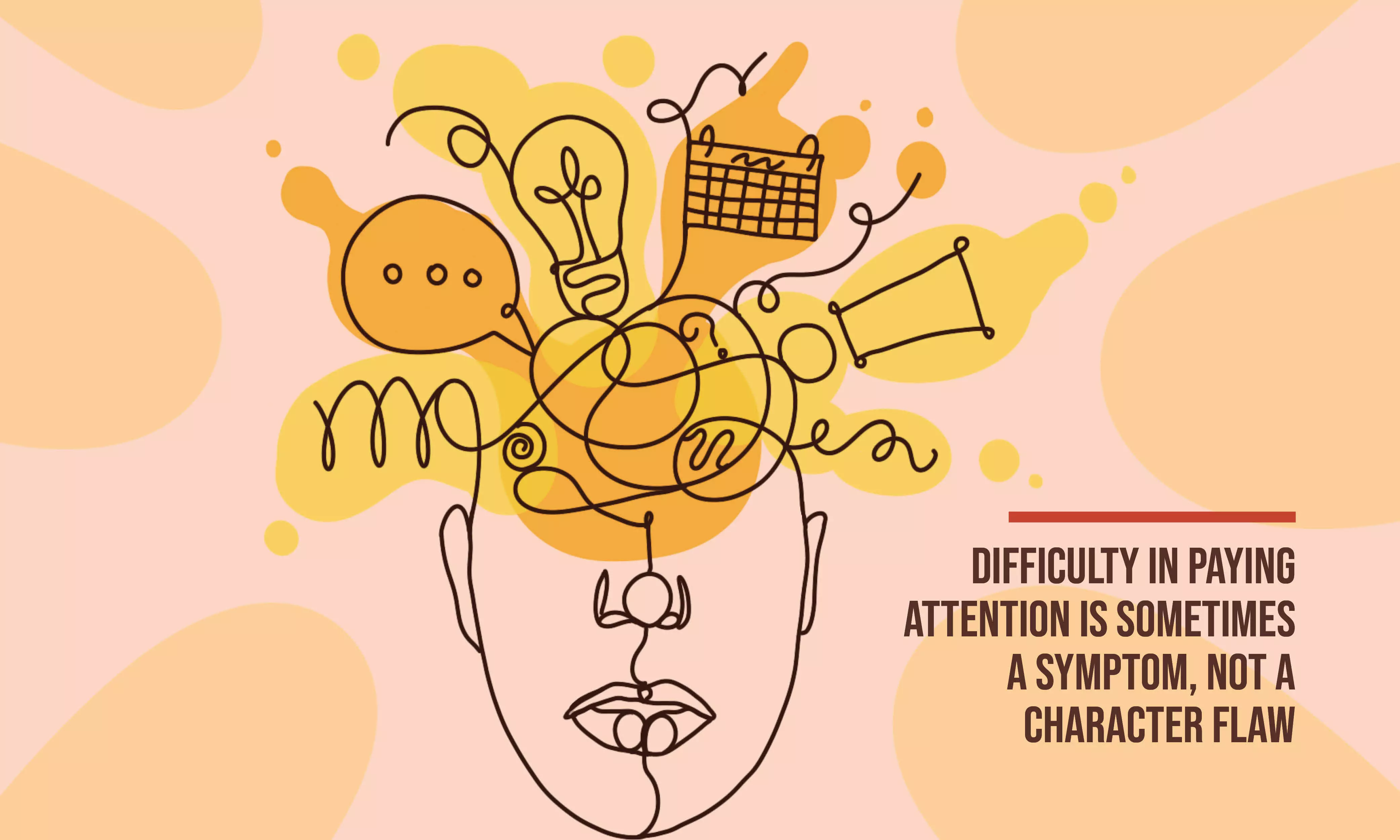
New Delhi, Oct. 24 -- "Doctor, maybe I have ADHD."
It is a sentence mental health professionals hear increasingly often, especially from young adults and millennials. Social media has played a big role with our feeds filled with videos about procrastination, forgetfulness, losing things and poor focus can make many people wonder whether ADHD explains their difficulties.
The truth from a doctor's mouth: Sometimes it does. But sometimes it doesn't.
What exactly is ADHD?
Attention Deficit Hyperactivity Disorder, or ADHD, is a neurodevelopmental condition that begins in childhood and can affect attention, impulse control and activity levels. It can affect learning, work, relationships and everyday functioning. Symptoms are persistent, occur across different situations and cause meaningful difficulty.
ADHD is NOT simply being distracted, disorganised or a "naughty child." And yes, adults can have ADHD.
What is Adult ADHD?
ADHD does not magically disappear when someone turns 18. Some people diagnosed as children continue to experience symptoms into adulthood. Others experience a significant reduction in symptoms and may no longer meet diagnostic criteria.
Some adults are diagnosed only later because their difficulties were missed during childhood or there was limited awareness among parents and teachers.
Adult ADHD may look less like the stereotypical hyperactive child and more like chronic procrastination, forgetfulness, poor organisation, time management difficulties, impulsive decisions, restlessness or struggling to complete things despite knowing what needs to be done.
Does everyone have a little ADHD?
No. Everyone procrastinates. Everyone gets distracted. Everyone forgets things occasionally. Having these experiences does not automatically mean you have ADHD.
The difference is pattern, persistence, severity and impact.
Is ADHD curable?
There is no simple "cure" that makes ADHD disappear permanently. But ADHD is highly manageable. Treatment can include medication, behavioural strategies, psychotherapy, coaching, environmental changes and practical support.
The goal is not to make someone "less ADHD". It is to help them function better and use their strengths effectively.
What looks like ADHD but isn't?
This is where proper assessment matters. Several conditions can produce ADHD like symptoms, including anxiety, depression, sleep deprivation, substance use, thyroid problems, certain medications, trauma and excessive stress.
Even constantly switching between notifications, videos and apps can make sustained attention harder without meaning someone has ADHD. These are called ADHD mimics.
What if I think I have ADHD?
Don't start with an Instagram Reel. Start with a proper assessment by a psychiatrist, psychologist or appropriately trained professional. A good assessment looks at current symptoms, childhood history, functioning across different settings and possible alternative explanations.
Are online ADHD quizzes reliable?
They can be useful as a screening tool, but they cannot diagnose ADHD. A quiz can tell you, "This is worth investigating." It cannot tell you, "You definitely have ADHD", or that you definitely don't. That distinction matters.
Is medication the only treatment?
No. Medication can be highly effective for many people, but treatment is often broader. Psychoeducation, cognitive behavioural strategies, organisational systems, sleep, exercise, workplace or academic accommodations and reducing distractions can all help.
The best approach is individualised.
Can we improve our attention?
Even without ADHD, our attention is under constant assault. Notifications, short videos, multitasking and endless scrolling train us to expect rapid stimulation. So practise doing the opposite.
1. Put your phone away when working.
2. Do one task at a time.
3. Work in short, focused blocks.
4. Take regular breaks.
5. Get adequate sleep.
6. Give your brain periods without constant stimulation.
And remember: attention is not just something you either have or don't have. It is a skill that can be trained and protected.
ADHD awareness should not mean diagnosing everyone who struggles to focus.
It should mean recognising genuine ADHD, reducing stigma, identifying the right treatment and understanding that difficulty paying attention is sometimes a symptom, not a character flaw.
Published by HT Digital Content Services with permission from Millennium Post.