
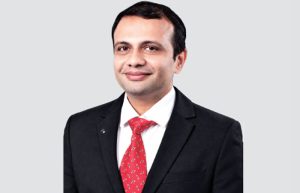
Mumbai, Oct. 27 -- As India's infrastructure sector braces for a wave of technological disruption, Cummins is repositioning itself for the future. Long synonymous with diesel engines, the company now sees its identity shifting toward being a technology-agnostic solutions provider. From powering data centres and AI-driven nodes to advancing batteries, fuel cells and electrolysers, Cummins is broadening its scope well beyond combustion. In this conversation with Infrastructure Today's Manish Pant, Jameson Mendonca, Power Generation Business Leader, Cummins India, explains how reliability, sustainability and integrated engineering solutions will define the company's next chapter.
You have announced new products for the data centre sector. What aspects of the business are you looking at servicing with those launches? Data centres in India are expanding rapidly. While they have been around since the early 2020s, growth has doubled in the past year. Two trends stand out. First, power nodes are shifting upwards. What was originally a 2,000 kVA diesel generator product is now moving to 2,200 kVA, then 2,500 kVA and beyond. This reflects rising power densities as chip technology advances and floor-space utilisation intensifies. Second, AI is driving demand. AI-driven nodes increase data centre intensity, particularly in hubs like Mumbai and Hyderabad. Navi Mumbai, with its vertical real estate, values compact products that fit into limited space. Meeting these requirements means higher power density and compliance with India's unique CAQM (Commission for Air Quality Management) norms. Initially applied only to the Delhi NCR (National Capital Region), these norms have since been adopted in Chennai and are expected to spread nationwide. Cummins is preparing products that meet CAQM requirements, ensuring readiness for data centres and other key infrastructure segments. Traditionally known as a diesel engine company, Cummins now positions itself as an engineering services partner. Beyond engines, we provide fuel management systems to ensure fuel quality and battery solutions that complement diesel. It's not diesel versus battery; it's about integrated solutions tailored to customer needs.
As you also pointed out, till a few years ago, Cummins was largely perceived as a company developing internal combustion engines. Today, you are increasingly acknowledged as an engineering technology services company. Where do you find yourself in this transition? The reality is that no single technology serves all markets. Some segments in India remain non-emission regulated, while others demand stringent compliance. For example, our 125 kVA diesel generator is a CPCB IV+ product, equivalent to TFO (Tier 4 Final), the most stringent emission norm globally. Yet certain Indian segments still operate outside emission requirements. Our approach is customer-centric. We don't impose standardised offerings; we engage with customers to understand their needs and co-create solutions. If the customer succeeds, we succeed. That's why Cummins has thrived in India for over 60 years. Sustainable partnerships matter more than one-time sales.
You have identified data centres as a growth driver, especially with AI adoption. What other new and emerging segments are you considering? Mission-critical segments in India are growing steadily. Commercial real estate, residential realty, manufacturing and infrastructure all show double-digit growth under Make in India incentives. Data centres stand out because they grow at 50-60 per cent, overshadowing other sectors. But across the high-horsepower range, demand is strong in hospitals, real estate, manufacturing and infrastructure. India's infrastructure capacity is always less than what its population requires, so infra will remain a growth driver. Data centres are part of this larger mission-critical ecosystem.
Where do you see technology and infrastructure interspersing, given Cummins' unique base? Infrastructure values reliability and low downtime. In residential realty, gensets are standby units. In infrastructure, equipment runs continuously, so uptime is critical. Cummins' strength lies in reliability and proactive digital solutions. Engines now communicate data, enabling prognostics. We can predict failures caused not just by product issues but by environmental conditions or poor fuel quality. Preventing failures saves customers downtime and repair costs. Scheduled service events can be planned, avoiding costly unplanned outages. Customers value this proactive approach.
Two recent developments are partly unrelated and partly related: the August flash floods in Nepal, and NHAI's new norms for AI in construction machines. How do you see these? The Nepal floods highlight the impact of global warming and the need for sustainability. Diesel gensets remain essential backups, but optimising their use with battery solutions reduces dependency. India's grid is shifting from coal-based to a renewable mix. Solar and wind create surges when conditions are right, disrupting base loads. Battery solutions help store excess energy, enabling time-of-day metering. In advanced countries, utilities sometimes give electricity free during surpluses and charge high rates at peak times. Batteries allow customers to optimise energy costs while using green power. AI in construction is a starting point. Equipment generates vast amounts of data, but large-scale processing is still limited. India has lagged in data centre adoption compared to the US and China. As AI use cases expand, more data centres will be required to process and store this information.
Experts say that while India missed the first wave of AI, the country could be a significant part of the second. Is this framing sound? Yes, India is now joining the party. Use-case applications-from environmental prediction to short-term weather forecasting-require more data centres. The Nepal floods showed the need for short- and mid-term forecasting, not just long-term. These capabilities generate huge amounts of data, demanding processing power. Data centres themselves consume significant energy, so having the right power solutions is critical. Otherwise, crises could worsen. Balancing energy consumption with sustainable solutions is key.
Against this backdrop, what kind of expansion are you looking at till 2030? We look at India's infrastructure space and identify which segments are growing. At the same time, Cummins is a global organisation. India doesn't have to serve India alone. If required, I can call on our UK, China or US plants to support demand. We operate a global supply chain. When we plan investments, we overlay global mega-trends with regional trends. That tells us which nodes and segments to prioritise. Predictions change-tariffs, oil price shocks, geopolitical crises-so we continually monitor assumptions and adjust near-, short- and medium-term forecasts. Not all investments need to be in the same region as the market.
What is your capex for the India region? We don't look at India or Asia in isolation. Our supply chain is global. Even if an engine is made in the US, many suppliers are based in India. So, India contributes content irrespective of where the product is manufactured. Investment decisions are taken at a global level, considering capacity across regions.
What new segments interest you going forward? Data centres will remain a focus. Batteries are another growth driver. Short-term growth is uncertain, but batteries are a sustainable product. Safety is critical; poorly integrated batteries can catch fire, and battery fires are hazardous. Customers value reliability and safety, and Cummins integrates technology to deliver durable, safe products. Sustainability is also central. We operate a reconditioning facility in India. Refurbishing a 25-year-old engine consumes far less energy than producing a new one. Dual-fuel kits are another solution. On average, Cummins products last over 15 years, so when new emission norms arrive, we provide solutions to upgrade older products to acceptable standards.
Cummins entered India in the 1960s. You are so deeply enmeshed in sectors that some mistake you for an Indian company. How do you view this perception? We have a large tech centre in India that designs not just for India but for the world. That allows us to work closely with customers, understand their needs and tailor products. There's a difference between being a US MNC that imports technology and sells it here, and being a company that invests in adapting products for India. Take the QSK60 high-horsepower diesel generator, which has been around for 25 years. We have tailored it for Indian requirements, which builds customer trust. Investments are declared in Cummins India Ltd's earnings calls, but many happen globally. Engines like the Q78 and Q95 are manufactured in the UK and US, yet those investments also serve Indian demand. So yes, we are embedded in many segments, and that perception reflects our long-term commitment.
Where do you think Cummins India's power generation business will evolve over the next decade? In India, I see us evolving from being perceived as a diesel engine company to being recognised as a solutions provider. Internally, we have invested in green technologies, including batteries, fuel cells and electrolysers. But externally, customers still see us primarily as a diesel player. That perception will change as we expand into green areas. Our goal is to be the first call when a customer faces a problem. Sometimes we may not have the product, but we can propose the optimal solution. Battery and diesel are not opposites. Both are needed. The key is managing the mix optimally as hydrogen and other technologies evolve. That's why we call ourselves a technology-agnostic company.
Published by HT Digital Content Services with permission from Infrastructure Today.