
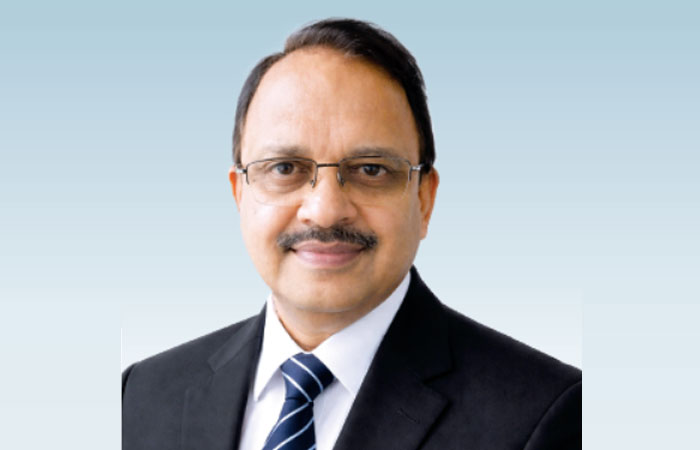
India, June 17 -- Dr SB Hegde, Professor, Jain College of Engineering, India, and Visiting Professor, Pennsylvania State University, USA, makes a compelling case that lubrication is the most undervalued lever for energy efficiency and profitability.
In a sector where one hour of unplanned kiln stoppage can cost up to '22 lakhs and bearing failures in vertical roller mills run into crores, the conversation around plant performance rarely begins with lubrication. Industry expert Dr SB Hegde brings an academic rigour to a subject that most plant managers treat as routine maintenance and not as a strategic investment. He outlines how synthetic lubricants, predictive maintenance and OEM collaboration can together deliver returns.
How critical is lubrication strategy in ensuring reliability and productivity in modern cement plants? Lubrication strategy is the backbone of reliability and productivity in modern cement plants. While lubricants account for only two to three per cent of total operating costs, poor lubrication is responsible for up to 70 per cent of maintenance problems, equipment failures and unplanned downtime. Leading global cement plants achieve 85 per cent + Overall Equipment Effectiveness (OEE) largely due to disciplined lubrication management. High performance synthetic lubricants deliver proven 2 to 6.5 per cent energy savings (typically three to four per cent) in critical equipment such as kiln rollers, vertical roller mills (VRM), ball mill gearboxes and crushers. In India, this translates to 8-15 crore annual savings per 1 MTPA plant, or80-150 per tonnes of cement, with payback in 6-12 months. With 160-170 million tonnes of new capacity expected by FY28 and many plants still operating at 65 per cent to 68 per cent OEE, a strong lubrication strategy has become a strategic necessity. It is not a routine maintenance activity, it is a high return investment that directly improves reliability, productivity and sustainability.
What is the biggest lubrication related challenges faced by the Indian cement industry today? The Indian cement industry operates under some of the harshest lubrication conditions in the world, extreme dust, high temperatures (100-140C), heavy shock loads, and continuous 24/7 operation. The most serious challenge is severe dust contamination, responsible for nearly 36 per cent of bearing failures. A major bearing failure in a VRM or kiln can cost 2-3.5 crore. Other key issues include incorrect lubricant selection, inconsistent greasing practices and cost perception of specialty lubricants. One hour of unplanned kiln stoppage due to lubrication failure can cost8-22 lakhs. These challenges push maintenance costs to 15 to 25 per cent of total production cost and can cause annual losses of '8-15 crore or more for a one MTPA plant. Addressing them through proper lubricant selection, contamination control and condition monitoring is now critical.
How can advanced lubricants contribute to energy efficiency and sustainability in cement manufacturing? Advanced synthetic and high-performance lubricants are among the most practical and effective tools for improving energy efficiency and sustainability in cement manufacturing. They reduce friction and operating temperatures, delivering 2-6.5 per cent energy savings (typically three to four per cent). In India, this results in 8-15 crore annual savings per 1 MTPA plant (80-150 per ton), with payback in 6-12 months. A three to four per cent energy reduction also lowers CO2 emissions by 2-4 kg per tonne of cement. For a one MTPA plant, this equals 2,000-4,000 tonnes of CO2 reduction annually, generating carbon credit revenue of '0.16-1 crore under India's CCTS. Additionally, they extend drain intervals 3-5 times and reduce lubricant consumption by 15 per cent to 30 per cent. With new capacity additions and stricter emission norms, advanced lubricants offer an excellent combination of profitability and environmental performance.
What role does predictive maintenance and oil condition monitoring play in reducing plant downtime? Predictive maintenance (PdM) and oil condition monitoring are game changers for reducing unplanned downtime. They shift maintenance from reactive to proactive by detecting issues early through oil analysis, vibration and temperature data. These technologies can reduce unplanned downtime by up to 50 per cent and improve uptime by 10 to 20 per cent. In one documented case, a cement plant achieved 57 ROI within six months, generating savings of over 8.4 crore and preventing a major failure that would have caused more than 160 hours of downtime. For Indian plants, where one hour of kiln stoppage costs8-22 lakhs, PdM typically delivers 25 per cent lower maintenance costs, 20 to 40 per cent longer equipment life, and payback in three-six months. It has become essential for achieving high reliability in the rapidly expanding cement industry.
How are synthetic and specialty lubricants transforming the performance of heavy cement equipment? Synthetic and specialty lubricants are significantly transforming the performance of heavy cement equipment by providing superior protection under extreme conditions of high temperature, shock loads, dust and continuous operation. They deliver three-seven times longer component life, 2 to 6.5 per cent energy savings, and 15-25C lower operating temperatures. Modern solutions such as PAO based synthetic gear oils (ISO VG 320-460), high-temperature synthetic greases, and advanced open gear compounds also provide three-five times longer drain intervals and 15 to 30 per cent lower lubricant consumption. In the Indian context, these improvements translate into '8-15 crore annual savings per one MTPA plant. As the industry adds large new capacity, synthetic and specialty lubricants have become a strategic choice for higher reliability and lower total cost of ownership.
How important is lubrication management in extending the lifecycle of critical plant machinery? Lubrication management is extremely important and one of the most effective ways to extend the lifecycle of critical cement plant machinery. Properly implemented, it can increase equipment life by 20 to 50 per cent or more. Since nearly 70 per cent of failures in bearings, gearboxes and rollers are lubrication related, disciplined practices such as right lubricant, correct quantity, contamination control and monitoring, can help deliver substantial benefits. For a typical one MTPA plant, good lubrication management can save 6-12 crore annually through reduced replacements and downtime. In my view, lubrication management is not a routine maintenance task but a strategic practice that directly determines long term asset performance, reliability and profitability. How can collaboration between lubricant companies, OEMs and cement manufacturers drive operational excellence? Collaboration between lubricant companies, OEMs and cement manufacturers is a powerful driver of operational excellence. It combines equipment design knowledge, lubricant technology and practical plant experience to deliver superior results. Such partnerships help develop tailor-made solutions, integrate automatic lubrication systems with predictive monitoring, and accelerate innovation in energy efficient products. One such collaboration delivered 57x ROI in six months with savings exceeding8.4 crore. With 160-170 million tonnes of new capacity expected by FY28, these collaborations are essential for achieving world class reliability, lower operating costs, and stronger sustainability performance. Cement manufacturers who actively engage in such partnerships will gain a clear competitive advantage.
Published by HT Digital Content Services with permission from Indian Cement Review.