
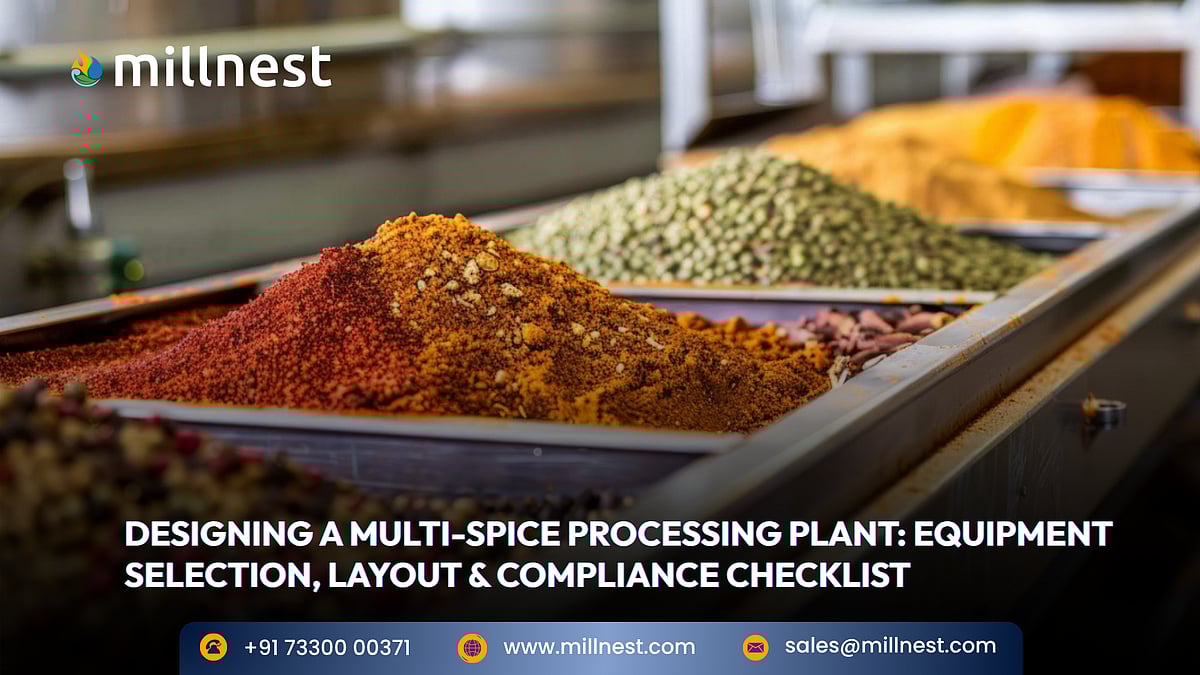
India, March 24 -- A single-product spice plant is an engineering problem with a relatively straightforward solution: define the spice, define the specification, select the equipment, size the utilities. A multi-spice plant is a different challenge entirely.
When a single facility must process turmeric, black pepper, cardamom, garlic flakes, coriander, and cumin each with different heat sensitivities, moisture behaviours, particle size requirements, and contamination risks every design decision carries consequences across the entire product portfolio.
Get the layout wrong and you have cross-contamination between product zones. Get the equipment sequence wrong and you have clogging, inconsistent output, and downtime on hygroscopic products. Get the zoning wrong and your heat-sensitive spice processing area ends up adjacent to a high-temperature decontamination zone.
This guide covers the design principles, equipment sequencing, and compliance checklist that MillNest applies to multi-spice EPC projects.
The Core Challenge: Different Spices, Different Requirements
Multi-spice plant design begins with a systematic classification of every product the facility will process:
Heat-sensitive vs. robust: Cardamom, black pepper, and cloves require sub-45C processing environments. Coriander, cumin, and dried vegetables tolerate higher-temperature milling with less quality impact. These two categories must not share grinding equipment on the same schedule without deliberate changeover protocol.
Hygroscopic vs. dry-stable: Garlic flakes, onion powder, and fenugreek absorb ambient moisture, clump during storage and milling, and require pre-treatment before entering a standard mill. Pepper, turmeric, and coriander are comparatively dry-stable. Hygroscopic products require dedicated handling protocols controlled humidity environments, pre-treatment equipment, and faster processing cycles from intake to sealed packaging.
Pharma-grade vs. food-grade compliance zones: If the facility processes any product destined for pharmaceutical or nutraceutical applications turmeric for curcumin extraction, pepper for piperine standardisation those products require dedicated equipment or rigorously validated cleaning procedures between food-grade and pharma-grade runs.
Zoning Principles for a Multi-Spice Facility
Wet zone vs. dry zone separation: Wet cleaning areas, washing stations for whole spices, and any process involving liquid addition must be physically separated from dry grinding and blending zones. Moisture migration from wet to dry areas is a contamination and quality risk.
Heat-sensitive processing areas: Dedicated low-heat processing bays should be zoned away from steam sterilization equipment, dryers, or any high-temperature process. Thermal proximity affects ambient conditions in the grinding zone and increases the risk of indirect heat damage to volatile oil-rich spices.
Decontamination integration points: TEMA HTST steam sterilization should be positioned in the process flow after cleaning and pre-treatment, before final milling or blending not as a post-processing step. This ensures that the decontaminated product does not pick up microbial load from subsequent handling in a non-sterile environment.
Equipment Sequencing: The MillNest EPC Approach
The correct sequence for a multi-spice processing line is not a generic recommendation it varies by product. However, the general architecture for a well-designed multi-spice plant follows this logic:
Stage 1 Cleaning: Removal of foreign matter, stones, stems, and other physical contaminants from whole spices. Appropriate for all spice types before further processing.
Stage 2 Pre-treatment (Delumper for hygroscopic spices): For garlic, onion, fenugreek, and other hygroscopic inputs that arrive in clumped or caked form, a Delumper breaks pre-formed lumps before the material enters the main milling stage. Feeding clumped material directly into a Hammer Mill or ACM causes blocked screens, inconsistent particle size, and downtime. Pre-treatment eliminates this failure mode.
Stage 3 Size Reduction (Application-specific):
Hammer Mill: High throughput, continuous operation, robust spices (coriander, cumin, dried vegetables)
Air Classifying Mill (ACM): Tight particle size control for pharma-grade and extraction-grade applications (turmeric, pharmaceutical pepper)
Cutter Mill: Fibrous and leafy spices, delicate brittle materials (dried herbs, some seed spices)
Universal Mill : Multi-mode flexibility for heat-sensitive spices requiring low heat generation (black pepper, cardamom, cloves)
Stage 4 Decontamination (TEMA HTST Steam Sterilization): Natural steam at 102122C for 2040 seconds achieves microbial reduction up to Log 6 without chemical treatment. Followed by fluidized bed cooling with sterile air to restore product temperature and prevent recontamination before blending or packaging.
Stage 5 Blending (Ribbon or Paddle Blender):
Paddle Blender : Batch-flexible, uniform mixing, zero dead zones, complete discharge suited for multi-SKU operations and pharma-grade blending
Ribbon Blender : High-volume continuous mixing for large-batch single-product operations
Stage 6 De-dusting (Bag Filter + Cyclone): Airborne particulate management is not optional in a multi-spice plant. In a facility processing multiple products, fine particles from one spice reaching another zone is a contamination event. MillNest de-dusting systems use Cyclone separators for large particulate removal and Bag Filters with Pulse Jet cleaning for fine particulate collection designed for continuous operation with advanced airflow management.
Cross-Contamination Prevention by Design
Cross-contamination in a multi-spice plant occurs through four pathways: shared equipment surfaces, airborne particulate, personnel movement between zones, and inadequate changeover procedures.
Design-level prevention includes:
SS 304/316 construction on all product-contact surfaces smooth, non-porous, cleanable without residue trapping
Minimal dead zones in equipment geometry complete discharge after each batch leaves no residual product from the previous run
Quick-release components for critical cleaning access points
Dedicated de-dusting for each processing zone preventing airborne transfer between product areas
Positive pressure in pharma-grade processing zones relative to adjacent areas preventing airborne contamination ingress
Compliance Considerations
For FSSAI compliance, equipment must meet hygienic design standards no crevices, accessible for cleaning, non-reactive material construction. For ISO-aligned facilities and export markets, additional requirements include documented cleaning validation, equipment material certification, and in some cases third-party audit of facility design.
MillNest supplies equipment with full material traceability documentation and supports customers through regulatory compliance requirements at the equipment specification stage.
The 20-Point Multi-Spice Plant Checklist
Product Classification All spice types classified by heat sensitivity All spice types classified by hygroscopic behaviour Pharma-grade vs. food-grade compliance zones identified
Layout & Zoning Wet zone and dry zone physically separated Heat-sensitive processing areas isolated from high-temperature processes Decontamination positioned correctly in process flow Airflow direction designed to prevent cross-zone contamination
Equipment Sequencing Delumper specified for all hygroscopic inputs Mill selection matched to each spice's processing requirements ACM specified for extraction-grade or pharma-grade products Decontamination method validated for all products processed
Contamination Prevention SS 304/316 throughout all product-contact surfaces Dead zone design verified on all blenders and mills De-dusting system covers all grinding and blending zones Changeover and cleaning protocols documented
Compliance & Traceability Batch traceability system in place for all product runs Equipment material certification documentation available FSSAI compliance verified for all equipment Export compliance requirements mapped against equipment specifications EPC partner has verified installation and commissioning capability
Conclusion
A multi-spice plant designed correctly from the outset is a competitive asset flexible enough to handle your full product portfolio, compliant with the markets you serve, and efficient enough to compete on cost per kilogram at your target volume.
Designed incorrectly, it becomes a constant source of quality problems, downtime, and compliance risk.
MillNest provides complete EPC solutions for multi-spice processing facilities from initial layout design and equipment selection through installation, commissioning, and on-site support.
Click Here for more information - Request an EPC Consultation www.millnest.com | namaste@millnest.com | +91 733 0000 173
Published by HT Digital Content Services with permission from FoodTechBiz.