
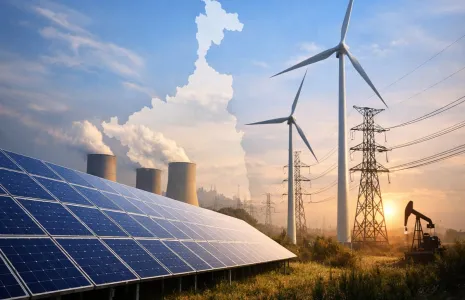
Mumbai, Aug. 28 -- West Bengal is entering a consequential phase in its energy sector and needs an integrated Clean Energy Framework to attract green investment, strengthen domestic industry and create high-skilled local employment. The BJP government led by Chief Minister Suvendu Adhikari, which took office after 15 years of Trinamool Congress rule, inherited a renewable energy base of just 2.2 gigawatt (GW) of installed capacity as of June 2026 against roughly 12 GW of total power capacity. At national level, India crossed 300 GW of non-fossil capacity in July, raising the bar for state-level investment.
A strategic dialogue hosted by Climate Trends on an integrated energy transition brought together leaders from policy, industry and finance who emphasised that creating an investable ecosystem is as important as meeting capacity targets. Participants argued that linking the manufacturing pipeline with project development and end-user demand will improve project economics and support local supply chains. The discussion stressed alignment between government policy, regulatory clarity and fiscal incentives to build investor confidence.
Saloni Sachdeva Michael of the Institute for Energy Economics and Financial Analysis said investors now assess states on ecosystem readiness rather than capacity alone. Soubhik Das of AMPIN Energy Transition noted that the state has a green hydrogen policy but lacks an open access regime to make it usable and called for regulatory measures to operationalise policy. He argued that regulator adoption and comprehensive regulations are needed to develop a robust energy ecosystem.
Professor Binoy Krishna Choudhury of the Indian Institute of Social Welfare and Business Management recommended that policy ensure waste streams are utilised to produce biogas and fertiliser, turning agricultural residue into economic opportunity. He said improved policy and awareness would enable local entrepreneurship and small businesses in waste-to-energy value chains. The experts concluded that coordinated policy, infrastructure and finance are essential to secure high-skilled employment.
Published by HT Digital Content Services with permission from Construction World.