
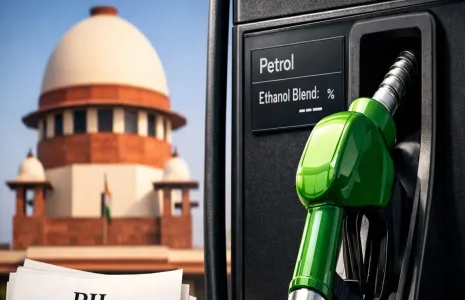
Mumbai, Sept. 2 -- The Supreme Court (SC) on Monday declined to entertain a public interest litigation seeking a directive to require mandatory and uniform labelling on every dispensing nozzle at petrol pumps disclosing the exact percentage of ethanol in petrol. A bench of Justices MM Sundresh and PB Varale said the petitioner, Narendra Kumar Goswami, should approach the jurisdictional high court rather than invoking Article 32 directly and asked him to seek relief there. The Attorney General for the Centre argued that the petition amounted to proxy litigation because a similar plea had already been dismissed by the court.
Goswami maintained that consumers have a right to know the composition of the fuel dispensed at pumps and urged the court to require invoices to state legibly the percentage of ethanol contained in each sale. He had also sought an order directing authorities to prepare and publish an official, public, vehicle-wise compatibility database searchable by manufacturer, model, engine type and year of manufacture indicating suitability or otherwise of various ethanol blends for each vehicle. The plea requested clear timelines for publication and accessibility of the database to assist owners and service providers.
The petition called for constitution of an independent expert committee including representatives from the ministries of petroleum and natural gas, road transport and highways, the Bureau of Indian Standards (BIS) and independent automobile engineers to examine real-world vehicle compatibility of the E20 blend across the existing fleet. The committee was to be asked to assess effects on fuel efficiency, engine longevity and maintenance costs as well as warranty and insurance implications and to produce a public report. It would also evaluate the net environmental footprint, including tail-pipe emissions and water consumption associated with ethanol production, and examine alleged food-security and feed diversion concerns linked to the blending programme.
The bench advised the petitioner to approach the jurisdictional high court and declined to entertain the plea under Article 32. It directed him to move the proper forum for the relief sought.
Published by HT Digital Content Services with permission from Construction World.