
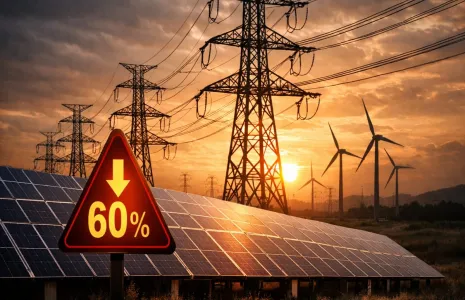
Mumbai, July 14 -- A report by Icra has found that critical delays in land acquisition and right-of-way (RoW) for transmission lines have left 33 per cent of India's recently commissioned renewable energy capacity evacuated through temporary general network access as of May 2026, with curtailment during solar hours remaining as high as 50-60 per cent. The agency noted that these bottlenecks coincide with a planned transmission capex cycle of Rs 5-6 trillion (tn) between 2026-27 and 2031-32 intended to integrate additional capacity into the grid.
Icra said the capex is expected to support the government's aim to evacuate more than 900 GW of non-fossil fuel capacity by 2035-36, including roughly 548 GW of solar and wind, and will involve strengthening existing infrastructure and adding new evacuation routes. The firm indicated that this scale of investment would also lift prospects for equipment suppliers as order inflows and outstanding orders have more than doubled since 2021-22.
To meet the targets set out in the earlier National Electricity Plan-II, Icra estimated the sector will require annual additions of about 20,000 circuit kilometres of transmission lines and 120 gigavolt-amperes of sub-station capacity, creating a significant investment opportunity in transmission equipment and services. The agency stressed that timely scaling up of manufacturing and project execution capacity will be vital to translate the pipeline into operational capacity.
Supply-side constraints could weigh on project timelines, with limited capacity of equipment manufacturers and shortages of skilled manpower likely to constrain execution unless participants scale up. Icra highlighted persistent execution risks linked to land acquisition, RoW and regulatory approvals; most projects awarded through tariff-based competitive bidding were delayed, with only about 12 per cent completed within the scheduled timeline and the remainder delayed by periods ranging from two months to three years and a median delay exceeding ten months.
The report warned that slippages in transmission commissioning are already feeding into curtailment episodes in regions with high renewable penetration, notably Rajasthan and Gujarat, while the southern region has seen more limited curtailment during solar hours. A pipeline of roughly 107 GW that has been granted connectivity is slated for integration between 2026-27 and 2030-31, and continued delays could impact renewable energy additions and materially affect project returns.
Published by HT Digital Content Services with permission from Construction World.