
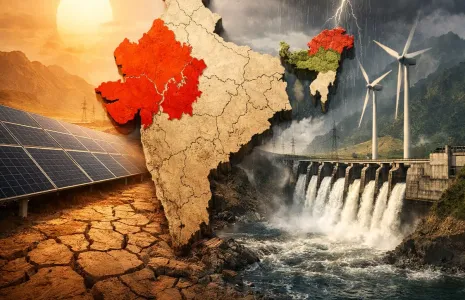
Mumbai, July 3 -- A recent state level assessment of climate exposure has placed Rajasthan, Gujarat and Arunachal at the centre of India's renewable risk map, the report has found. It said the concentration of extreme heat, water stress and extreme rainfall in those states heightens vulnerability of solar, wind and hydro assets. The analysis mapped physical hazards and correlated them with generation and transmission footprints.
The assessment highlighted that Rajasthan and Gujarat face acute heat and aridity that can reduce solar panel efficiency and increase operating costs, while frequent dust storms add maintenance burdens. Wind projects in coastal Gujarat were shown to face higher risks from cyclonic winds and sea level related impacts on infrastructure. Transmission corridors spanning arid zones may experience greater thermal stress and reliability challenges.
In Arunachal Pradesh the study identified intensified monsoon patterns and a higher incidence of floods and landslides that threaten hydropower installations and access roads. Soil saturation and slope failures were linked to potential plant outages and longer restoration times for affected projects. The geography of the state compounds logistical challenges for rapid repair and evacuation.
The report suggested that investors and insurers will need to incorporate state level climate exposure into due diligence and pricing, while lenders should factor in higher contingency costs for affected projects. Grid planners were urged to incorporate climate scenarios into network design and redundancy planning to reduce curtailment and outage risks. Policy makers at state and national level were advised to align permitting and land use rules with projected hazards.
The authors recommended that targeted adaptation measures, including site level microclimate assessment, elevated foundations, diversified technology mixes and improved drainage, could reduce asset loss and revenue volatility. They argued that coordinated monitoring and data sharing between states would improve resilience and investment certainty. The findings were presented as a call to accelerate climate proofing of renewable infrastructure.
Published by HT Digital Content Services with permission from Construction World.