
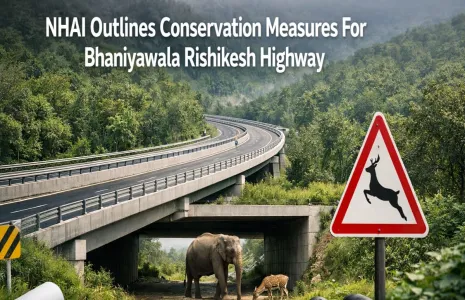
Mumbai, July 23 -- The National Highways Authority of India (NHAI) reiterated that the proposed Bhaniyawala-Rishikesh highway has been designed with extensive wildlife protection measures, responding to concerns over its potential impact on ecologically sensitive areas near the Rajaji Tiger Reserve. The authority said environmental safeguards were incorporated from the planning stage to balance infrastructure development with biodiversity conservation.
The proposed highway is intended to improve connectivity between Dehradun and Rishikesh while reducing congestion on one of Uttarakhand's busiest road corridors. NHAI noted increasing traffic volumes, frequent bottlenecks and safety concerns necessitated expansion, particularly during peak tourist and pilgrimage seasons.
Addressing concerns raised by conservationists, NHAI stated that the alignment has been developed following detailed environmental assessments and consultations with relevant authorities. The project incorporates several mitigation measures intended to minimise disturbance to wildlife movement and reduce ecological fragmentation.
Among the key provisions are dedicated wildlife underpasses and animal crossings at identified movement corridors, planned according to wildlife movement patterns to enable safe passage for animals without disrupting traffic flow. Noise barriers and controlled lighting have also been proposed in selected stretches to minimise disturbance to surrounding habitats.
NHAI further stated that speed management measures, protective fencing and appropriate road signage will be introduced near wildlife-sensitive zones to reduce the risk of vehicle-animal collisions. Construction activities will also be regulated to limit environmental disturbance, with contractors required to comply with conditions laid down under environmental and forest clearances.
The authority emphasised that the project has been designed to comply with statutory requirements prescribed by environmental and wildlife agencies and that approvals involved multiple stages of technical scrutiny, with mitigation measures incorporated as part of the project's environmental management framework. Environmental organisations have sought greater scrutiny of ecological impact and strict implementation of mitigation measures during construction and operation, while NHAI maintained that continuous monitoring will help ensure measures remain effective and that the highway will deliver improved connectivity, enhanced road safety and reduced travel time for commuters between Dehradun, Rishikesh and adjoining regions.
Published by HT Digital Content Services with permission from Construction World.