
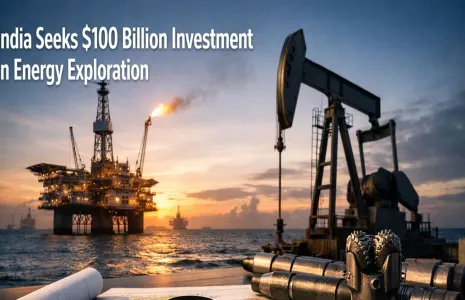
Mumbai, July 1 -- India aims to attract USD 100 bn in upstream investment and expand exploration acreage to one million sq km by 2030, a senior hydrocarbons official said at CERAWeek in Houston.
Director General of Hydrocarbons Srikant Nagulapalli outlined policy reforms, enhanced data access and exploration opportunities intended to draw international capital and presented a roadmap for large scale investment while acknowledging complex global energy transition dynamics.
Speakers positioned India as a major destination for global capital and set out the USD 100 bn target for upstream investment. India's Consul General in Houston said the initiative reflects a growing strategic convergence in India-US energy cooperation and emphasised the creation of a competitive, investor friendly ecosystem linking American technology with Indian resources.
Nagulapalli said output from current levels of about 29 million tonnes (29 mn t) of oil and over 36 billion cubic metres (36 bn cubic metres) of gas annually must rise through improved reservoir management and focus on deepwater exploration. Officials highlighted the National Data Repository and a node at the University of Houston that allows companies to access geological and seismic datasets locally, lowering entry barriers. They also noted Open Acreage Licensing Policy bid rounds offering blocks with marketing and pricing freedom and recent policy changes to enhance operational flexibility and fiscal stability.
The conference drew policymakers, operators and executives who discussed energy security, supply risks and rising demand driven by urbanisation, industrial growth and new load centres such as artificial intelligence and data centres. Participants flagged a structural rise in demand and the reconfiguration of global liquefied natural gas markets alongside a surge in electricity demand with implications for import dependent economies such as India. Climate protests outside the venue underscored tensions over continued fossil fuel investment and participants said competing priorities of energy security, economic growth and climate commitments will shape the global outlook.
Published by HT Digital Content Services with permission from Construction World.