
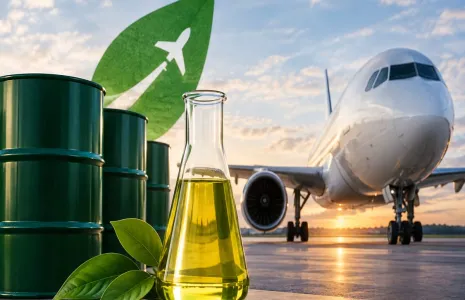
Mumbai, Oct. 1 -- India's jet fuel demand is projected to increase from about 192,000 barrels per day in 2024 to 277,000 barrels per day by 2031, creating a larger market for Sustainable Aviation Fuel (SAF), according to a report by S&P Global Energy and the SAF Association. The findings were released at the 2nd India SAF Conclave.
The government's SAF blending roadmap begins with a 1 per cent mandate in 2027, rising to 2 per cent in 2028 and 5 per cent in 2030. The policy is intended to support aviation decarbonisation while encouraging the development of domestic SAF production and supply chains.
The report estimates that India's SAF demand will reach 46,000 t in 2027 before increasing to 250,000 t in 2030. It also identifies India's aviation sector as one of the fastest-growing sources of refined product demand through 2060, supported by rising middle-class mobility, higher domestic and international travel, airport development and airline fleet additions.
Aviation fuel consumption softened during mid-2026, with July demand falling to about 180,000 barrels per day amid weaker flight activity, higher operating costs and supply disruptions. However, consumption during the first half of 2026 still increased by nearly 2 per cent year on year, indicating that the recent weakness has not altered the longer-term growth outlook.
Passenger traffic, low-cost aviation and international connectivity are expected to remain important demand drivers. New infrastructure, including Navi Mumbai International Airport and Jewar Airport in Noida, is intended to ease capacity constraints, while international seat capacity is expanding faster than domestic capacity in 2026. Policy measures such as the UDAN regional connectivity scheme and an aviation turbine fuel (ATF) pricing stabilisation mechanism, including a fixed ATF price in Delhi and a dedicated fund, are also expected to improve cost visibility for airlines.
Published by HT Digital Content Services with permission from Construction World.