
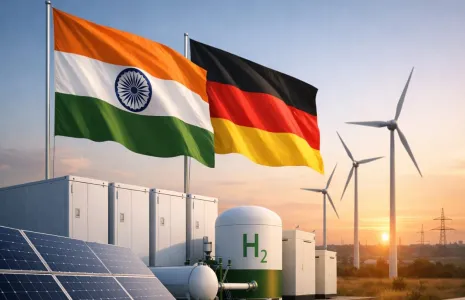
Mumbai, June 26 -- India and Germany reaffirmed commitments to deepen cooperation on renewable energy, energy storage and green hydrogen to boost energy security and reduce reliance on imported fossil fuels. The renewed focus arose at the tenth edition of the GSDP Conversation Series, jointly hosted by the Indo-German Partnership for Green and Sustainable Development (GSDP) and the Ministry of New and Renewable Energy (MNRE). The event gathered policymakers, industry leaders, think tanks and experts assessing pathways for clean energy systems.
Panelists said renewable technologies and storage can shield economies from fossil fuel price volatility while supporting long-term growth and decarbonisation. Non-fossil fuel sources account for around 54 per cent of India's installed power generation capacity and the country remains committed to reaching 500 GW of non-fossil fuel capacity by 2030 as part of a wider transition to net-zero emissions by 2070. The discussion highlighted battery energy storage and green hydrogen alongside solar and wind.
The German ambassador characterised renewable energy as having moved from a climate imperative to an economic and strategic necessity, and observed that both countries face the shared challenge of reducing reliance on imported fuels while creating economic opportunity. Delegates noted that bilateral cooperation, now marking 75 years of diplomatic relations, spans renewable deployment, manufacturing, battery storage, grid integration, energy efficiency and green mobility. They also highlighted support for hard to abate industrial sectors and skills development.
Participants urged accelerated deployment and stronger public private collaboration to secure reliable, affordable supplies and recommended coordinated investments across generation, transmission, distribution, storage and financing to support the next phase of the transition. Industry experts emphasised the need for grid modernisation and domestic manufacturing scale up to attract investment and reduce costs. Germany was identified as a key partner in supporting reforms and technology cooperation to strengthen energy independence and enhance system resilience.
Published by HT Digital Content Services with permission from Construction World.