
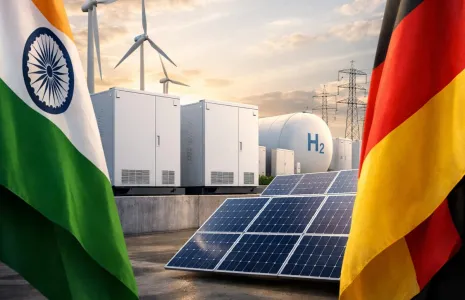
Mumbai, June 26 -- India and Germany reaffirmed commitments to deepen cooperation in renewables, energy storage and green hydrogen, with a focus on strengthening energy security and reducing reliance on imported fossil fuels. The renewed focus emerged at the 10th GSDP Conversation Series, jointly hosted by the Indo-German Partnership for Green and Sustainable Development (GSDP) and the Ministry of New and Renewable Energy under the theme Energy Security through Renewable Energies. The event gathered policymakers, industry executives, think tanks and renewable energy experts.
The German ambassador to India said renewable energy had moved beyond a climate imperative to become an economic and strategic necessity and affirmed that both countries face shared challenges in reducing import dependence. He described renewables as creating a convergence of climate action, economic opportunity and energy security, indicating scope for enhanced bilateral collaboration. Delegates highlighted cooperation on deployment, manufacturing, battery storage, grid integration and energy efficiency.
The MNRE secretary underlined vulnerabilities in fossil fuel supplies amid geopolitical tensions in West Asia and emphasised the role of solar, wind, battery energy storage systems and green hydrogen in strengthening energy security and sustainable development. He noted that non-fossil fuel sources now account for around 54 per cent of India's installed power generation capacity and restated the target of achieving 500 GW of non-fossil capacity by 2030.
Panellists urged accelerated deployment of renewable capacity, increased investment in battery storage and grid modernisation alongside stronger public-private collaboration to ensure reliable and affordable supplies. They said the next phase of India's clean energy transition would require coordinated investments across generation, transmission, distribution, storage, financing and domestic manufacturing ecosystems. Germany was identified as a key partner, with cooperation expressed on climate finance and skills development.
The discussions coincided with the 75 year milestone in diplomatic relations and formed part of ongoing efforts to scale renewable deployment and domestic manufacturing to cut import reliance and meet long-term net-zero commitments. Stakeholders indicated that policy, finance and technology deployment must align to realise the objectives set out at the forum.
Published by HT Digital Content Services with permission from Construction World.