
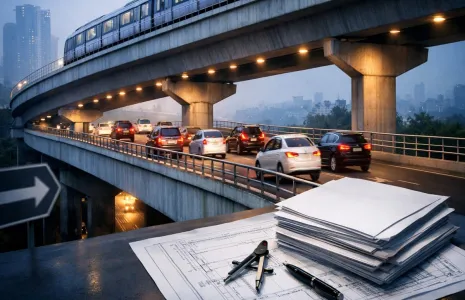
Mumbai, July 6 -- A technical assessment by the Indian Institute of Science examined integration of an elevated road with the Bengaluru Metro Phase three corridors and concluded the double-decker design would attract more private vehicles and reduce metro ridership. The findings were presented at an interactive session organised by civic groups before Union government consideration of Phase three approvals. The convenor of IISc's Sustainable Transportation Lab said the configuration is incompatible with sustainable mobility objectives.
The study compared a metro-only scenario with one combining metro and an elevated road on the same pillars for two corridors totalling 44.65 km. It projected daily metro ridership on those corridors would fall from 0.809 mn to 0.798 mn under the combined design. Bus mode share was projected to fall by 6.4 per cent and metro share by 1.4 per cent while car use was expected to rise by 3.8 per cent.
Researchers estimated that increased road capacity would raise total vehicle kilometres travelled and daily emissions by 17,012 kg of carbon dioxide, 85.9 kg of carbon monoxide and 1.1 kg of PM2.5. The report projected additional fuel consumption of 7,000 litres per day and associated extra fuel cost of Rs 0.645 mn per day. These shifts were linked to a modal move from high occupancy public transport to private vehicles.
Capital expenditure for Bangalore Metro Rail Corporation Limited under a double-decker integration was put higher by Rs 28,635.3 mn, attributed to larger pier diameters, deeper foundations and elevated stations that add multimodal integration costs without public transport benefit. Corridor one costs were estimated to rise from Rs 49,720 mn to Rs 70,300 mn and corridor two from Rs 17,110 mn to Rs 25,170 mn, producing the stated additional burden. The report flagged legal obligations in earlier sanction letters to favour metro ridership and noted that the Ministry for Housing and Urban Affairs has not approved the double-decker proposal; an entrepreneur responded on X calling the assessment one sided and urging greater investment in public transport capacity.
Published by HT Digital Content Services with permission from Construction World.