
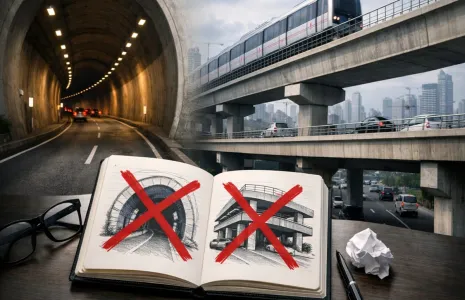
Mumbai, July 6 -- Prof Ashish Verma, convenor of the Indian Institute of Science (IISc) Sustainable Transportation Lab, criticised proposed tunnel road and double-decker corridor projects at a citizen event in Bengaluru. The session was organised by the Citizens Voluntary Initiative for the City (CIVIC) Bangalore and Bengaluru Praja Vedike as the Union government considers approval to Phase three of Namma Metro. He warned that placing a metro line and a roadway on the same vertical would increase the use of private transport and cause the road to compete with metro services.
He said the incentivisation was ill timed given limited access to energy amid volatility at the Strait of Hormuz and rising fuel prices. Research by the IISc Sustainable Transportation Lab projects an additional daily fuel consumption of around 7,000 litres for the city, amounting to approximately Rs 0.645 mn. The study estimated excess emissions of about 85.9 kg of carbon monoxide and about one point one kg of particulate matter two point five per day.
The lab calculated that each double-decker corridor would impose an excess cost on Bengaluru Metro Rail Corporation (BMRCL) of Rs 28.6354 bn compared with a standard metro corridor. The analysis modelled traffic shifts and energy use and concluded the vertical combination of road and rail would worsen congestion and environmental outcomes. The professor urged planners to weigh short term travel time gains on roadways against longer term operational and sustainability costs.
The event aimed to inform public debate as authorities review Phase three alignments and designs. Civic groups called for a focus on enhancing public transit capacity and efficiency rather than adding roadways that favour private vehicles. The lab recommended that policy makers incorporate energy security and emissions impacts into cost benefit assessments of major transport projects.
Published by HT Digital Content Services with permission from Construction World.