
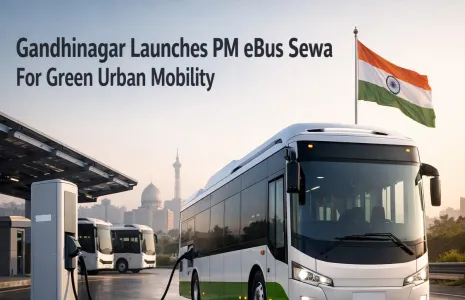
Mumbai, July 3 -- Gandhinagar has launched the PM eBus Sewa scheme, marking a new phase in the city's transition to sustainable urban mobility. The centrally sponsored programme was launched under the leadership of Prime Minister Narendra Modi and carries an estimated outlay of Rs 576.13 billion (Rs 57,613 crore), including a Central Government contribution of Rs 200 billion (Rs 20,000 crore). Implemented through a public-private partnership, the initiative plans to deploy 10,000 electric buses and has allocated 100 electric midi buses to Gandhinagar.
The project is being overseen by Gandhinagar Greenline Transport Service Limited, a special purpose vehicle established by the Gandhinagar Municipal Corporation, and the first phase placed 40 fully air-conditioned electric buses on regular routes. Each nine-metre-long midi bus has seating for 25 passengers and standing space for 13 and is fitted with hydraulic ramps to enhance accessibility. Four seats have been reserved for women and four for senior citizens, and the fleet is equipped with Electronic Ticketing Machines (ETMs) for cashless payments.
A dedicated depot and charging infrastructure has been developed at Sargasan at an estimated cost of Rs 170 million (Rs 17 crore), featuring charging stations, maintenance facilities and an operational control system. The service will operate on 18 planned routes connecting nodes including the Secretariat, Gandhinagar Railway Station, Mahatma Mandir, GIFT City and IIT Gandhinagar, with schedules aligned to commuter demand. Fares have been fixed by distance, ranging from Rs five to Rs 30, and travel on all routes will be free for the first 15 days.
After the free period, children below five years will continue to travel free and the municipal corporation said it remains committed to safe, clean and comfortable public transport. The launch is presented as a milestone in Gandhinagar's Smart City agenda and as part of efforts to reduce urban pollution and modernise public transport. Authorities expect the scheme to improve last-mile connectivity and encourage sustainable mobility among residents.
Published by HT Digital Content Services with permission from Construction World.