
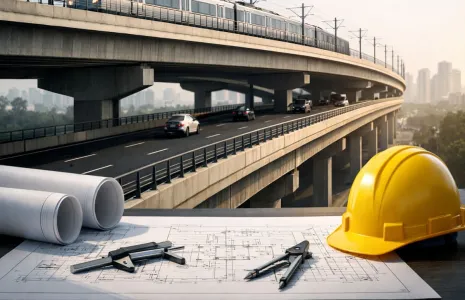
Mumbai, July 20 -- The Delhi Metro Rail Corporation (DMRC) will undertake a feasibility study to develop an integrated double?decker flyover?cum?Metro corridor along the proposed 16.5 km Keshav Puram to Rohini Sector 34 route under Phase V(B) of the Delhi Metro network. The consultancy is estimated to cost around Rs 20.8 mn and will examine options for placing Metro infrastructure on the upper deck with an elevated road or flyover on the lower deck to ease traffic congestion along the corridor.
The study is scheduled to be completed in six months and will assess alignment options, traffic and transport demand, structural and construction feasibility, utility constraints and the commercial viability of the integrated corridor. It will also evaluate the need for loops, ramp?in and ramp?out facilities, cloverleafs, directional ramps and other road infrastructure at major intersections.
Officials noted that the proposed corridor passes through densely urbanised areas including Keshav Puram and several sectors of Rohini, where the study will need to account for existing flyovers, Metro structures, utilities, land constraints and busy traffic junctions. As part of the exercise the appointed consultant will conduct traffic volume counts, turning movement surveys, origin?destination studies, public transport surveys, road network inventory and speed and delay studies, with limited topographical verification at critical stretches where required.
The consultant will prepare a transport model to assess current and future traffic demand and develop conceptual plans to integrate the Metro viaduct with road infrastructure, alongside concept?level structural assessment, construction feasibility and preliminary land requirement estimates. It will prepare indicative project cost estimates, conceptual bills of quantities and a comparative commercial assessment of different structural configurations, and carry out a cost?benefit analysis together with an environmental impact assessment. The final report will consolidate findings from all stages of the study and include recommendations on the preferred alignment and the overall feasibility of the proposed integrated double?decker corridor.
Published by HT Digital Content Services with permission from Construction World.