
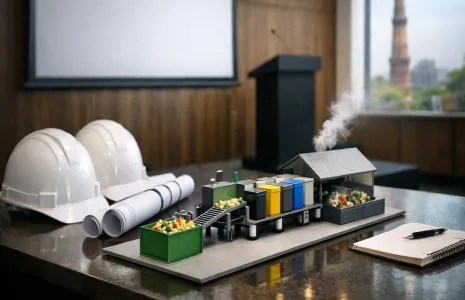
Mumbai, Sept. 4 -- Delhi Lieutenant Governor Taranjit Singh Sandhu inaugurated a one-day workshop on municipal solid waste management organised by the Municipal Corporation of Delhi (MCD) with the Indian Institute of Technology Delhi (IIT Delhi) at the India International Centre in New Delhi on September one. The event marked the first institutional collaboration between the two institutions and convened experts, public representatives and stakeholders to discuss policy and operations for the capital.
Sandhu commended the MCD and IIT Delhi for bringing together participants and urged that best practices inform Delhi's approach to waste management. He identified Indore as a domestic example of disciplined municipal effort and urged studying and adapting that model to Delhi's scale, density and local conditions. He noted Delhi generates around 13,000 metric tonnes (t) of municipal waste daily.
The Lieutenant Governor emphasised moving from collection to reducing, reusing and recycling and urged a shift from waste-to-landfill to waste-to-wealth. He said proper segregation of wet, dry, sanitary and domestic hazardous waste at source is essential for scientific processing and resource recovery. He also stressed the use of modern technology, digital monitoring and effective data management.
He expressed hope the workshop would produce practical solutions and concrete action plans to develop a sustainable model for Delhi. Delhi Mayor Pravesh Wahi described cleanliness as a collective priority and highlighted progress in clearing landfill sites, strengthening sanitation infrastructure and deploying new machinery. He urged strict enforcement and proposed selected wards be developed as models.
Indore Mayor Pushyamitra Bhargav credited the Swachh Bharat Abhiyan for guiding cleanliness efforts and described Indore's sustained measures as transformational. He emphasised responsive governance, behavioural change and decentralised Zero Waste schemes with resident participation. MCD Commissioner Sanjeev Khirwar said priorities include source segregation, scientific processing and resource recovery, and that the MCD is expanding facilities to convert organic waste into compost and biogas and increase dry waste recycling.
Published by HT Digital Content Services with permission from Construction World.